
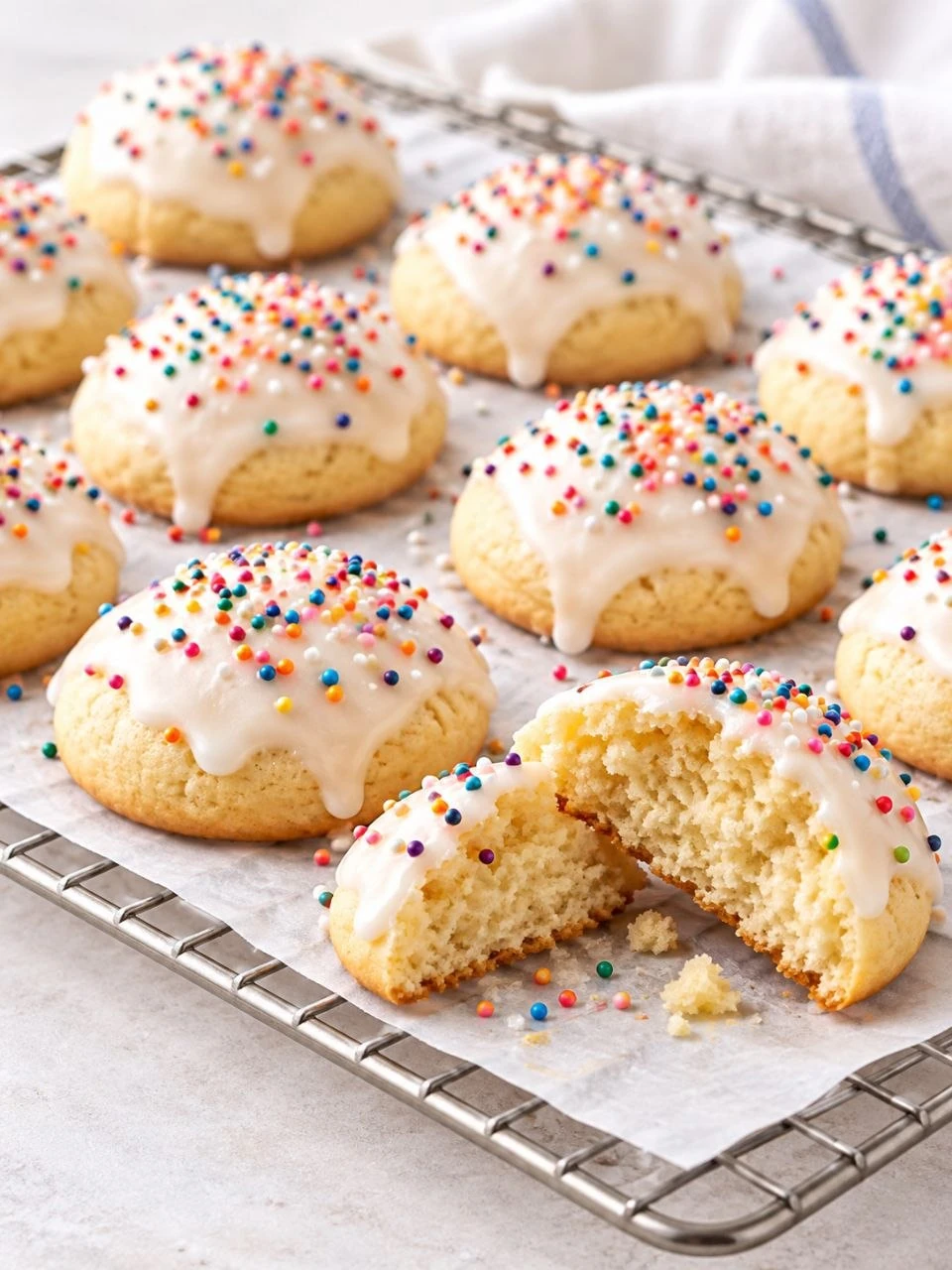
Anise Glazed Italian Cookies. Soft, rounded Italian-style anise cookies with a thin anise-scented glaze and a measured sprinkle finish. The formula and timing below are working estimates for a future kitchen trial, not a claim that a batch has been made.

Jump to ingredients · Jump to method
A soft cookie, not a pressed wafer
These anise glazed Italian cookies are meant to be gently rounded and tender, with a pale surface that takes a thin white icing. They are not the crisp, pressed pizzelle also planned for Chefly. The two formats can sit on the same cookie tray without competing for the same method: this one uses baking sheets and a spoonable dough, the other needs a patterned iron.
This is an original working formula awaiting a bake test. Its twenty-four-cookie count assumes level tablespoon scoops, and the ninety-four-minute clock assumes two successive oven batches followed by complete cooling and a short glaze set. A larger cookie, a smaller oven or a longer chill will change those figures.
Balance the dough and the icing
Soften butter enough to beat with sugar, but do not melt it. The two eggs give the cookies structure while a small measured amount of milk keeps the mixture scoopable. Flour, baking powder and salt are whisked first to distribute leavening; heavy-handed mixing after the flour is added can make the bite less tender.
Anise extract appears twice, three-quarters teaspoon in the dough and a quarter teaspoon in the glaze. Keeping the two measures separate prevents a full teaspoon landing in one bowl. Extract intensity differs by brand, so taste the finished test batch before changing it. No anise seeds or liquor are part of the base.
Confectioners' sugar and milk make a glaze that should stay visible on the rounded tops instead of running entirely off. Nonpareils go on before that glaze sets. The recipe contains wheat, milk and egg; decorative sprinkles and extracts also need package checks for guests with specific allergies.
Ingredients for 24 cookies
| Ingredient | Amount | Use |
|---|---|---|
| All-purpose flour | 2.25 cups | Spoon and level. |
| Baking powder | 2 teaspoons | For a rounded crumb. |
| Fine salt | 1/4 teaspoon | In dough. |
| Unsalted butter, softened | 1/2 cup | Cream with sugar. |
| Granulated sugar | 2/3 cup | In dough. |
| Large eggs | 2 eggs | Room temperature. |
| Anise extract, for dough | 3/4 teaspoon | Measure separately. |
| Whole milk | 2 tablespoons | For soft dough. |
| Confectioners' sugar | 1 cup | Sift for glaze. |
| Whole milk, for glaze | 2 tablespoons | Add a spoonful at a time. |
| Anise extract, for glaze | 1/4 teaspoon | Flavor the white glaze. |
| Rainbow nonpareils | 2 tablespoons | Apply while glaze is wet. |
Step-by-step method
- Heat oven to 350°F and line two sheets with parchment. Whisk 2 1/4 cups flour, 2 tsp baking powder and 1/4 tsp salt. Beat 1/2 cup softened butter and 2/3 cup sugar until creamy, about 2 minutes; beat in 2 eggs one at a time, then 3/4 tsp anise extract.
- Mix the dry ingredients into the butter mixture in two additions, alternating with 2 tbsp milk. Stop when no flour remains. Scoop approximately 1 tbsp per mound, allowing space between 24 cookies. If the dough is too warm to hold a mound, refrigerate briefly and record that added time in a tested revision.
- Bake one sheet at a time at 350°F about 10–12 minutes, just until tops look set and undersides are lightly golden. Avoid waiting for dark tops. Transfer to a rack and cool completely, approximately 30 minutes after the final batch.
- Whisk 1 cup confectioners' sugar with up to 2 tbsp milk and 1/4 tsp anise extract to a thick, brushable glaze. Dip or spoon over cooled cookies, scatter 2 tbsp nonpareils immediately and allow about 15 minutes for the surface to set. Count and weigh a test batch before fixing yield.
Scoop, bake and dip without rushing
Line two sheets before mixing so the dough does not wait in a warm kitchen. Cream butter and sugar until the mixture looks lighter, then add eggs individually. Fold in the dry ingredients in two additions with the measured dough milk. A tablespoon scoop helps keep baking time even, but an untested dough may spread more than expected; use one test tray rather than filling every sheet edge to edge.
Bake at 350°F until the tops are set and the bottoms lightly golden, not brown all over. Start checking at ten minutes; the proposed twelve-minute upper end is a guide, not a guarantee for every oven. Cool on racks until no warmth remains. Warm cookies can make icing translucent and slippery.
Whisk the icing smooth and adjust only within the stated two tablespoons milk. Dip the top or use a spoon, then add the sprinkles while wet. The short final set describes a touch-dry surface, not a promise that stacked cookies will never stick. The eventual photo should show a thin glaze, not a heavy buttercream cap.
Small fixes for a cleaner batch
If the mounds spread flat, note the butter temperature and scoop size before adding unmeasured flour. A brief chill may help, but it changes the clock and needs a kitchen test. If a bottom browns before the top sets, inspect pan color and rack placement; a dark pan may run hotter.
A glaze that disappears was likely too thin or placed on cookies that had not cooled. Add liquid gradually rather than pouring all two tablespoons at once. Thick icing can be thinned with drops of milk during the trial, but that exact adjustment should be recorded in the final formula.
McCormick's glazed anise cookie is a useful technique reference, not a formula copied here. Chefly's Earl Grey cookies are a separate tea-scented option. Neither link verifies the taste, yield or storage life of this new batch.
Serve and store after a trial
Let the glaze set before arranging the cookies in a tin, and put parchment between layers if testing reveals tackiness. Keep a test sample in a covered container and record texture over time rather than printing a fixed shelf-life promise for an untested moist cookie.
The planned October slot gives holiday cookie content lead time without asserting exact Pinterest search growth. Ingredient selection, photograph and final byline should be checked together: a picture of seeds, lemon icing or iron-pressed rounds would no longer represent this card.
Questions for a first bake
Can I use anise seed instead of extract?
Not as a direct measured swap. Seed texture and strength differ, and the named card specifies extract in both dough and glaze.
Why glaze only after cooling?
Residual heat can dissolve the sugar coating. Wait until the cookie center and top feel cool before dipping.
Can I stack them right away?
Wait for the glaze to set; then test layered storage with parchment before promising a gift-tin holding period.
Further reading and related Chefly recipes: McCormick's glazed-anise cookie method; Chefly Earl Grey cookies. These are relevant references and other dishes, not evidence that this proposed formula was tested.
Print
Anise Glazed Italian Cookies
- Total Time: 94 minutes
- Yield: 24 servings 1x
Description
Twenty-four small soft drop cookies with anise in the dough and glaze.
Ingredients
- 2 1/4 cups All-purpose flour
- 2 teaspoons Baking powder
- 1/4 teaspoon Fine salt
- 1/2 cup Unsalted butter, softened
- 2/3 cup Granulated sugar
- 2 eggs Large eggs
- 3/4 teaspoon Anise extract, for dough
- 2 tablespoons Whole milk
- 1 cup Confectioners' sugar
- 2 tablespoons Whole milk, for glaze
- 1/4 teaspoon Anise extract, for glaze
- 2 tablespoons Rainbow nonpareils
Instructions
- Heat oven to 350°F and line two sheets with parchment. Whisk 2 1/4 cups flour, 2 tsp baking powder and 1/4 tsp salt. Beat 1/2 cup softened butter and 2/3 cup sugar until creamy, about 2 minutes; beat in 2 eggs one at a time, then 3/4 tsp anise extract.
- Mix the dry ingredients into the butter mixture in two additions, alternating with 2 tbsp milk. Stop when no flour remains. Scoop approximately 1 tbsp per mound, allowing space between 24 cookies. If the dough is too warm to hold a mound, refrigerate briefly and record that added time in a tested revision.
- Bake one sheet at a time at 350°F about 10–12 minutes, just until tops look set and undersides are lightly golden. Avoid waiting for dark tops. Transfer to a rack and cool completely, approximately 30 minutes after the final batch.
- Whisk 1 cup confectioners' sugar with up to 2 tbsp milk and 1/4 tsp anise extract to a thick, brushable glaze. Dip or spoon over cooled cookies, scatter 2 tbsp nonpareils immediately and allow about 15 minutes for the surface to set. Count and weigh a test batch before fixing yield.
Notes
Recipe-development draft; not kitchen-tested. Timing and yield are estimates. Nutrition has not been calculated.
Additional chilling, resting or cooling time: 45 minutes, included in the total.
Untested estimate: two 12-minute oven batches, 30-minute full cooling and 15-minute glaze set; preheat excluded.
- Prep Time: 25 minutes
- Chilling, resting or cooling: 45 minutes
- Cook Time: 24 minutes
- Category: Cookies
Nutrition
- Serving Size: One glazed cookie