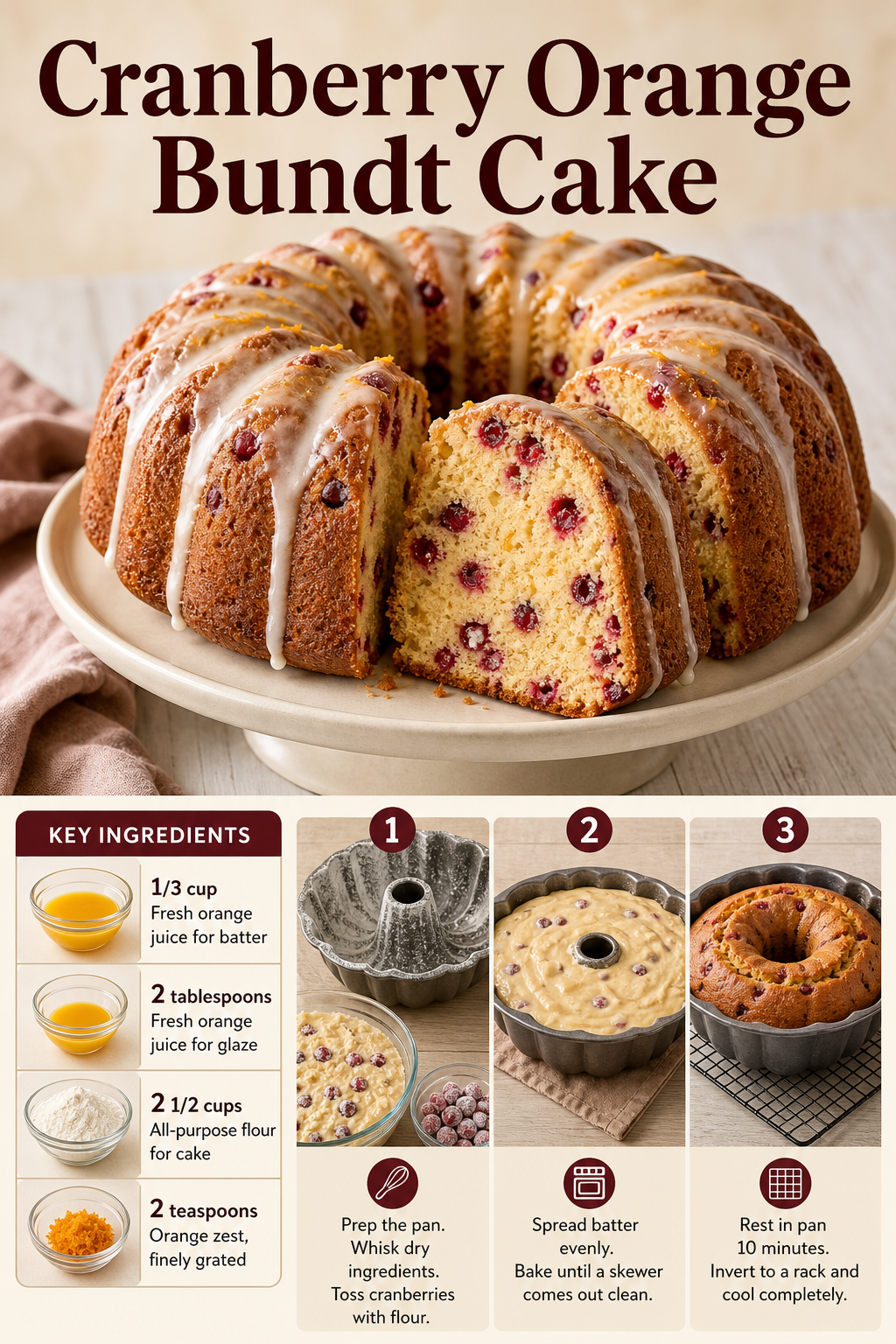
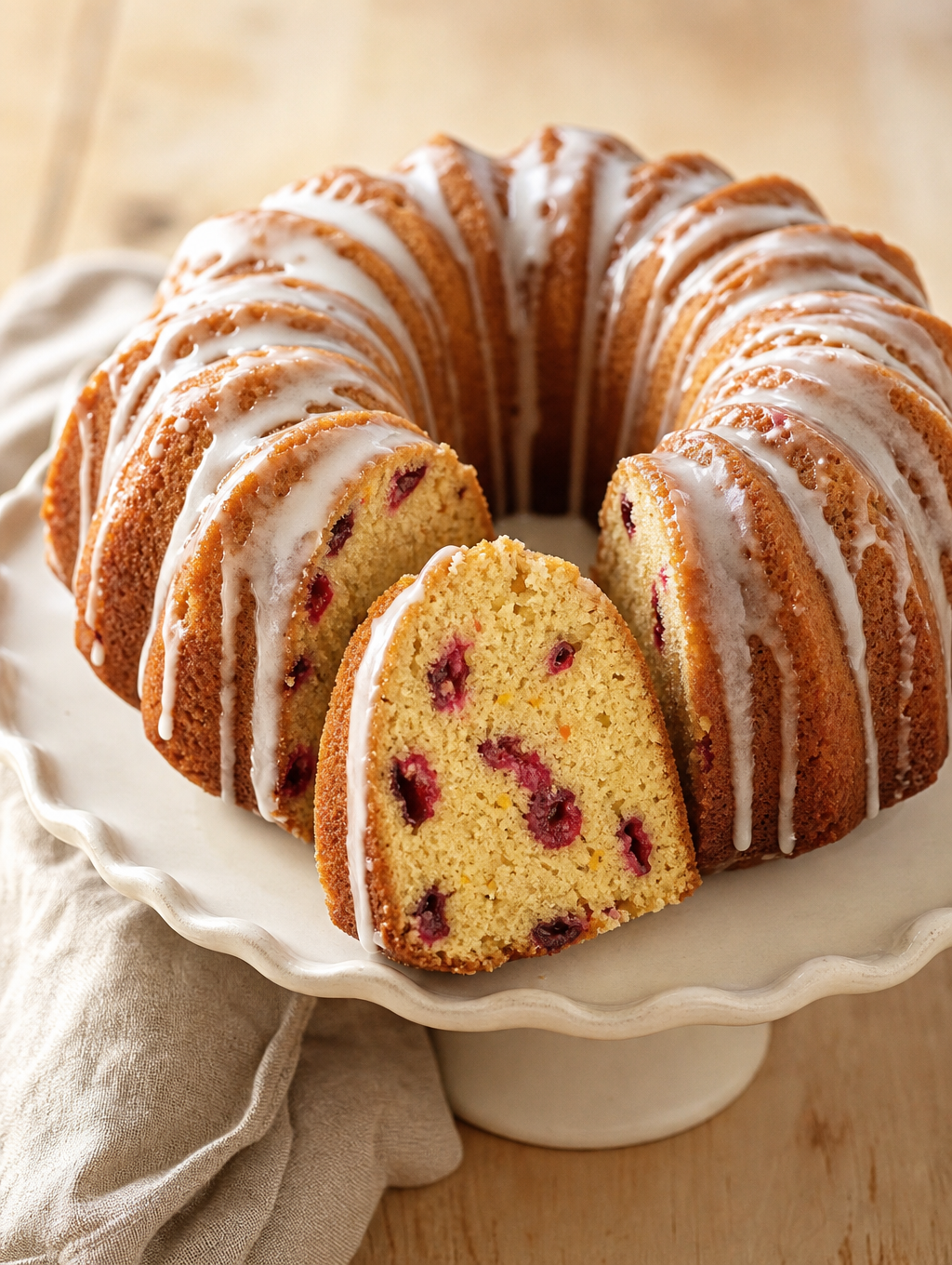
A cranberry orange Bundt cake gives a holiday dessert table a bright citrus scent and scattered red fruit in every cut slice. This working version uses fresh cranberries, orange zest and juice in a sour-cream cake, then a simple orange glaze once the cake is cool. It is not kitchen-tested. Bundt pans vary in capacity and detail, so the recipe needs a real pan-release and center-doneness test before the 12-slice yield or baking window can be treated as dependable.
Jump to ingredients · Jump to method
What makes this a Bundt cake rather than a loaf?
The ring pan gives a large cake a decorative shape and exposes a substantial surface to the pan. That makes preparation of every groove important. A beautifully browned outside is not enough evidence that the thickest interior section is done, and a cake that releases from one pan may cling to another. Use a 10- to 12-cup pan for the first test, record the actual filled depth and check the thickest part with a long skewer.
Fresh berries are the specified fruit. Their tartness balances the sweet glaze, but their size and moisture may affect how they settle in the crumb. Tossing them with a measured tablespoon of flour is a working tactic to test, not proof that every berry will remain suspended. The cover image should show an actual cut cross-section, not a generic white cake with red dots added in editing.
Ingredients for one ring cake
| Ingredient | Amount | Practical note |
|---|---|---|
| All-purpose flour | 2 1/2 cups for cake, plus 1 tablespoon for berries and 1 tablespoon for pan | Keep both extra spoonfuls separate. |
| Baking powder | 2 teaspoons | Whisk evenly with the dry ingredients. |
| Fine salt | 1/2 teaspoon | Balances the cake and glaze. |
| Unsalted butter, softened | 1 cup | For the batter; additional pan grease is measured during testing. |
| Granulated sugar | 1 1/2 cups | Cream with butter. |
| Large eggs | 4 | Add one at a time. |
| Full-fat sour cream | 1 cup | Part of the batter; alternate products need their own test. |
| Finely grated orange zest | 2 teaspoons | Avoid the bitter white pith. |
| Fresh orange juice | 1/3 cup for batter; 2 tablespoons for glaze | Measure separately. |
| Vanilla extract | 1 teaspoon | Background flavor. |
| Fresh cranberries, rinsed and dried | 1 1/2 cups | Do not silently substitute sweetened dried berries. |
| Powdered sugar | 1 cup | Whisk with glaze juice only after the cake cools. |
| Additional softened butter | 1 tablespoon for pan | Coat the grooves before dusting with the extra tablespoon of flour. |
Have a 10- to 12-cup Bundt pan, mixer, cooling rack and long wooden skewer ready. A tablespoon each of extra butter and flour is the working pan-preparation amount; test whether that coats your pan fully. Note the pan brand and surface before finalizing the card.
Mix, bake, release and glaze
- Prepare. Heat the oven to 350°F (175°C). Coat the grooves with the additional tablespoon of butter, then dust with the additional tablespoon of pan flour, tapping out excess. Whisk 2 1/2 cups cake-batter flour with baking powder and salt. Dry the cranberries after rinsing and toss them with their separate tablespoon of flour.
- Build the batter. Beat softened butter and sugar until lighter. Add the four eggs one at a time. Mix in sour cream, zest, the 1/3 cup orange juice and vanilla. Fold in dry ingredients only until incorporated, then gently fold in the berries. Record whether the batter is too stiff or thin for the chosen pan.
- Bake. Spread evenly in the pan and tap gently to settle the batter. Bake on a middle rack for an estimated 55 to 70 minutes. Insert a long skewer into the thickest cake section; it should come out without wet batter. Tent loosely with foil if the exposed surface darkens early. A clean skewer at one shallow edge is not enough.
- Release carefully. Let the cake rest in its pan for an estimated 10 minutes. Invert onto a rack. If it resists, do not tear the cake to force the schedule; document the release and adjust pan preparation or timing in the next test.
- Cool and glaze. Cool completely, about an hour, before whisking one cup powdered sugar with two tablespoons orange juice. Drizzle over the cake and let the glaze set for an estimated 15 minutes before cutting into 12 working portions.
The working elapsed time is 185 minutes: 30 minutes preparation, up to 70 minutes oven time, 10 minutes in the pan, about 60 minutes cooling and 15 minutes glaze setting. It assumes the cake releases and cools on that schedule, which must be verified. The recipe is not an overnight or make-ahead promise.
How to troubleshoot the test cake
Fruit collects near the bottom
Check berry dryness and the batter’s thickness. The tablespoon of flour coating may help, but photograph a cut slice and note where berries actually landed before claiming uniform distribution. Do not add more flour casually without checking crumb texture.
The cake sticks in the grooves
Record whether the pan was fully coated, how long it cooled, and whether the surface is worn. Try one controlled change in the next test. A decorative pan with many tight corners may require a different preparation than a simple ring mold.
Top is dark before center is ready
Use a loose foil tent and continue checking the thickest portion for wet batter. Fruit can make a skewer damp even when the surrounding crumb has set; distinguish berry juice from uncooked batter by checking more than one location.
Variations and serving
Frozen cranberries could change both batter temperature and baking time; this draft specifies fresh fruit and has not tested an unthawed substitute. Dried cranberries would change the moisture and tartness substantially. Orange juice concentrate, sweetened yogurt or non-dairy sour cream would also make different cakes, not automatic swaps.
Serve a modest slice as a plated dessert, or pair smaller cake slices with an existing separate cookie option such as Earl Grey cookies on a mixed tray. Check the cookie’s own ingredients before stating any shared dietary property. The cake contains wheat, milk and eggs; no numerical nutrition has been calculated.
Storage and questions
Cool before covering to avoid trapping condensation on the glaze. A tested storage interval and method are still needed, especially if the cake will be boxed as a gift. Do not taste the raw batter: FDA raw-flour guidance advises against eating uncooked batter and calls for cleaning after handling raw flour and eggs.
Can I glaze while the cake is warm?
The working method waits until the cake is fully cool so the glaze forms visible white ribbons rather than melting straight into the surface. Test actual cooling time in your kitchen.
How do I know whether my pan is large enough?
Use a pan sold as 10 to 12 cups and check actual batter depth before baking. If the pan is smaller, do not fill it to the rim; develop a different pan or divide the batter and retest the bake time.
Will every slice contain cranberries?
That is the aim, not a verified result. Examine at least several slices from the first test and adjust the folding method or formula if the fruit distribution is uneven.
Print
Cranberry Orange Bundt Cake
- Total Time: 185 minutes
- Yield: 12 servings 1x
Description
A fresh-cranberry and orange-zest cake baked in a 10- to 12-cup Bundt pan and finished with orange glaze.
Ingredients
- 2 1/2 cups All-purpose flour for cake
- 1 tablespoon Additional all-purpose flour for berries
- 2 teaspoons Baking powder
- 1/2 teaspoon Fine salt
- 1 cup Unsalted butter, softened
- 1 1/2 cups Granulated sugar
- 4 whole Large eggs
- 1 cup Full-fat sour cream
- 2 teaspoons Orange zest, finely grated
- 1/3 cup Fresh orange juice for batter
- 1 teaspoon Vanilla extract
- 1 1/2 cups Fresh cranberries, rinsed and dried
- 1 cup Powdered sugar for glaze
- 2 tablespoons Fresh orange juice for glaze
- 1 tablespoon Additional softened butter for pan
- 1 tablespoon Additional all-purpose flour for pan
Instructions
- Heat oven to 350 F (175 C). Thoroughly coat every recess of a 10- to 12-cup Bundt pan with the additional tablespoon of butter, then dust with the additional tablespoon of pan flour, tapping out excess. Whisk 2 1/2 cups cake-batter flour, baking powder and salt. Toss dry cranberries with their separate tablespoon of flour.
- Beat softened butter and sugar until lighter, then add eggs one at a time. Mix in sour cream, orange zest, 1/3 cup orange juice and vanilla. Fold in dry ingredients just until combined, then gently fold in the floured fresh cranberries.
- Spread batter evenly in the prepared pan and tap gently to settle. Bake on a middle rack for an estimated 55 to 70 minutes, until a long skewer inserted into the thickest cake section comes out without wet batter. If the exposed surface browns early, tent loosely with foil.
- Rest in the pan for an estimated 10 minutes, then invert onto a rack. If resistance is felt, do not tear the cake; test the release technique and pan preparation before publishing a guarantee. Cool completely, approximately 60 minutes.
- Whisk powdered sugar with 2 tablespoons orange juice into a pourable glaze. Drizzle over the cool cake and let set approximately 15 minutes. Cut into 12 working portions and record actual height, crumb, fruit distribution and yield.
Notes
Recipe-development draft; not kitchen-tested. Timing and yield are estimates. Nutrition has not been calculated.
Additional chilling, resting or cooling time: 85 minutes, included in the total.
Development estimate: up to 70 minutes in the oven, 10 minutes in the pan, approximately 60 minutes complete cooling and 15 minutes glaze setting; actual pan shape, oven and fruit change time.
- Prep Time: 30 minutes
- Chilling, resting or cooling: 85 minutes
- Cook Time: 70 minutes
Nutrition
- Serving Size: One twelfth of the glazed cake