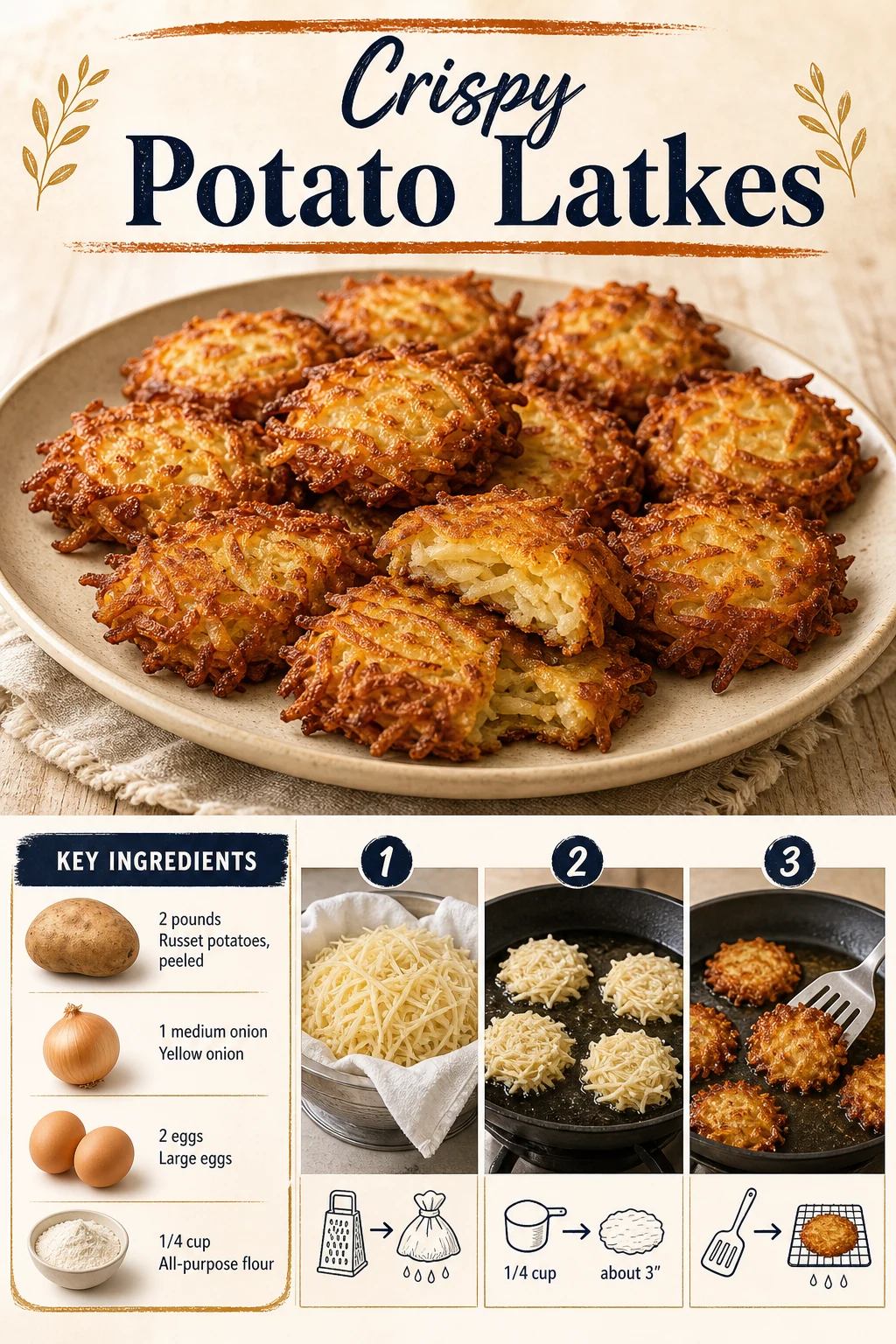
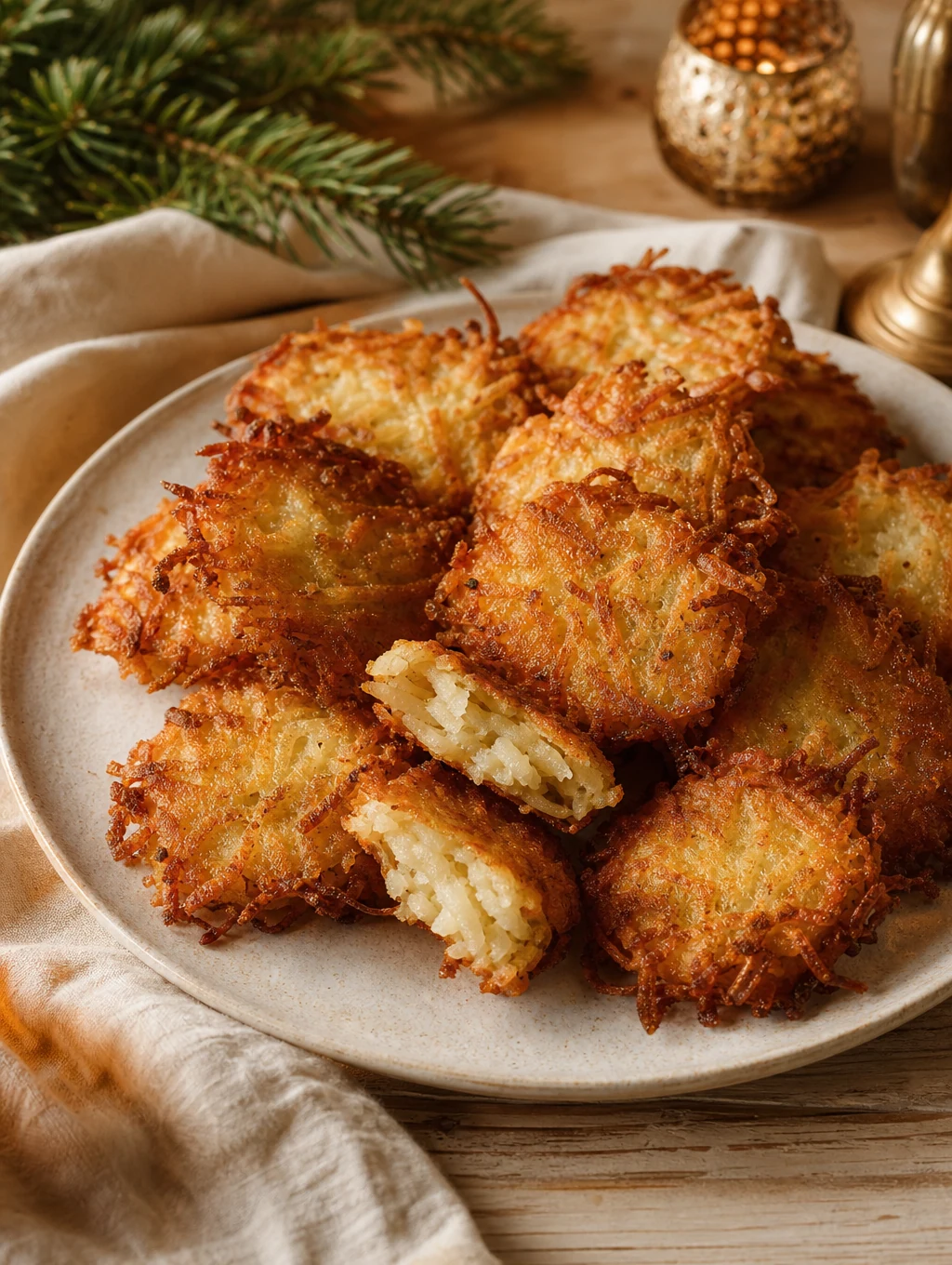
Potato latkes are best when the center is tender but the edges stay crisp enough to hear as you cut through them. This proposed small-batch version starts with grated russets and onion, squeezes out excess liquid, then binds the shreds with egg and a little flour before shallow frying. It aims for roughly twelve 3-inch latkes, or six working servings of two. The sixty-minute plan and oil use need an actual skillet test, especially if your pan holds only a few at a time.
Jump to ingredients · Jump to method
Dry shreds are the starting point
Potato and onion release water as soon as they are grated. Bundle the shreds in a clean towel and squeeze over a sink or bowl before adding eggs. If you leave the wet shreds standing in a large puddle, the binder thins and the oil can sputter. Work reasonably quickly after grating, and have the skillet, bowl and wire rack ready first.
A quarter cup of mixture per latke makes a small round; flatten each to about three inches rather than building a thick mound. The pan should hold enough shimmering oil for a shallow fry, not smoke or run dry. If the oil is too cool, the cakes may absorb more and stay pale; if it is too hot, edges darken before the centers cook. The measured half cup is pan supply, not the amount necessarily absorbed into the finished recipe.
Ingredients for a working dozen
| Ingredient | Amount | Use |
|---|---|---|
| Russet potatoes | 2 lb | Peel, grate and squeeze dry. |
| Yellow onion | 1 medium | Grate with potatoes. |
| Large eggs | 2 | Binder. |
| All-purpose flour | 1/4 cup | Light binder, not a batter base. |
| Fine salt | 1 tsp | Season the shreds. |
| Black pepper | 1/4 tsp | Season the shreds. |
| Neutral frying oil | 1/2 cup available | Add gradually; measure what remains after cooking. |
Use a box grater or food processor, clean towel, mixing bowl, heavy skillet, wide spatula and a wire rack over a baking sheet. A food thermometer for oil can help record the real skillet conditions in a kitchen test, but the recipe does not claim one exact oil temperature from untested equipment. Applesauce or sour cream can be offered at the table; neither is included in these seven ingredients or the serving basis.
Grate, squeeze and fry
- Remove water. Coarsely grate two pounds peeled russet potatoes and one medium onion. Gather in a clean dish towel and squeeze firmly to remove as much liquid as practical. Transfer the shreds to a bowl. Do not soak them in water and then assume a quick surface pat will remove it all.
- Bind. Whisk two eggs, quarter cup flour, one teaspoon salt and quarter teaspoon black pepper. Toss through the dry shreds until coated. Avoid tasting raw egg-and-flour mixture; see FDA’s raw-flour guidance.
- Heat the skillet. Pour a thin layer from the measured half cup neutral oil into a heavy skillet over medium to medium-high heat. When shimmering but not smoking, add about quarter-cup mounds, flattening each to roughly three inches. Leave room to turn them without splashing oil.
- Fry in batches. Cook roughly three to four minutes per side until deeply golden and the center is cooked through, flipping once with a wide spatula. Transfer to a wire rack over a sheet so steam does not soften the underside. Continue with remaining mixture, adding oil only from the measured half cup as needed; reduce heat if edges darken too fast.
- Serve. Count approximately twelve finished cakes and divide into six two-latke working portions. Serve promptly with toppings chosen separately. Refrigerate leftovers promptly and reheat them until thoroughly hot; a particular re-crisping time has not been tested.
Twenty-five minutes grating, squeezing and mixing plus about thirty-five minutes across frying batches gives the 60-minute working estimate. A large skillet may hold three or four latkes; a smaller one takes longer. The number of cakes also depends on how much liquid was squeezed out and whether each mound is truly a quarter cup. Record finished and leftover oil if nutrition is ever calculated rather than assigning all half cup to the food.
How to protect the crisp edge
Soggy latkes: squeeze the shreds more thoroughly, avoid crowding and drain on a rack instead of stacking hot cakes on a plate. Falling apart: coat the shreds evenly with the measured eggs and flour, then let the first side firm before flipping. Burned edge, raw middle: flatten smaller, lower pan heat and give the center time. Oil splatter: wet potato strands and overfilled pans make frying harder to control; dry the mixture and move food gently.
Sweet potatoes have a different moisture and starch balance and need a new formula. Gluten-free flour or matzo meal changes binder behavior and allergen labels. Adding scallions, cheese or garlic would make a different flavor profile and should be reflected in photos and recipe-card fields. This base contains egg and wheat, and a sour-cream topping would add milk.
Serve as a side
Offer applesauce or sour cream in separate bowls so guests can choose; neither is included in the working portion or image prompt. For a larger holiday spread, Chefly’s published honey-glazed baby carrots are another separate side. Two sweet-accented sides may suit a savory main, but a menu pairing is an editorial idea, not a tested diet or nutrition statement.
If cooking for a crowd, keep the first batches on a rack while the rest fry; stacking traps steam. A warm-oven hold may help but changes texture and timing, so it needs its own test before a make-ahead instruction. Do not promise crisp results after freezing or reheating without measuring them.
Latke questions
Do I need to discard the potato liquid?
Squeezing is essential to this working method. Some traditional approaches settle and reuse potato starch from the liquid, but this formula uses a measured quarter cup flour instead and does not depend on that step.
Can I bake these instead?
That would be a different method with a different edge and oil use. The current draft specifies shallow frying in a heavy skillet, not oven baking.
Why is the oil amount not the calorie amount?
Half a cup is the available frying supply. Some remains in the pan or on the rack, and absorption varies. Without weighing oil before and after and the cooked latkes, a numerical per-latke nutrition estimate would be invented.
Recipe-card handoff: About twelve small skillet potato latkes, six working servings of two; 25 minutes preparation plus about 35 minutes batch frying, 60 minutes estimated. Seven ingredients and five steps above are proposed native-card fields. Nutrition, images, a Tasty Recipes record and kitchen-test evidence are pending.
Print
Crispy Potato Latkes
- Total Time: 60 minutes
- Yield: 6 servings 1x
Description
Twelve small skillet-fried grated potato and onion latkes with crisp edges.
Ingredients
- 2 pounds Russet potatoes, peeled
- 1 medium onion Yellow onion
- 2 eggs Large eggs
- 1/4 cup All-purpose flour
- 1 teaspoon Fine salt
- 1/4 teaspoon Black pepper
- 1/2 cup Neutral frying oil
Instructions
- Coarsely grate 2 pounds peeled russet potatoes and 1 medium onion. Gather in a clean dish towel and squeeze out as much liquid as practical. If working in batches, keep squeezed shreds covered briefly; do not soak them in a bowl of water.
- In a large bowl whisk 2 eggs with 1/4 cup flour, 1 teaspoon salt and 1/4 teaspoon pepper. Add the dry squeezed potato-onion shreds and toss to coat. Do not taste the raw egg-and-flour mixture.
- Heat a thin layer from the measured 1/2 cup neutral oil in a heavy skillet over medium to medium-high heat until shimmering, not smoking. Add about 1/4 cup mixture per latke and flatten to roughly 3 inches; keep the pan uncrowded.
- Fry about 3–4 minutes per side until deeply golden and cooked through, flipping once with a wide spatula. Transfer to a wire rack over a sheet to drain. Continue in batches, replenishing only from the measured oil and adjusting heat if the edges darken before centers cook.
- Serve approximately 12 latkes as 6 working two-latke portions. Applesauce or sour cream may be offered separately; they are not in the recipe yield or nutrition. Refrigerate leftovers promptly and reheat until thoroughly hot.
Notes
Recipe-development draft; not kitchen-tested. Timing and yield are estimates. Nutrition has not been calculated.
Working estimate: 25 minutes grating/squeezing and 35 minutes across several skillet batches; pan capacity and actual yield pending.
- Prep Time: 25 minutes
- Cook Time: 35 minutes
Nutrition
- Serving Size: Two of approximately twelve 3-inch latkes, excluding applesauce or sour cream; actual fried weight and oil uptake pending