
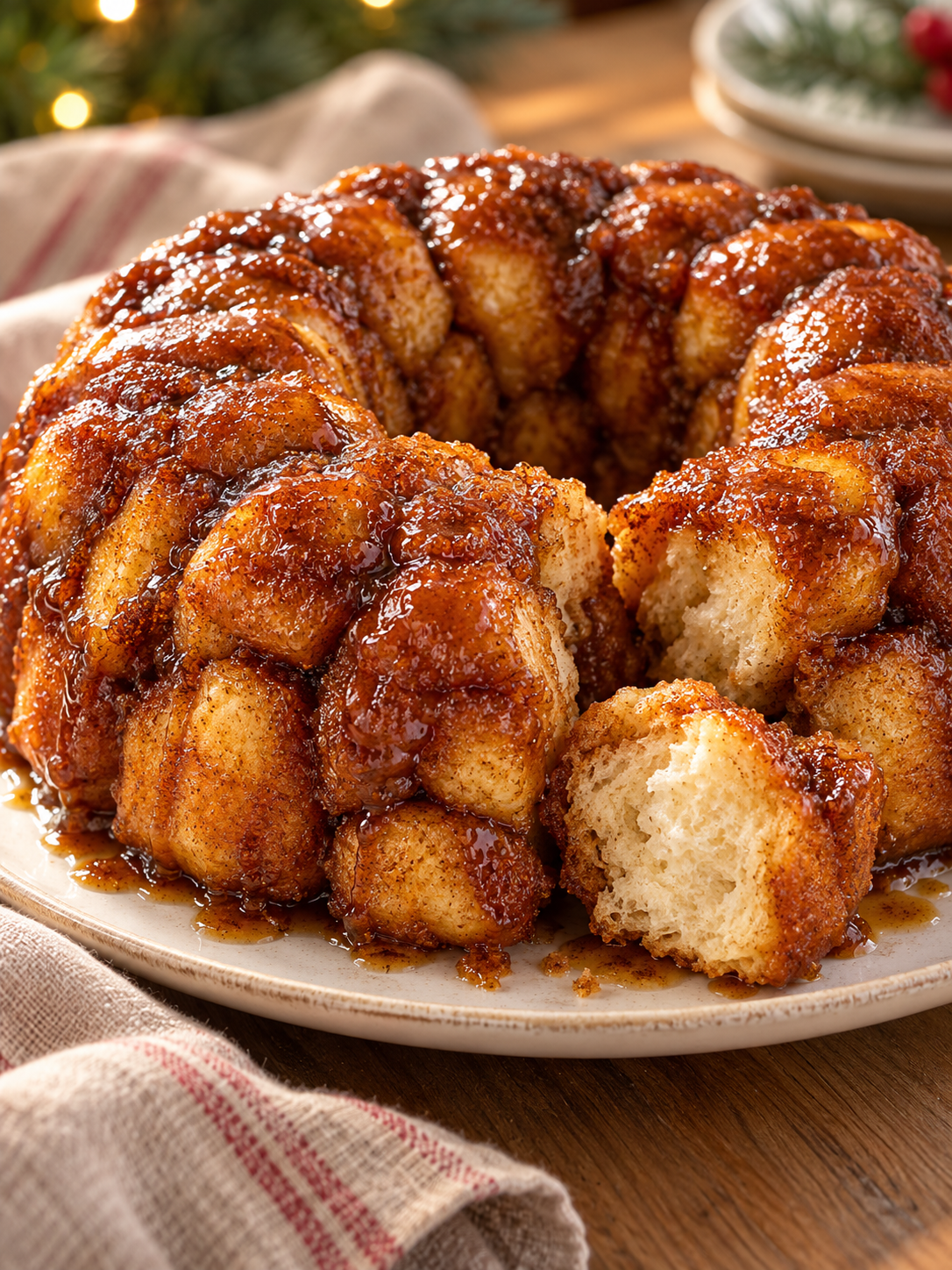
Homemade monkey bread should mean more than canned biscuit pieces in cinnamon sugar. This working Christmas-brunch version starts with a soft yeasted dough, divides it into small pieces, coats each in butter and cinnamon sugar, then layers them in a Bundt pan under a brown-sugar butter glaze. It needs two rises, a full bake and a careful inversion while the glaze is warm. The 12 portions and 200-minute planning total are not kitchen-tested; the dough’s rise and fully baked center decide when it is ready.
Jump to ingredients · Jump to method
What makes the pull-apart structure?
Small pieces of yeast dough are coated separately before being stacked loosely in a greased ring pan. The cinnamon sugar creates sweet seams between them, while the final brown-sugar butter mixture moves between some of the gaps during baking. Pieces should rise against one another but still pull apart after inversion. The dough needs time to double once in the bowl and become puffy again in the pan; it is not an instant breakfast just because oven time is under an hour.
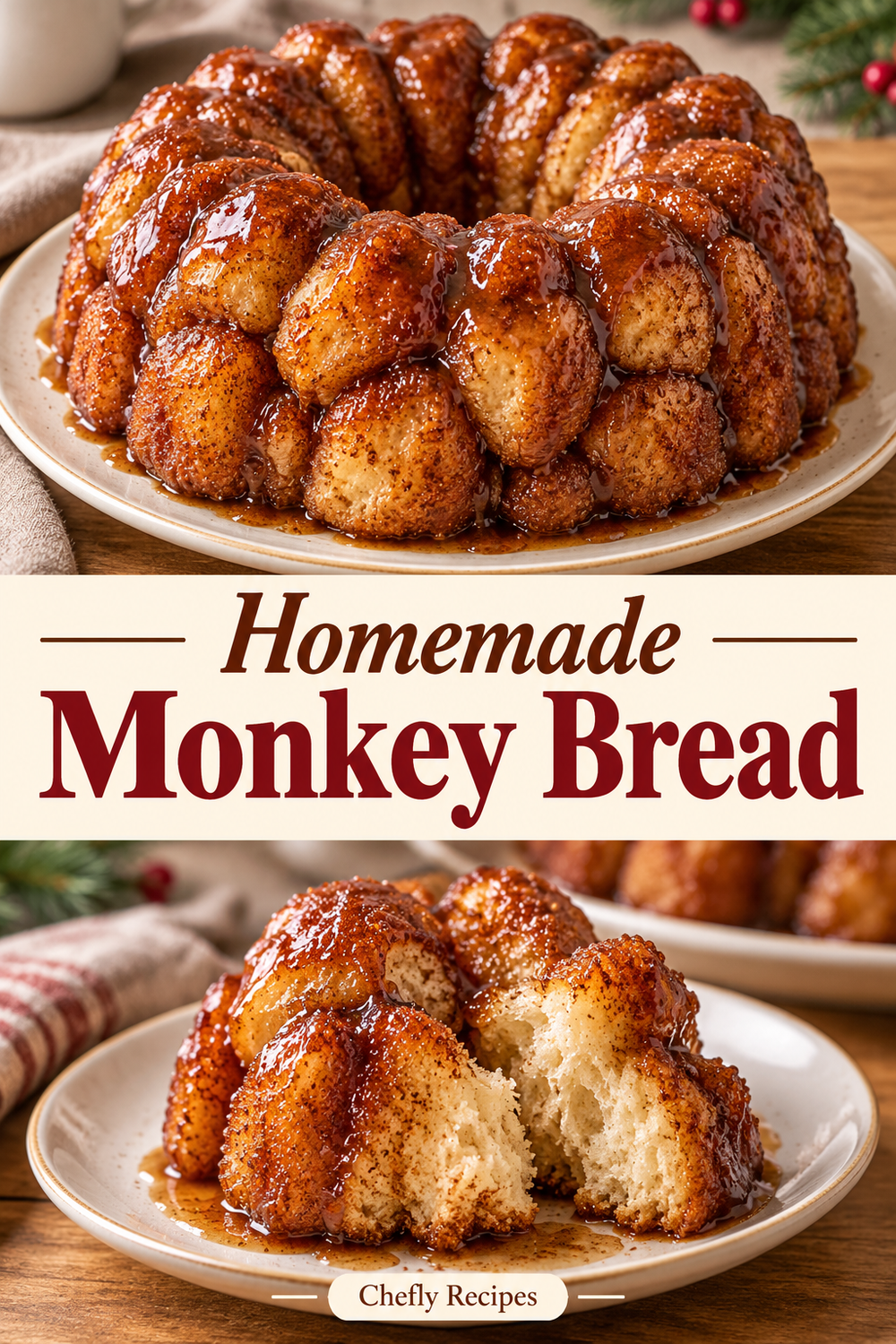
Keep the butter measures distinct. Four tablespoons go into the dough, four tablespoons coat pieces before cinnamon sugar, and a final four tablespoons warm with brown sugar for the glaze. The total is 12 tablespoons, but dumping them into one bowl would not produce the same layers. A teaspoon of neutral oil greases the Bundt pan; no canned dough, cream-cheese icing or chopped nuts are part of this base.
Ingredients for one working Bundt ring
| Ingredient | Amount | Use |
|---|---|---|
| All-purpose flour | 3 cups | Soft yeasted dough; measure consistently. |
| Instant yeast | 2 1/4 tsp | Mix with dry ingredients. |
| Granulated sugar, for dough | 1/4 cup | Mix into dough. |
| Fine salt | 1 tsp | Balances sweetness. |
| Pasteurized whole milk, warm but not hot | 3/4 cup | Wet dough ingredient. |
| Large egg | 1 | Binder; do not taste raw dough. |
| Unsalted butter, melted for dough | 4 tbsp | Cool slightly before mixing. |
| Neutral oil for pan | 1 tsp | Grease a 10- to 12-cup Bundt pan. |
| Granulated sugar, for coating | 1/2 cup | Mix with cinnamon separately. |
| Ground cinnamon | 2 tsp | Separate coating. |
| Unsalted butter, melted for coating | 4 tbsp | Dip dough pieces before sugar. |
| Light brown sugar, packed | 1/2 cup | Warm with final butter for glaze. |
| Unsalted butter, melted for glaze | 4 tbsp | Separate from dough and coating butter. |
Use a large mixing bowl or stand mixer, two shallow coating bowls, a small saucepan, a 10- to 12-cup Bundt pan and a rimmed sheet underneath it to catch possible drips. Have oven mitts and a heat-safe plate ready for inversion. The batter is a yeast dough, not a pourable cake batter; if it is very stiff or excessively sticky with the specified flour and milk, record the actual measures before changing them blindly.
Knead, rise, coat and bake
- Make the dough. Whisk flour, instant yeast, quarter cup granulated sugar and salt. Add warm milk, egg and the first four tablespoons of melted butter once it has cooled slightly. Knead about eight to ten minutes until smooth, elastic and a little tacky. Cover and let rise in a suitable warm place until roughly doubled, around 60 minutes as a working figure. Do not taste raw dough; see the FDA’s flour-safety advice.
- Prepare the coating. Grease the Bundt pan with the teaspoon of neutral oil, including its center tube and crevices. Mix the separate half cup of granulated sugar with two teaspoons of cinnamon. Melt the separate four tablespoons butter for dipping.
- Build the ring. Divide risen dough into about 40 similar pieces and roll loosely. Dip each lightly in coating butter, then roll in cinnamon sugar and layer around the pan. Do not compress into a solid mass. Gently warm the half cup brown sugar with the final four tablespoons melted butter until combined, then pour it evenly over the pieces.
- Rise again. Cover the pan and let the pieces become puffy, about 40 minutes in the working plan. Start heating the oven to 350°F (175°C) near the end of the rise. A cold kitchen may require a longer proof; watch the dough rather than forcing it into the oven on a fixed clock.
- Bake through. Place the Bundt pan on a rimmed sheet. Bake an estimated 35–45 minutes, tenting loosely with foil if the top browns before the center is ready. Check an inner piece near the center tube for fully baked crumb without wet raw dough. The surface alone cannot show whether the packed center has baked.
- Rest and invert. Let stand about ten minutes in the pan, then carefully invert onto a heat-safe serving plate using mitts. Hot butter-sugar glaze can spill and burn; do not let children handle the inversion. Pull apart into twelve working portions and serve warm.
The conservative development total is 200 minutes: about 45 minutes active mixing, kneading and coating; up to 45 minutes oven baking; a 60-minute first rise, 40-minute second rise and ten-minute pan rest. Some active preparation overlaps with proofing, but not every kitchen will proof in that time. Measure actual yield and center doneness in a kitchen test before shortening the advertised clock.
Substitutions are separate formulas
Active dry yeast may require different handling from instant yeast and a fresh timing test. Using canned biscuits would no longer be this homemade yeasted-dough recipe. A dairy-free milk and butter alternative changes dough enrichment and glaze behavior; egg also remains in the base. A quick powdered-sugar icing, cream cheese or nuts would add ingredients and allergens not listed here and should not appear in a photograph of this draft.
A loaf pan or small Bundt might overflow; use the specified 10- to 12-cup capacity and put a sheet underneath. Doubling this formula needs more pan space and a new center bake test, not simply twice the minutes.
What to check when it fails
Dense pieces: confirm the yeast is active, the milk is warm rather than hot and the dough has visibly risen at both stages. Dark top, raw center: tent and continue baking, checking inner dough rather than the crust. Sticks to pan: grease the tube and contours thoroughly and rest ten minutes before inverting, but do not leave it until the glaze hardens. Sugar pools on the plate: use the measured coating butter and glaze, and check whether pieces were dipped too heavily or compressed in the pan.
Serving and storage
Monkey bread fits a sweet brunch table next to a savory option such as Chefly’s existing Mushroom and Swiss Sheet Pan Omelette. The omelette is a separate dish, not part of the bread’s nutritional serving. Let the bread cool enough to handle, but serve while pull-apart seams are tender. Keep a clean utensil available rather than encouraging many guests to tear pieces from one sticky ring with unwashed hands.
Cool leftovers and store covered; the actual quality after refrigeration or freezing has not been tested for this formula, so no fixed soft-texture window is promised. Rewarming can loosen the glaze, which becomes hot enough to burn; a reheated sample needs testing before posting instructions. Do not leave enriched bread with egg and milk in a warm, covered pan for an overnight make-ahead claim without a validated procedure.
Monkey bread questions
Can I use canned biscuit dough?
Not while calling it this from-scratch formula. Canned pieces would have a different texture, ingredient list, rise and bake. Develop that as a separate shortcut variation if desired.
How many dough pieces should I cut?
Around 40 similar pieces from one dough batch is a working portioning target. Uneven large chunks may stay doughy after the smaller ones bake; weigh or compare pieces in a test.
When should it leave the Bundt pan?
After about ten minutes of pan rest in this untested method, using mitts and a heat-safe plate. Invert with care because hot syrup can spill. If it sticks or the glaze sets too fast, revise the measured rest time from an actual trial.
Recipe-card handoff: Thirteen ingredients with three separate butter uses, six steps, two rises and the full pan-rest allowance match the portable recipe object. This local preview is not a native Tasty Recipes card. Numerical nutrition is not calculated.
Print
Homemade Monkey Bread
- Total Time: 200 minutes
- Yield: 12 servings 1x
Description
From-scratch yeasted dough balls dipped in butter and cinnamon sugar, layered in a Bundt pan with brown-sugar butter glaze.
Ingredients
- 3 cups All-purpose flour
- 2 1/4 teaspoons Instant yeast
- 1/4 cup Granulated sugar, for dough
- 1 teaspoon Fine salt
- 3/4 cup Pasteurized whole milk, warm but not hot
- 1 egg Large egg
- 4 tablespoons Unsalted butter, melted for dough
- 1 teaspoon Neutral oil for greasing pan
- 1/2 cup Granulated sugar, separate cinnamon coating
- 2 teaspoons Ground cinnamon
- 4 tablespoons Unsalted butter, melted for coating
- 1/2 cup Light brown sugar, packed for glaze
- 4 tablespoons Unsalted butter, melted for glaze
Instructions
- Whisk flour, instant yeast, 1/4 cup granulated sugar and salt. Add warm milk, egg and 4 tablespoons cooled melted butter. Knead 8–10 minutes until smooth and elastic yet slightly tacky. Cover and let rise in a suitable warm place until approximately doubled, about 60 minutes as a working estimate.
- Grease a 10- to 12-cup Bundt pan with 1 teaspoon neutral oil. Mix separate 1/2 cup granulated sugar with 2 teaspoons cinnamon in a bowl; melt separate 4 tablespoons butter for coating. Divide risen dough into approximately 40 similar pieces, roll each, dip lightly in coating butter and then in cinnamon sugar, and layer evenly in the pan.
- Gently warm 1/2 cup packed brown sugar with the final 4 tablespoons melted butter until combined; pour evenly over the dough pieces. Cover and let rise until puffy, about 40 minutes as a development estimate. Heat oven to 350 F (175 C) near the end of the second rise.
- Set Bundt pan on a rimmed sheet to catch any drips. Bake approximately 35–45 minutes, tenting loosely with foil if top browns ahead of the center, until inner dough pieces are fully baked with no wet raw streaks. Check the center, not only the crust, and record actual bake in a kitchen test.
- Rest in pan about 10 minutes, then carefully invert onto a heat-safe serving plate using oven mitts; hot butter-sugar glaze can burn. Divide into 12 working portions and serve warm.
Notes
Recipe-development draft; not kitchen-tested. Timing and yield are estimates. Nutrition has not been calculated.
Additional chilling, resting or cooling time: 110 minutes, included in the total.
Development allowance: about 60-minute first rise, 40-minute second rise, 10-minute pan cooling, up to 45-minute bake and 45-minute active mix/knead/coating. Yeast and kitchen conditions may make proof longer; center-doneness and risen dough override the clock.
- Prep Time: 45 minutes
- Chilling, resting or cooling: 110 minutes
- Cook Time: 45 minutes
Nutrition
- Serving Size: One twelfth of a finished Bundt ring; actual pulled portion and cooked mass not measured