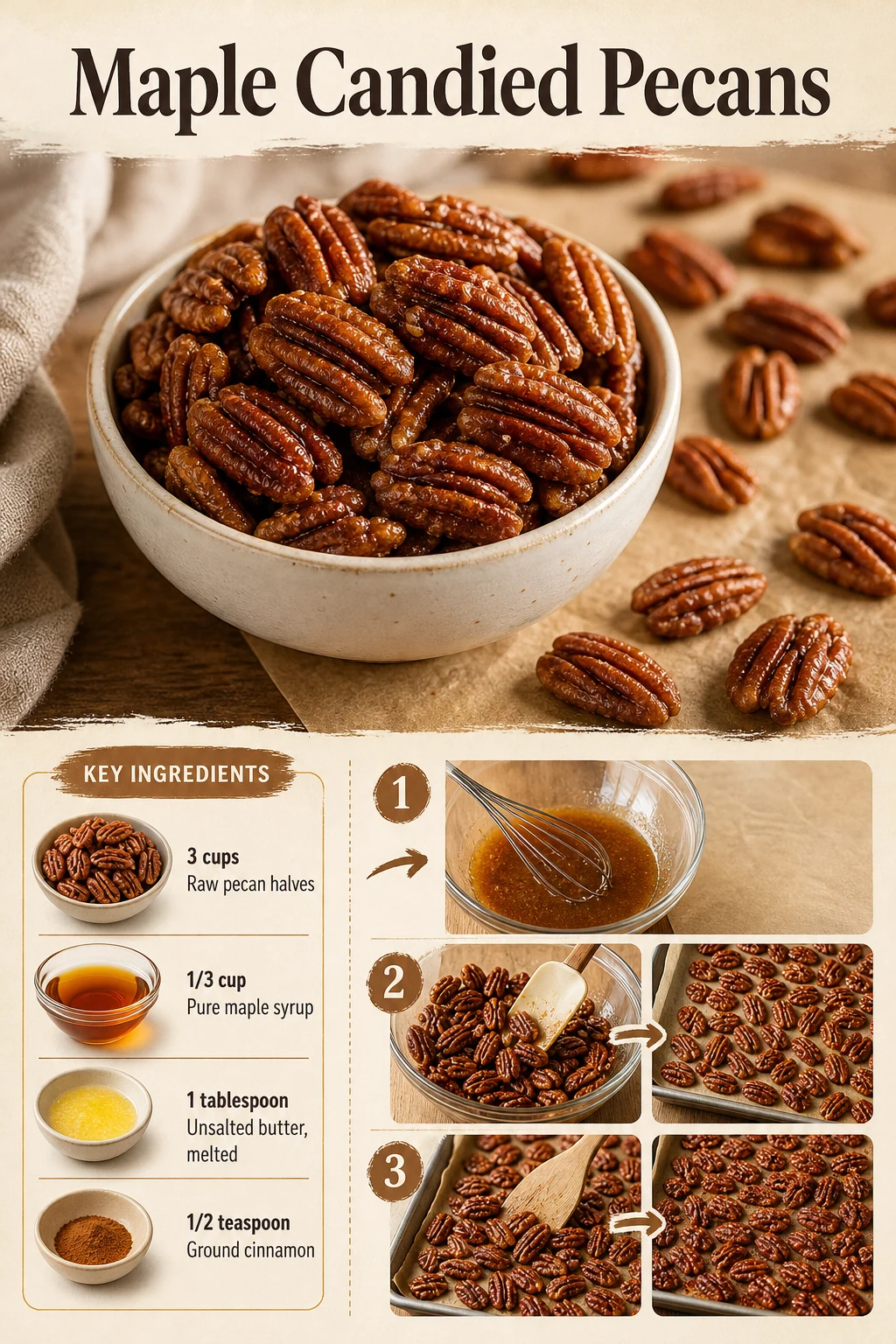
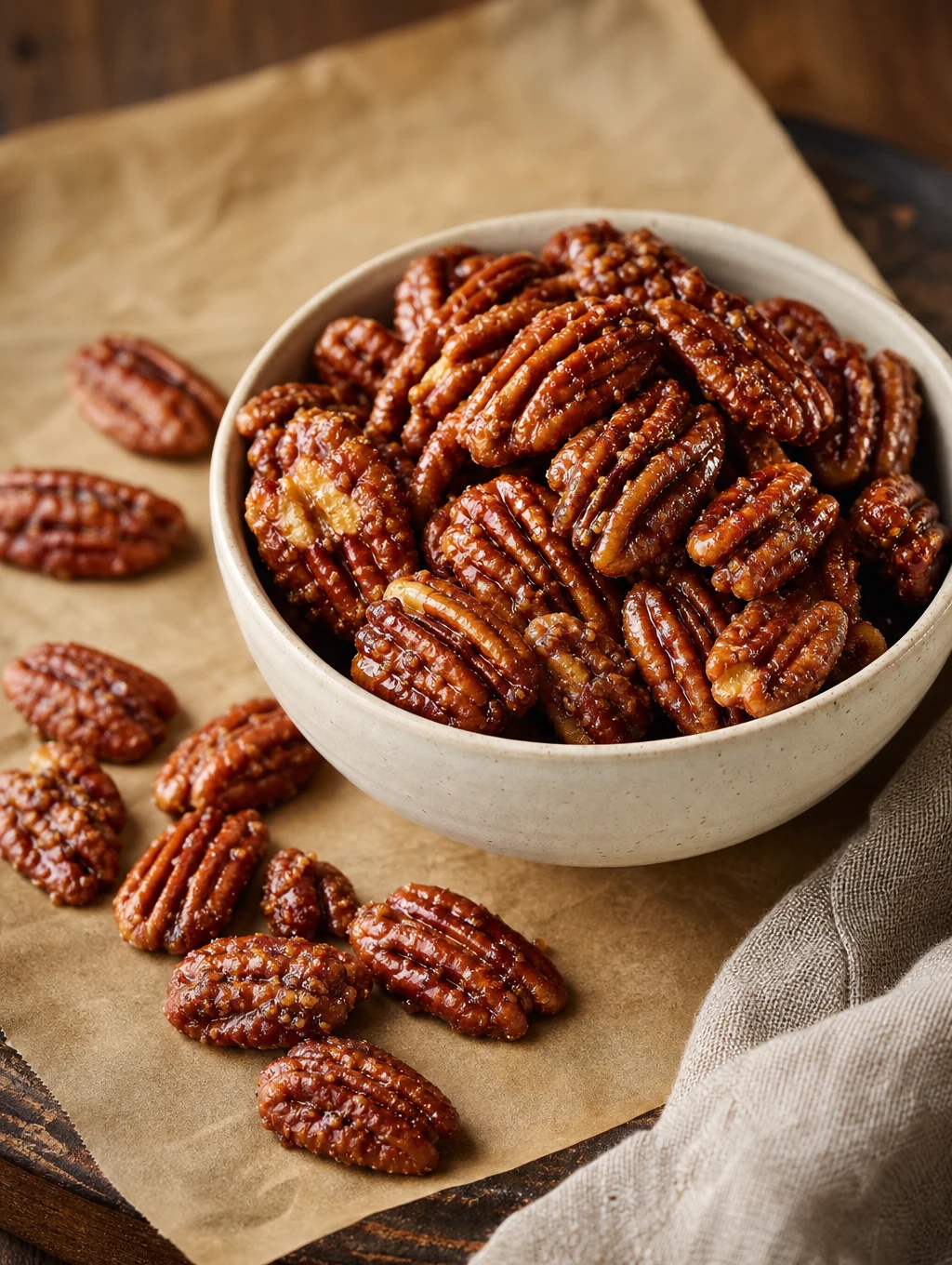
Maple candied pecans are a small-batch holiday snack with a thin cinnamon-maple coating rather than a thick candy shell. This working recipe tosses raw pecan halves in syrup, a little butter and salt, then roasts them in one layer so the glaze can cling to the nuts. Let them cool before deciding whether the coating has set: a hot pecan can feel sticky even when the finished batch will separate. The oven timing and gift-packaging performance still need a kitchen trial.
Jump to ingredients · Jump to method
What makes this batch useful for holiday hosting
There are only five measured ingredients, and none requires a candy thermometer. Pecans bring their own deep, buttery flavor; pure maple syrup supplies the coating rather than an added brown-sugar syrup. Cinnamon is restrained so the nuts can sit beside cheeses or fruit as well as on a dessert table. The entire proposed batch starts with three cups of raw pecan halves, a practical quantity for one roomy rimmed sheet. If your tray is smaller, use two trays rather than piling glazed nuts into a mound.
This is an oven recipe, not a no-bake snack. The syrup needs heat and then a full cooling period to change texture. A comparison, Dorie Greenspan’s candied cocktail nuts, roasts a mixed-nut, thyme-and-chile mixture with maple and brown sugar. This draft is deliberately a simpler pecan-only, cinnamon-forward formulation; that reference does not establish its exact oven time or its eventual shelf life.
One earlier calendar idea is a maple-pecan cookie. The reader intent here is different: loose coated nuts that can be sprinkled, served in a bowl or, after testing, packed as an edible gift. Do not turn this into a second cookie page simply because both contain pecans and maple. The connected site search found no exact-title pecan post, though a full-body duplicate check is still needed before assigning a new URL.
Five ingredients and one large sheet
| Ingredient | Amount | Why it is here |
|---|---|---|
| Raw pecan halves | 3 cups | Whole halves make a recognizably pecan-centered snack. |
| Pure maple syrup | ⅓ cup | Coats the ridges; use syrup, not maple-flavored pancake topping. |
| Unsalted butter, melted | 1 tbsp | Helps distribute the syrup and rounds out the glaze. |
| Ground cinnamon | ½ tsp | A modest warm spice note. |
| Fine salt | ¼ tsp | Balances the sweetness. |
Use a rimmed sheet to keep the nuts from sliding into the oven and parchment to catch the glaze. A wide bowl makes coating easier than stirring on the pan. Have a flexible spatula ready for the halfway toss. If the glaze collects in a puddle under one group of nuts, spread those pieces into open space. The first trial should record the sheet dimensions, since a crowded pan can change the coating more than a one- or two-minute adjustment in roast time.
Coat, roast and cool
- Prepare the sheet. Heat the oven to 325°F and line a large rimmed baking sheet with parchment. Leave enough flat space for the coated halves to lie mostly in one layer.
- Make a thin glaze. Whisk one-third cup pure maple syrup, one tablespoon melted unsalted butter, half a teaspoon ground cinnamon and a quarter teaspoon fine salt in a large bowl. Add three cups raw pecan halves and toss until the glaze reaches the curved and cut sides.
- Roast with room to separate. Spread the nuts onto the parchment and scrape over remaining glaze. Roast approximately 20 to 25 minutes, stirring and redistributing at the halfway point. Watch closely toward the end. The nuts should smell toasted and the coating should cling rather than pool; pull the pan if the syrup darkens rapidly.
- Let the coating finish setting. Spread hot pecans apart with the spatula and cool on the parchment for approximately 30 minutes. Break any clusters gently after cooling. Count or measure the finished nuts before claiming a certain number of jars or servings.
The development total is 65 minutes: ten to prepare, up to 25 in the oven and 30 to cool. You can start tidying during the roast, but the cooling step is part of making a manageable snack rather than an optional garnish. If a first test still feels tacky after the full cooling period, note the room humidity, pan crowding and syrup pooling before changing several variables at once. The formula is not yet a proven crisp, shelf-stable confection.
Adjustments worth testing separately
For a more savory bowl, try a tiny amount of cayenne in a separate half-batch, then compare it against the cinnamon-only base. Pepper does not belong in the base recipe or the first visual prompts. For a different tree nut, a new bake test is required; walnuts and almonds do not have the same size or surface. Replacing butter with another fat also changes flavor and could change how the glaze behaves. Do not call the untested substitution vegan, dairy-free or allergen-free without checking every product and the result.
Want smaller clusters for a crumble? Chop the pecans only after they have cooled. Starting with chopped nuts changes surface area and could over-darken the small pieces on the proposed schedule. If the goal is a neatly packaged edible gift, make and inspect one trial batch first: verify that the coating does not glue the nuts together, stain a paper bag or soften after packing. A pretty jar photograph cannot substitute for that holding test.
Troubleshooting the first trial
The glaze pools. Spread the nuts farther apart while the syrup is still mobile. A pooled puddle may become a brittle patch rather than an even coating. Next time use a larger sheet or split the batch.
Some nuts darken too fast. Pecans on pan edges may color before those in the middle. Turn the tray and stir halfway, then remove the pan when the coating begins to deepen quickly. Do not rely only on a clock; oven calibration and sheet color matter.
They seem sticky while warm. Wait the full cooling period before judging texture. If the cooled batch remains tacky, record that honestly rather than describing it as crisp. A return to the oven might fix a specific batch, but it needs a measured retest before becoming published advice.
The finished amount differs from three cups. Three cups is the starting measure. Glaze, clustering and broken pieces can alter the final volume. The proposed twelve quarter-cup servings must be checked by measuring the cooled batch, not inferred from the raw bag.
Serving and storing
Serve a small bowl alongside cheese, crisp apples or other holiday snacks. Scatter a few cooled, chopped pieces over yogurt, oatmeal or a slice of Chefly’s pumpkin banana loaf if its flavor pairing suits your menu. Keep the pecans out of a nut-free spread; the recipe contains pecans and milk from butter. This is a topping idea, not a claim that the linked loaf meets a special diet.
For the trial, let the nuts cool completely before transferring them to a clean airtight container. Label the batch date, monitor whether the coating stays separate and check quality before offering it as a gift. Exact room-temperature storage and shipping claims have not been established for this new formula; do not print a shelf-life label yet. If the nuts are to be mixed into other foods, follow the storage needs of the finished dish, not the nut bowl.
Questions before you bake
Can I use roasted pecans?
This schedule is designed around raw halves. Already roasted nuts could darken or taste overdone during a full second roast. If that is what you have, test a smaller batch at shorter intervals rather than treating the timing as interchangeable.
Does maple syrup make them hard like candy?
Not necessarily. The proposed glaze is relatively thin and does not use a thermometer or cooked sugar stage. Expect a coated, separated nut as the target, not a guaranteed brittle candy shell. The exact finish depends on the trial.
Can I prepare gift bags now?
Wait until a cooled test batch has been stored in the intended package and checked for tackiness and flavor. The draft provides a useful gift concept, not validated packaging or shelf-life instructions.
Recipe-card handoff — preview, not a native plugin card
Maple Candied Pecans. Yield: provisionally twelve quarter-cup portions from three cups raw nuts; measure cooled volume. Prep 10 minutes; oven 25 minutes; cooling 30 minutes; total approximately 65 minutes. Method: oven. Contains pecans and milk. Not kitchen-tested; nutrition not calculated.
Ingredients: 3 cups raw pecan halves; ⅓ cup pure maple syrup; 1 tbsp melted unsalted butter; ½ tsp ground cinnamon; ¼ tsp fine salt.
Instructions: Heat oven to 325°F and line a large rimmed sheet with parchment. Whisk syrup, butter, cinnamon and salt; toss with pecans. Spread in one layer and roast about 20–25 minutes, stirring and redistributing halfway, until fragrant and glaze clings without rapidly darkening. Spread apart; cool approximately 30 minutes before measuring, serving or packing. Test coating, actual yield and storage behavior before publishing.
Print
Maple Candied Pecans
- Total Time: 65 minutes
- Yield: 12 servings 1x
Description
Pecan halves coated with pure maple syrup, a little butter, cinnamon and salt, roasted on parchment and cooled separately.
Ingredients
- 3 cups Raw pecan halves
- 1/3 cup Pure maple syrup
- 1 tablespoon Unsalted butter, melted
- 1/2 teaspoon Ground cinnamon
- 1/4 teaspoon Fine salt
Instructions
- Heat oven to 325°F. Line a large rimmed baking sheet with parchment. In a large bowl, whisk ⅓ cup pure maple syrup, 1 tbsp melted unsalted butter, ½ tsp cinnamon and ¼ tsp fine salt.
- Add 3 cups raw pecan halves and toss thoroughly until all are coated. Spread in one uncrowded layer on the prepared sheet, pouring over any remaining glaze.
- Roast about 20 to 25 minutes, stirring and spreading the nuts again halfway through. Watch the last several minutes for a fragrant toasted aroma and glaze that clings rather than pools; stop if the syrup begins to darken rapidly.
- Spread the hot pecans apart on the parchment and cool approximately 30 minutes until the coating firms. Break apart clusters gently. Measure the cooled yield and check whether the coating remains tacky in the kitchen trial.
Notes
Recipe-development draft; not kitchen-tested. Timing and yield are estimates. Nutrition has not been calculated.
Additional chilling, resting or cooling time: 30 minutes, included in the total.
Untested estimate: 10-minute preparation, up to 25-minute roast, 30-minute cooling. Actual coating and oven behavior may change bake and cooling time.
- Prep Time: 10 minutes
- Chilling, resting or cooling: 30 minutes
- Cook Time: 25 minutes
Nutrition
- Serving Size: Approximately ¼ cup from a three-cup starting batch; final coated volume and count pending