
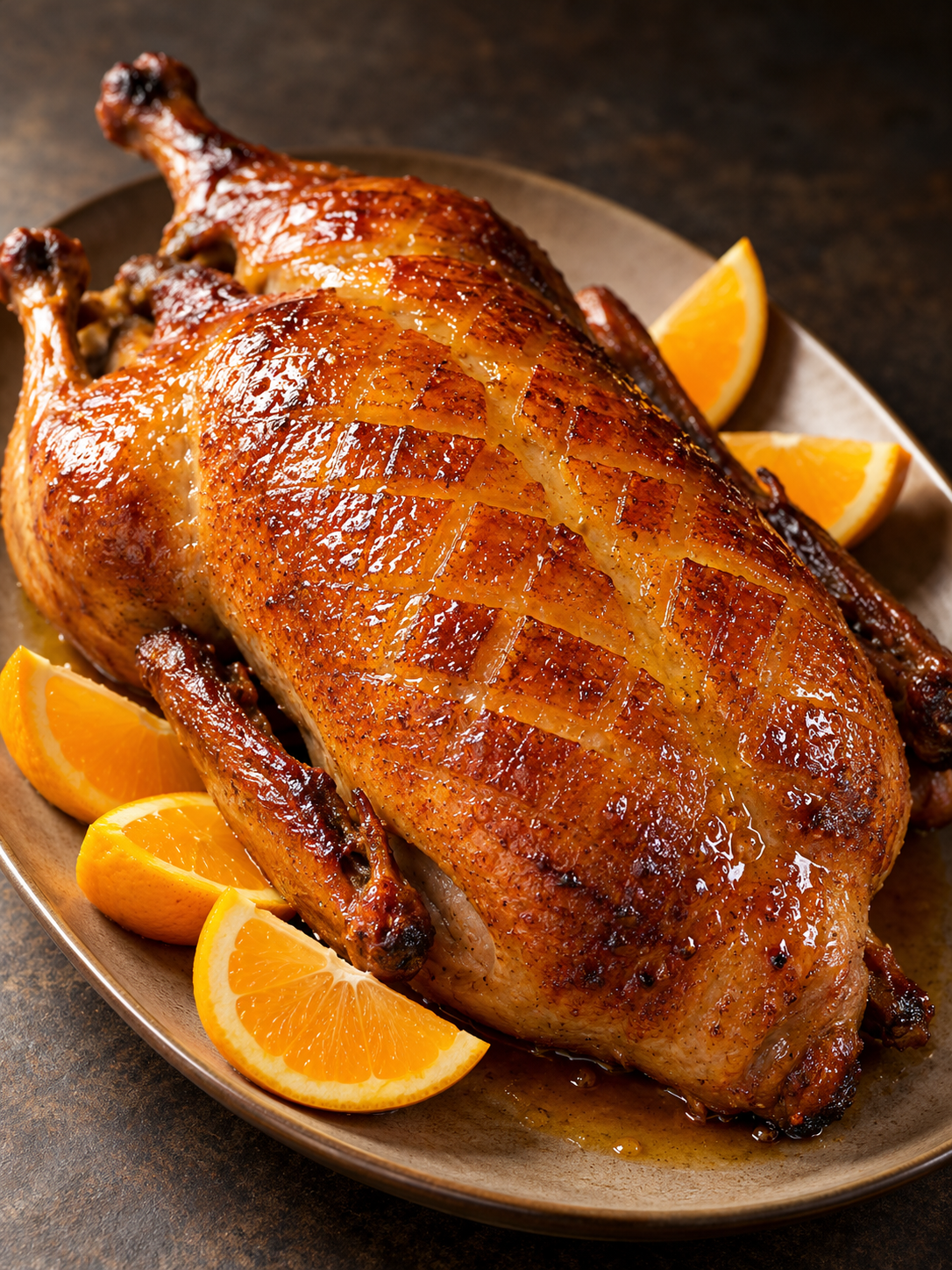
Orange Glazed Roast Duck. A whole roast duck with scored skin and a late orange-marmalade glaze for a small holiday table. The formula and timing below are working estimates for a future kitchen trial, not a claim that a batch has been made.
Jump to ingredients · Jump to method
A small-table orange roast
One whole duck with scored skin and a late marmalade-orange glaze makes a distinct holiday centerpiece from the prior day's small Cornish hens. Four portions are a working plan, not a measured edible yield.
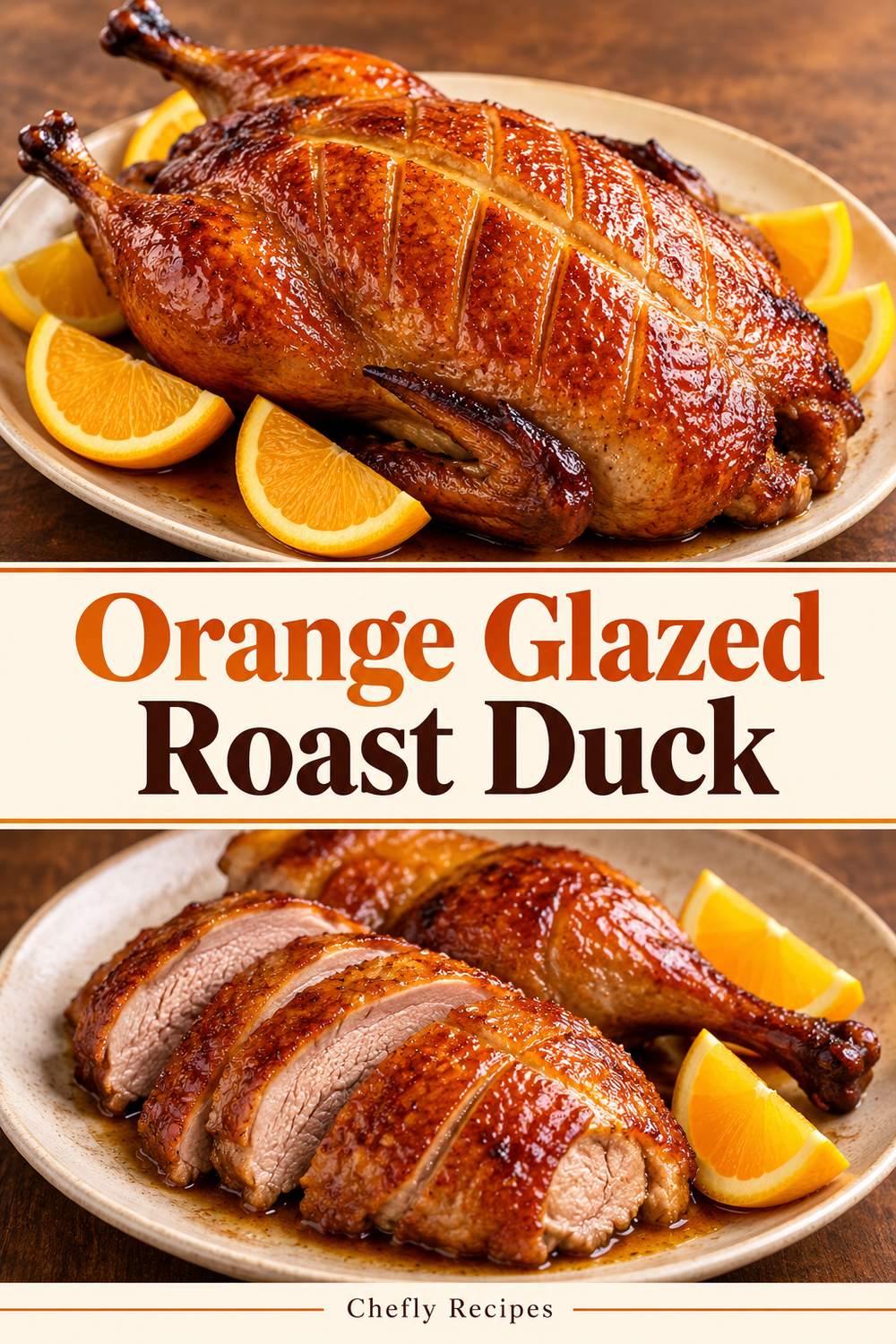
Duck fat renders during roasting; a rack and cautious fat management help the skin brown. The recipe has not been kitchen-tested, so actual timing and glaze color remain open.
Score skin, not flesh
Pat the fully thawed bird dry and score only through skin and fat. Cuts into the meat can release juices and change cooking. Remove giblets and keep raw-poultry prep separate from ready-to-eat food.
Season simply before roasting. The orange marmalade, juice, vinegar and zest are a measured glaze, not a marinade added from the start.
Ingredients for 4 portions
| Ingredient | Amount | Use |
|---|---|---|
| Whole duck, thawed and giblets removed | 1 4- to 5-pound duck | Pat dry. |
| Fine salt | 1 1/2 teaspoons | Season skin and cavity lightly. |
| Freshly ground black pepper | 1/2 teaspoon | Season duck. |
| Orange marmalade | 1/3 cup | Glaze. |
| Fresh orange juice | 1/4 cup | Glaze. |
| Apple cider vinegar | 1 tablespoon | Glaze balance. |
| Fresh orange zest | 1 teaspoon | Glaze. |
Step-by-step method
- Heat oven to 350°F. Remove giblets from one fully thawed 4- to 5-lb duck and pat dry. Score only the skin and fat in a shallow crosshatch on the breast, without cutting into flesh. Season with 1 1/2 tsp salt and 1/2 tsp pepper; place breast-side up on a rack in a roasting pan.
- Roast approximately 90 minutes, carefully spooning accumulated fat from the pan as needed so it does not smoke. Handle the hot fat cautiously and save or discard only according to your kitchen's normal practice. In a small saucepan warm 1/3 cup orange marmalade with 1/4 cup orange juice, 1 tbsp cider vinegar and 1 tsp orange zest until brushable.
- Brush duck with glaze for the final approximately 20–30 minutes. Check both thickest breast and innermost thigh away from bone; continue roasting until every measured poultry location reaches 165°F. Shield browned skin loosely if glaze darkens before the interior is done.
- Rest the duck fifteen minutes before carving into approximately four portions. Measure actual cooked edible yield, rendered fat, skin texture, glaze browning and time during a kitchen trial.
Roast before glazing
Start at 350°F on a rack. Drain or spoon away rendered fat carefully if it accumulates and smokes, avoiding spills of hot fat. The first approximately ninety minutes are only an estimate.
Good Food has a marmalade-glazed roast duck reference. This version applies its own small orange-vinegar glaze late, when it is less likely to burn over the entire roast.
Thermometer before carving
Brush the glaze in the last twenty to thirty minutes and check breast and inner thigh away from bone. The FDA poultry endpoint is 165°F; color and a two-hour clock cannot substitute for it.
If the glaze becomes too dark before the interior reaches temperature, shield loosely with foil and keep cooking. Rest fifteen minutes before carving.
Serve and assess leftovers
Carve on a board that has not touched raw duck. A simple roasted vegetable side can be served separately; it is not in this card or included in the timing.
No exact storage, rendered-fat yield or portion size has been verified for the proposed bird. Record edible meat weight and cooling in the trial before promising leftover portions.
Roast duck questions
Why glaze toward the end?
The sugar-rich marmalade can darken during a long roast, so it is brushed on late.
Is this the Cornish hen recipe?
No. This is one larger whole duck with rendered fat and orange glaze.
What determines doneness?
Measured 165°F in representative thick breast and inner-thigh locations, not skin color.
Further reading and related Chefly recipes: Good Food's marmalade-glazed roast duck; FDA safe food handling. These are relevant references and other dishes, not evidence that this proposed formula was tested.
Recipe-card handoff — preview, not a native plugin card
Orange Glazed Roast Duck. Category: Dinners. 4 portions. Prep approximately 25 minutes; cooking approximately 120 minutes; additional cooling/chilling approximately 15 minutes; total approximately 160 minutes excluding preheat. Not kitchen-tested; nutrition not calculated.
Ingredients: 1 4- to 5-pound duck Whole duck, thawed and giblets removed; 1 1/2 teaspoons Fine salt; 1/2 teaspoon Freshly ground black pepper; 1/3 cup Orange marmalade; 1/4 cup Fresh orange juice; 1 tablespoon Apple cider vinegar; 1 teaspoon Fresh orange zest.
Instructions: Heat oven to 350°F. Remove giblets from one fully thawed 4- to 5-lb duck and pat dry. Score only the skin and fat in a shallow crosshatch on the breast, without cutting into flesh. Season with 1 1/2 tsp salt and 1/2 tsp pepper; place breast-side up on a rack in a roasting pan. Roast approximately 90 minutes, carefully spooning accumulated fat from the pan as needed so it does not smoke. Handle the hot fat cautiously and save or discard only according to your kitchen's normal practice. In a small saucepan warm 1/3 cup orange marmalade with 1/4 cup orange juice, 1 tbsp cider vinegar and 1 tsp orange zest until brushable. Brush duck with glaze for the final approximately 20–30 minutes. Check both thickest breast and innermost thigh away from bone; continue roasting until every measured poultry location reaches 165°F. Shield browned skin loosely if glaze darkens before the interior is done. Rest the duck fifteen minutes before carving into approximately four portions. Measure actual cooked edible yield, rendered fat, skin texture, glaze browning and time during a kitchen trial.
Allergens: Check duck and marmalade labels for added ingredients and cross-contact. Review packaged ingredients and cross-contact before serving.
Print
Orange Glazed Roast Duck
- Total Time: 160 minutes
- Yield: 4 servings 1x
Description
One whole orange-glazed roast duck, carved into approximately four portions.
Ingredients
- 1 4- to 5-pound duck Whole duck, thawed and giblets removed
- 1 1/2 teaspoons Fine salt
- 1/2 teaspoon Freshly ground black pepper
- 1/3 cup Orange marmalade
- 1/4 cup Fresh orange juice
- 1 tablespoon Apple cider vinegar
- 1 teaspoon Fresh orange zest
Instructions
- Heat oven to 350°F. Remove giblets from one fully thawed 4- to 5-lb duck and pat dry. Score only the skin and fat in a shallow crosshatch on the breast, without cutting into flesh. Season with 1 1/2 tsp salt and 1/2 tsp pepper; place breast-side up on a rack in a roasting pan.
- Roast approximately 90 minutes, carefully spooning accumulated fat from the pan as needed so it does not smoke. Handle the hot fat cautiously and save or discard only according to your kitchen's normal practice. In a small saucepan warm 1/3 cup orange marmalade with 1/4 cup orange juice, 1 tbsp cider vinegar and 1 tsp orange zest until brushable.
- Brush duck with glaze for the final approximately 20–30 minutes. Check both thickest breast and innermost thigh away from bone; continue roasting until every measured poultry location reaches 165°F. Shield browned skin loosely if glaze darkens before the interior is done.
- Rest the duck fifteen minutes before carving into approximately four portions. Measure actual cooked edible yield, rendered fat, skin texture, glaze browning and time during a kitchen trial.
Notes
Recipe-development draft; not kitchen-tested. Timing and yield are estimates. Nutrition has not been calculated.
Additional chilling, resting or cooling time: 15 minutes, included in the total.
Untested estimate: about two hours roasting plus fifteen-minute rest; bird size and measured 165°F endpoint override the clock.
- Prep Time: 25 minutes
- Chilling, resting or cooling: 15 minutes
- Cook Time: 120 minutes
- Category: Dinners
Nutrition
- Serving Size: One quarter of the carved duck, pending edible-yield measurement