
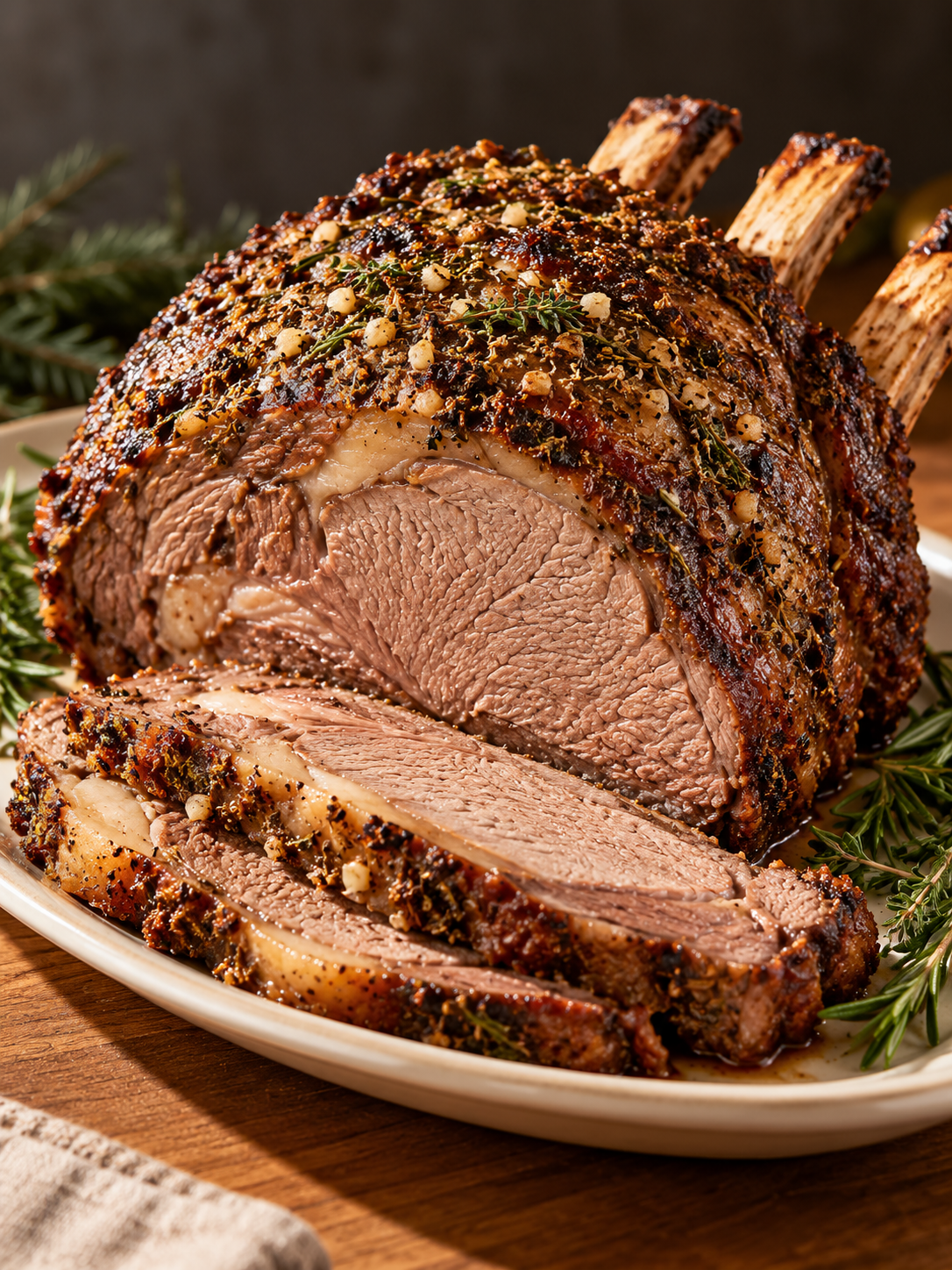
A prime rib roast in the oven needs a thermometer more than a promise of “minutes per pound.” This working recipe uses a roughly five-pound bone-in beef rib roast, a measured garlic-herb coating, a short 450°F start and a 325°F finish. The thickest meat must reach at least 145°F before a rest of at least three minutes under USDA guidance; this method gives it a 20-minute rest before carving. The roast has not been kitchen-tested, so cooking time, salt balance and eight portions are estimates to verify.
Jump to ingredients · Jump to method
A complete roast, not another rub page
Chefly already has a prime-rib-rub article and two related seasoning explainers. This proposal is a complete bone-in oven-roast method with a defined size, oven sequence, measured thermometer endpoint and carving plan, not a second article for the same spice blend. The existing rub page currently gives a 125°F finished roast instruction below the USDA beef-roast minimum. It is deliberately not linked from this draft; its body, FAQ and native card need correction before a reader is sent there for complementary seasoning advice.
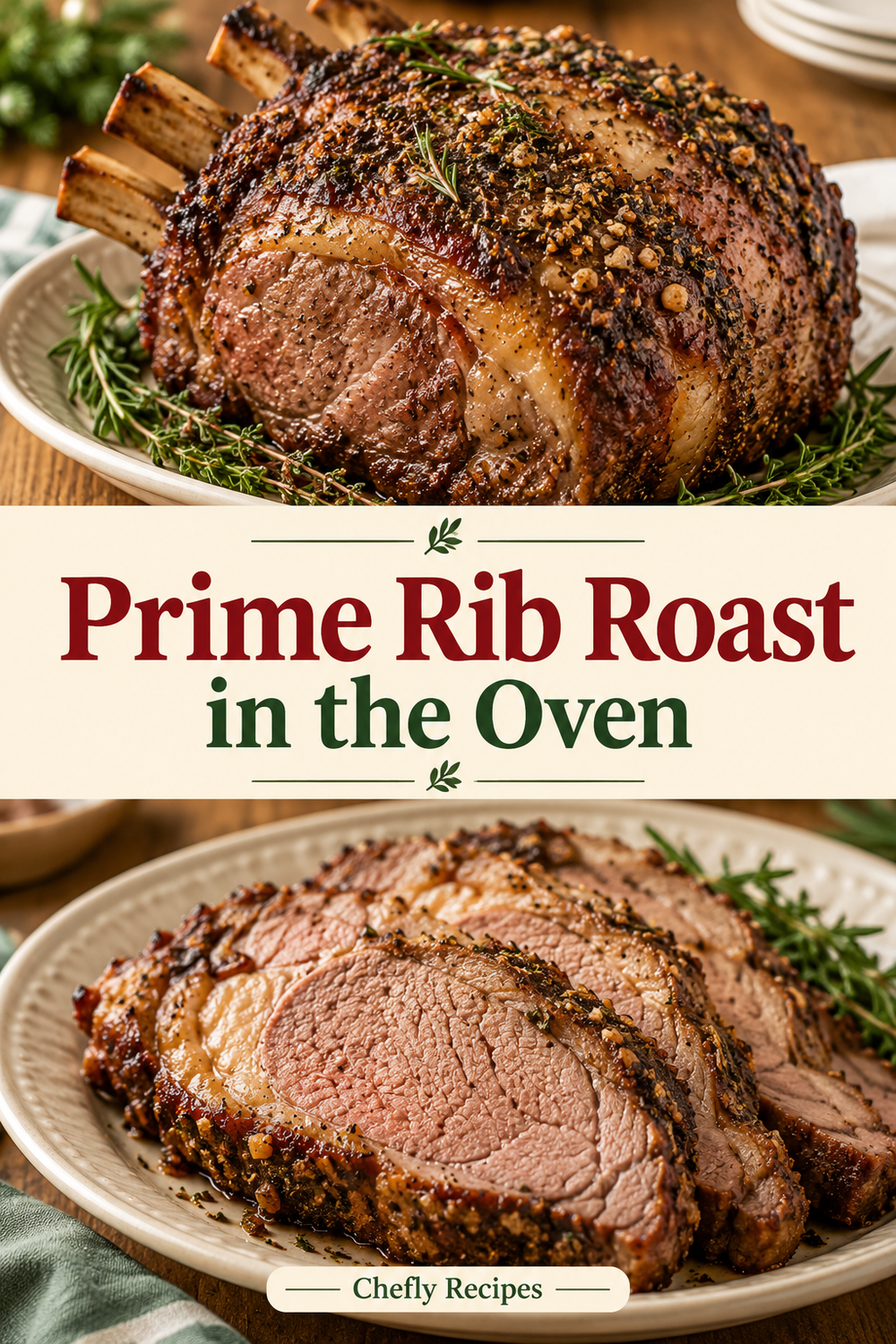
A “prime rib” name does not prove that the purchased roast has a USDA Prime grade. Ask the butcher for a bone-in beef rib roast around five pounds. Its shape, bone configuration and starting temperature affect oven time. Keep it refrigerated until preparation instead of treating a long room-temperature counter hold as a required safety or tenderness step.
Ingredients for eight working portions
| Ingredient | Amount | Use |
|---|---|---|
| Bone-in beef rib roast | About 5 lb | Bone weight is not edible serving weight; actual yield needs measurement. |
| Neutral oil | 2 tbsp | Helps seasonings adhere to the surface. |
| Kosher salt | 2 1/2 tsp | Record brand and crystal size for the test. |
| Coarsely ground black pepper | 2 tsp | Surface seasoning. |
| Fresh garlic, minced | 4 cloves | Distributed with oil rather than whole cloves under the roast. |
| Fresh rosemary, finely chopped | 1 tbsp | Herb coating. |
| Fresh thyme leaves | 1 tbsp | Herb coating. |
Have a roasting pan with rack, oven mitts, a clean instant-read or leave-in probe thermometer, and a carving board ready. Place the probe into thick meat without touching a bone or fat pocket. The mix is not the exact measured dry rub in Chefly’s existing article; do not transfer that article’s seasoning amounts or its unsafe roast endpoint here.
Roast with a hot start and a measured finish
- Preheat and season. Heat the oven to 450°F (about 230°C). Take the roast from refrigeration, pat exposed surfaces dry with disposable towels and wash hands/sanitize surfaces after handling raw beef. Mix oil, kosher salt, pepper, minced garlic, chopped rosemary and thyme. Rub the measured mixture evenly over the roast, then set it bone side down on a rack in a roasting pan.
- Start hot. Roast for 15 minutes at 450°F to begin browning the exterior. Lower the oven to 325°F (about 165°C) without moving the meat to a room-temperature counter. Watch the herbs so they do not burn; a loose foil tent may be needed if the surface darkens too fast.
- Finish by temperature. Continue roasting at 325°F. Begin checking well before the 150-minute total cooking allowance, because a five-pound roast’s diameter and oven can vary. Measure in several of the thickest edible areas, away from bones, fat and pan. The USDA safe-temperature chart specifies at least 145°F (63°C) with a minimum three-minute rest for beef roasts. Do not pull this roast at 125°F and claim it meets that standard.
- Rest and carve. Remove the roast once the thick centers reach at least 145°F. Tent loosely and rest for the proposed 20 minutes, which exceeds the three-minute safety rest. Carve away bones after resting and slice the cooked meat into eight working portions. Record actual cooked edible weight before asserting portion size or nutrition.
The development plan allows 25 minutes to prepare and preheat, up to 150 minutes oven cooking (15 at high heat, up to about 135 at lower heat), and 20 minutes resting: 195 minutes in total. Some prep overlaps preheating, while an oven that takes longer to heat or a differently shaped roast may change the real elapsed time. A thermometer reading, not the clock or the color of one outside slice, determines when to stop cooking.
About doneness and safety
The center at the stated USDA endpoint may look different from a restaurant’s lower-temperature serving style. This article does not claim that a 125°F or 130°F pull is USDA-compliant. A person may encounter alternative culinary preferences elsewhere, but they should not be substituted for the measured food-safety procedure in this draft. Make sure the probe is clean and the tip sits in meat rather than touching bone; check more than one point because a rib roast is not uniform.
Raw-beef juices must not contact ready-to-eat holiday sides. Use a cleaned carving board and utensils after cooking. Do not pour a raw-marinade bowl over finished slices. A salt brand with finer or denser crystals may make two and a half teaspoons taste different; kitchen-test the named brand before telling readers this seasoning is ideal for every roast.
Troubleshooting the first test
Top darkens before center reaches 145°F: loosely tent with foil and continue at the lower oven setting, checking the probe. Some readings lag: continue until all representative thick areas reach the endpoint; a thin outside section is not the center. Garlic tastes burnt: check where the minced pieces sit during the 450°F start and test a gentler placement or roast approach; do not quietly change the photo. Slices seem dry: verify actual temperature, probe location, rest and carve thickness in a controlled trial rather than promising an untested lower endpoint.
Serve with sides and handle leftovers
For a Christmas plate, pair the roast with Chefly’s existing crispy roast potatoes and green bean casserole with homemade mushroom sauce. These are separate side recipes with their own pending updates; they do not establish this roast’s timing or nutritional servings. A large family-style platter should be served promptly, not held without temperature control for an entire party.
Refrigerate leftovers promptly in shallow containers. The USDA leftovers guidance gives reheating to 165°F (74°C). Reheating will change the look and texture of the slices, so do not advertise a medium-rare leftover method that conflicts with the food-safety endpoint. Freeze or make-ahead techniques are not tested in this draft.
Prime rib questions
Can I follow the old rub article’s 125°F instruction?
No, not for the USDA-compliant method here. The published rub page still contains that lower-temperature instruction and needs editorial correction. This recipe requires at least 145°F in thick meat followed by at least three minutes of rest; the working rest is 20 minutes.
How long does a five-pound roast take?
Up to about 150 minutes of cooking is only a development allowance, not a fixed answer. Check early with a calibrated clean thermometer, because roast shape, bone structure, starting temperature and oven all matter. Add time rather than serving under the measured endpoint.
Do I need a USDA Prime-graded roast?
No grade is asserted by this title. The recipe describes a bone-in beef rib roast. Purchased grade, marbling and edible cooked yield should be recorded before nutrition or serving claims.
Recipe-card handoff: Seven measured ingredients, four complete steps, 145°F plus rest, eight working portions and all time components are mirrored in the portable recipe object. This local preview is not a native Tasty card. Numerical nutrition is omitted because bones, fat trimming and cooked yield are unmeasured.
Print
Prime Rib Roast in the Oven
- Total Time: 195 minutes
- Yield: 8 servings 1x
Description
Bone-in beef rib roast coated with measured salt, pepper, garlic and herbs; hot oven start followed by a lower roast to at least 145 F and a 20-minute rest.
Ingredients
- 5 pounds Bone-in beef rib roast
- 2 tablespoons Neutral oil
- 2 1/2 teaspoons Kosher salt
- 2 teaspoons Coarsely ground black pepper
- 4 cloves Fresh garlic, minced
- 1 tablespoon Fresh rosemary, finely chopped
- 1 tablespoon Fresh thyme leaves
Instructions
- Heat oven to 450 F (about 230 C). Keep raw roast refrigerated until preparation; pat dry with disposable towels. Mix oil, kosher salt, pepper, minced garlic, rosemary and thyme, and rub over exposed roast surfaces. Set roast bone side down on a rack in a roasting pan.
- Roast 15 minutes at 450 F, then lower oven to 325 F (about 165 C) without leaving the roast on a counter. Continue roasting, checking the thickest meat away from bone, fat and pan with a clean thermometer. Begin checking before the estimated finish rather than relying on minutes per pound.
- Remove the roast only when several thick areas of edible beef reach at least 145 F (63 C), the USDA minimum for beef roasts; let rest at least 3 minutes for safety. This working method rests 20 minutes loosely tented, not an unmeasured 125 F pull.
- Carve after the 20-minute rest, removing bones and dividing cooked edible meat into eight working portions. Refrigerate leftovers promptly; reheat cooked leftovers to 165 F (74 C).
Notes
Recipe-development draft; not kitchen-tested. Timing and yield are estimates. Nutrition has not been calculated.
Additional chilling, resting or cooling time: 20 minutes, included in the total.
Development allowance for one approximately 5-pound bone-in roast: 15-minute 450 F start plus up to about 135 minutes at 325 F, and a 20-minute rest after 145 F is measured. Oven, shape and starting temperature vary; thermometer and safe endpoint override all time estimates.
- Prep Time: 25 minutes
- Chilling, resting or cooling: 20 minutes
- Cook Time: 150 minutes
Nutrition
- Serving Size: One eighth of cooked edible beef after bones and trimming; actual cooked mass not measured