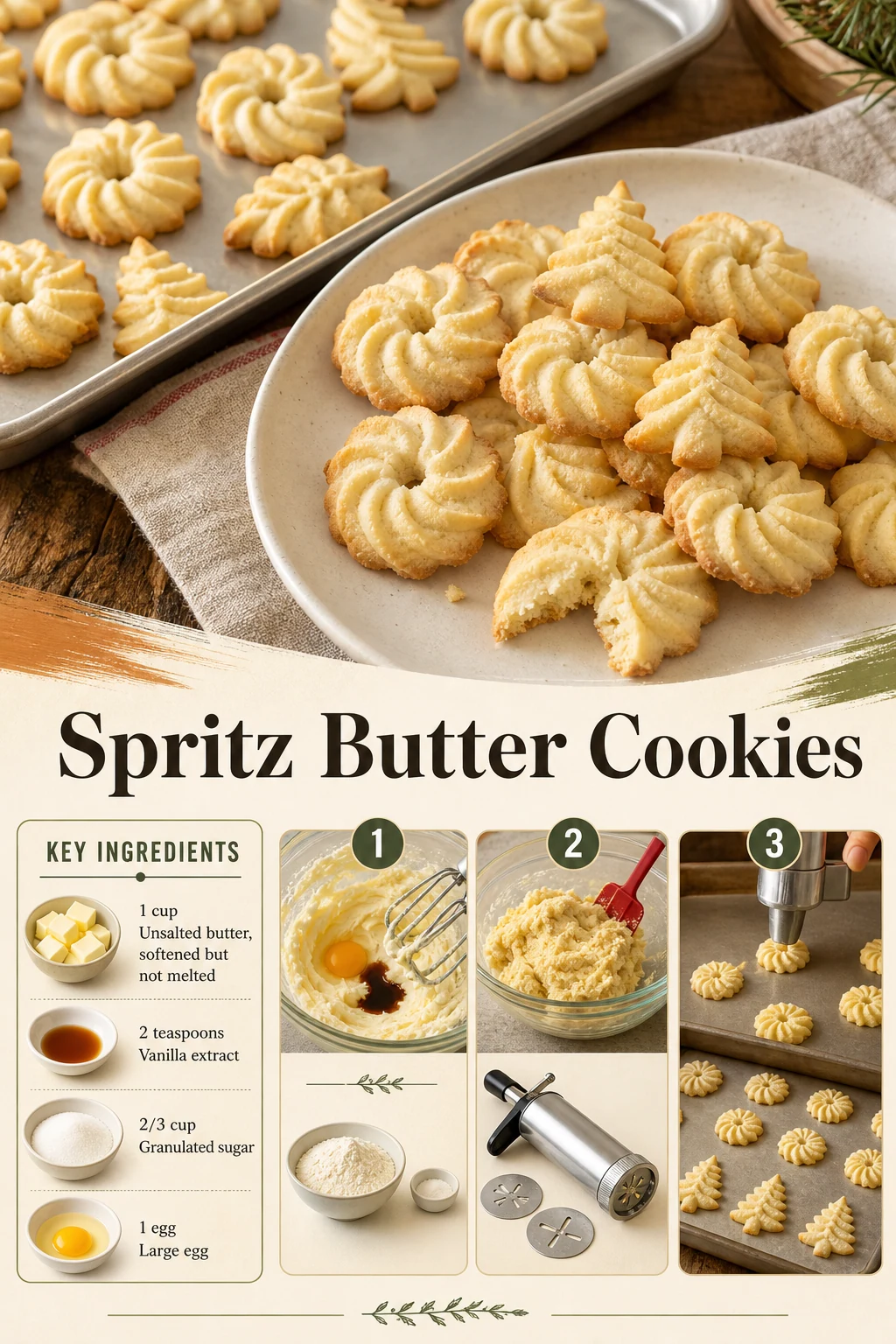
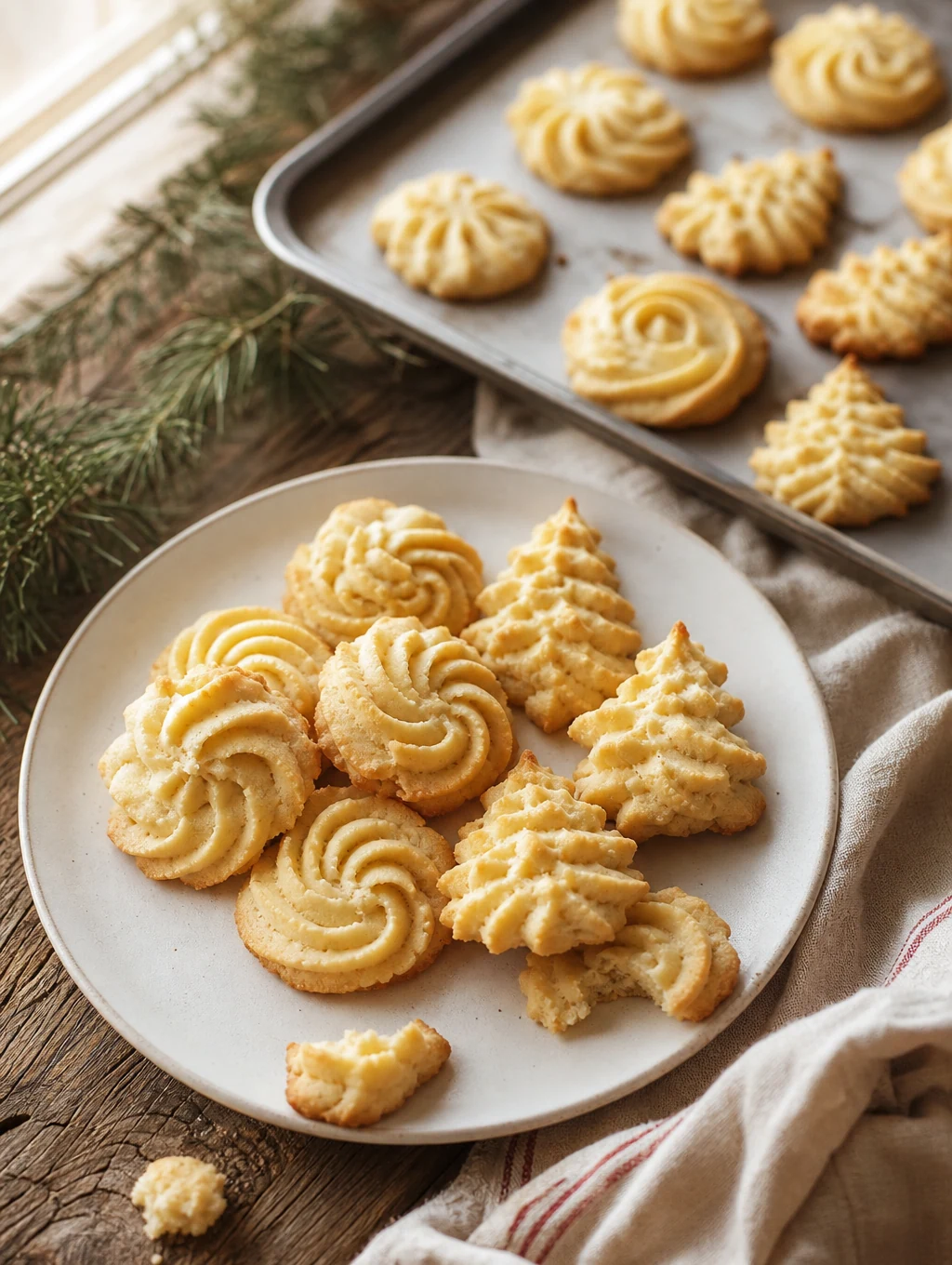
Spritz butter cookies take their shape from a cookie press rather than a rolling pin. This proposed vanilla dough is soft enough to extrude into little rosettes or trees on a cool baking sheet, then bakes until just pale gold at the edges. It is a different method from stamped shortbread: the dough has an egg and granulated sugar, and the ridges come from a press disc. The 48-cookie yield and two-sheet timing need a kitchen test with the actual press.
Jump to ingredients · Jump to method
The press changes how the dough behaves
A shortbread-style dough can be rolled and cut, but a spritz needs to pass through a plunger and stick to the sheet long enough to separate cleanly from its disc. A very cold stiff dough may resist the press; a warm greasy dough can lose the ridges. That is why the card begins with softened but not melted butter and a cool ungreased metal sheet. It does not instruct a long refrigerator chill of the whole dough, as the stamped cookies in the previous calendar slot do.
King Arthur’s spritz method uses ungreased sheets and a cookie press, but its spice-and-cream-cheese dough is not this plain vanilla formula. The technique is a useful comparison, not evidence that this dough will release perfectly. Press models and discs differ. Start with a simple rosette in the first kitchen trial before promising a tiny, intricate tree design will keep every branch.
Chefly’s Earl Grey cookies use tea in a rolled shortbread-style dough. They can sit on the same dessert tray but do not answer a reader looking for a cookie-press recipe. The site search found no exact spritz post. A full-body duplicate check remains necessary before a new URL is created, and the local stamped-vanilla draft should also be checked for search-intent overlap when titles are finalized.
A plain butter-and-vanilla dough
| Ingredient | Amount | Purpose |
|---|---|---|
| Unsalted butter, softened | 1 cup | Pressable fat base. |
| Granulated sugar | ⅔ cup | Sweetness and structure. |
| Large egg | 1 | Binds the soft dough. |
| Vanilla extract | 2 tsp | Only added flavor. |
| All-purpose flour | 2½ cups | Body for a shaped cookie. |
| Fine salt | ½ tsp | Balance. |
The cookie press is essential to this particular shape promise. Keep two clean metal sheets ready, ideally cool to the touch. A silicone mat or parchment may not grip the dough in the same way as bare metal; follow the specific press directions and document the chosen surface during testing. If a sheet has just come out of the oven, let it cool before pressing another batch. This working formula has no cream cheese, almond extract, colored sugar or glaze, so those should not appear in its pictures.
Mix, press and watch the edges
- Heat the oven and mix butter. Heat oven to 375°F. Keep two ungreased metal sheets cool. Beat one cup softened, not melted, unsalted butter with two-thirds cup granulated sugar until smooth and slightly lightened. Add one large egg and two teaspoons vanilla; mix to combine.
- Bring the dough together. Stir in two and a half cups all-purpose flour and half a teaspoon fine salt only until no dry flour remains. The dough should be pliable enough for the press without running. Record how it feels; different flour measuring and butter temperatures can change extrusion.
- Press shapes. Fill the cookie press according to its maker. Press small shapes directly onto the cool sheets with space between them. Let each shape release before moving the press. If the dough stays on the disc, check the disc seating, sheet surface, pressure and dough temperature rather than adding unmeasured liquid.
- Bake in measured loads. Bake about ten minutes per sheet load, until edges turn lightly golden. Do not wait for the whole face to darken. Cool five minutes on the sheet so the shapes firm, then transfer to a rack for roughly ten more minutes before layering or packing. Count actual pieces and loads; the plan assumes two sequential loads.
The 65-minute development total includes 30 minutes mixing and shaping, 20 minutes for two ten-minute loads and 15 minutes cooling. Those phases can overlap in a busy kitchen, but this arithmetic makes no promise of a 30-minute start-to-finish cookie. A small press disc may give many more than 48 cookies, while a large one may produce fewer. If both sheets cannot bake together or a third sheet is needed, revise total time after the trial.
Make the ridges rather than fixing them in prose
Shapes will not stick to the sheet: check that the sheet is ungreased and cool, then adjust the press’s contact and release motion. Ridges blur: note whether butter was too soft or whether the sheet was warm from the last load. Cookies are tough: stop mixing when flour is incorporated and compare a tested batch before changing ingredients. Undersides brown before the tops: assess sheet color and rack placement. Those are diagnostic possibilities, not proof that this untested formula behaves in every oven.
Adding cocoa or food coloring changes texture or appearance and would need a measured variation. Replacing the egg with an egg-free binder is not the same formula; the existing stamped shortbread concept is intentionally egg-free but shaped in a different way. The base recipe contains dairy, egg and wheat. A nut-flavored extract or almond flour would change allergen labeling. A holiday cookie tray can be attractive without claiming the spritz are allergy-friendly by default.
Serve and protect the small shapes
Once completely cool, arrange the pressed cookies in a shallow tin with parchment between layers. Avoid crowding delicate tree tips against a heavy cookie. Tea is a simple pairing; the Earl Grey cookies make a contrasting tea-infused option if more than one kind of butter cookie is planned. For a box, test how these small ridged cookies travel and stay crisp rather than promising an unmeasured shelf life.
A kitchen test should photograph a tray immediately after pressing, after baking and after cooling. That sequence will reveal whether the intended rosette holds. Record the press model, disc, flour measuring method, room temperature, number of cookies per sheet, final yield and what the base tastes like without decorations. Numerical nutrition is omitted until actual yield and ingredient brands are documented.
Spritz questions
Can I make them without a cookie press?
Drop cookies would use the dough differently and not have a spritz shape. This card promises a press-made cookie, so test a separate shaping alternative rather than calling spooned dough identical.
Should the sheets be lined?
The working method presses onto cool ungreased metal for grip. If your press maker recommends another surface, test that combination and update the instructions.
Do I chill the dough first?
No mandatory dough chill is in this card. An overly firm dough can be difficult to extrude; if it becomes greasy, a short temperature adjustment may be needed in the trial.
Recipe-card handoff: Six ingredients, four stages, approximately 48 small cookies and a 65-minute two-load estimate. No tested yield, assigned author, approved imagery, native WordPress recipe record or Pinterest destination exists.
Print
Spritz Butter Cookies
- Total Time: 65 minutes
- Yield: 48 servings 1x
Description
Small vanilla butter cookies extruded from a cookie press onto cool ungreased sheets and baked lightly golden.
Ingredients
- 1 cup Unsalted butter, softened but not melted
- 2/3 cup Granulated sugar
- 1 egg Large egg
- 2 teaspoons Vanilla extract
- 2 1/2 cups All-purpose flour
- 1/2 teaspoon Fine salt
Instructions
- Heat oven to 375°F. Keep two clean, ungreased metal sheets cool. Beat 1 cup softened butter with ⅔ cup granulated sugar until smooth and slightly lightened; beat in 1 egg and 2 tsp vanilla.
- Mix in 2½ cups all-purpose flour and ½ tsp fine salt just until a soft pressable dough forms. Fill cookie press according to its maker, using a simple disc for first test. Do not chill the whole dough into a hard block.
- Press small shapes directly onto cool ungreased sheets with room between them. If dough will not release, check press pressure, dough temperature and sheet surface rather than adding unmeasured liquid.
- Bake about 10 minutes per load at 375°F until edges are just lightly golden. Cool on sheet 5 minutes, then rack approximately 10 minutes before handling. Count actual pieces and number of sheet loads.
Notes
Recipe-development draft; not kitchen-tested. Timing and yield are estimates. Nutrition has not been calculated.
Additional chilling, resting or cooling time: 15 minutes, included in the total.
Untested estimate: 30 minutes mixing/pressing, two sequential ten-minute sheet loads, 15 minutes cooling. If more loads, total longer.
- Prep Time: 30 minutes
- Chilling, resting or cooling: 15 minutes
- Cook Time: 20 minutes
Nutrition
- Serving Size: One of approximately 48 small pressed cookies; disc and press affect count