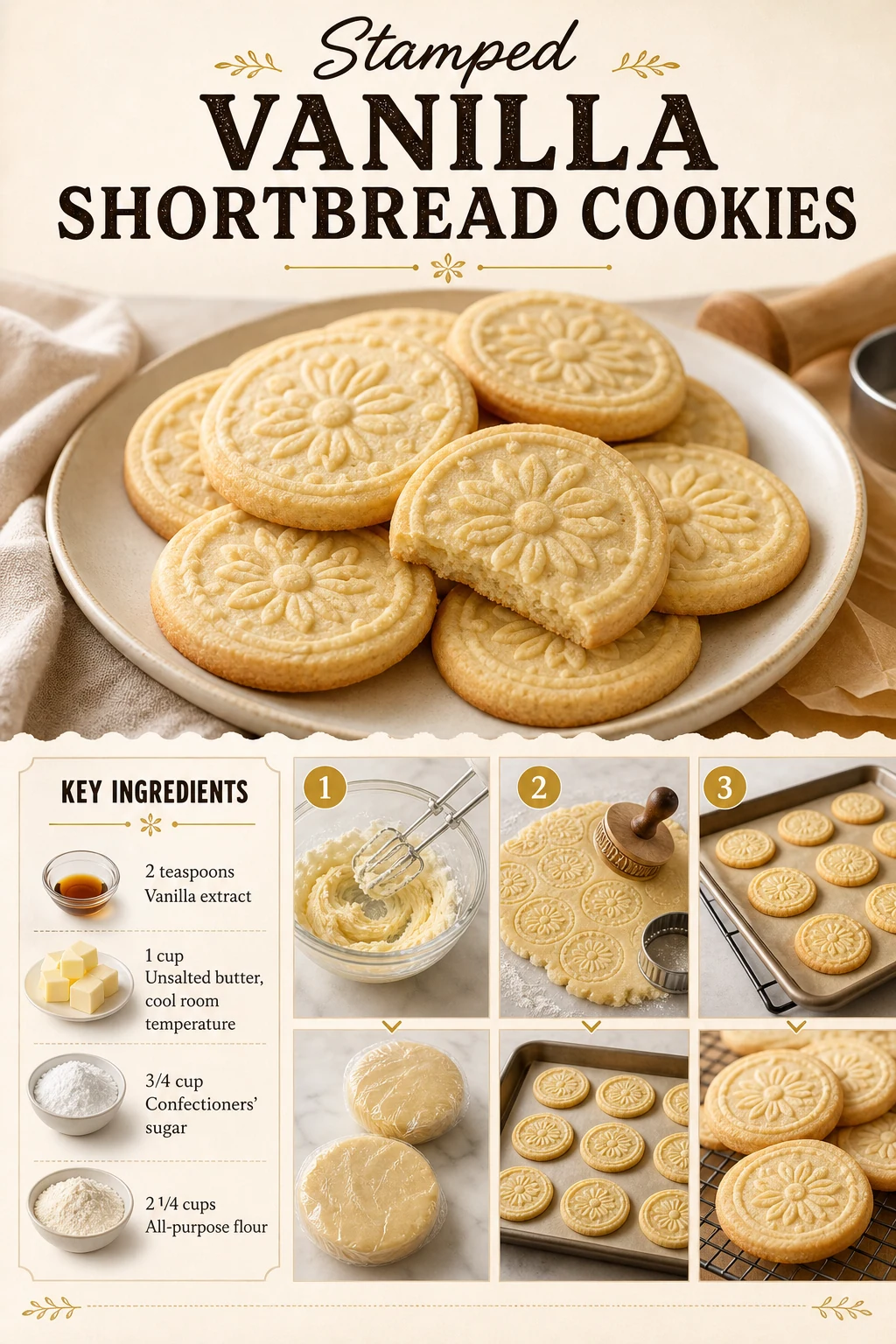
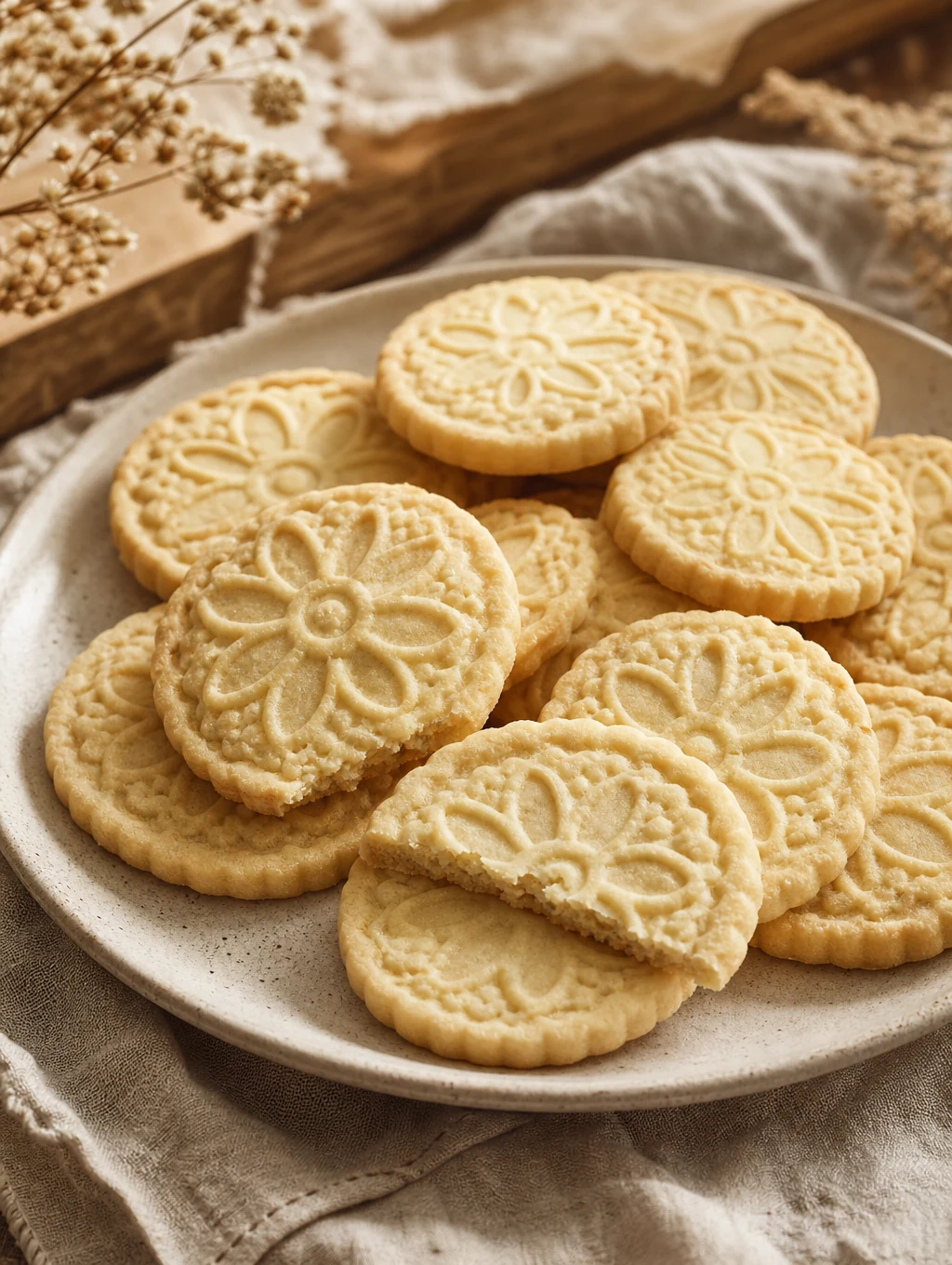
Stamped vanilla shortbread cookies make a simple butter dough look dressed for a holiday tray. The proposed method keeps the flavor deliberately plain: vanilla, butter, flour and confectioners’ sugar, with no icing to conceal the pressed pattern. Roll the dough evenly, flour the stamp lightly and chill the cut cookies before baking. The precise yield and the strength of the imprint still need a kitchen test with the actual stamp.
Jump to ingredients · Jump to method
What makes a good stamped cookie?
The appeal is the contrast between a detailed surface and a tender, lightly golden cookie beneath it. A stamped pattern needs a dough that can be pressed without crumbling but is not so warm that the grooves blur as the butter melts. This formula contains no baking powder or baking soda. That choice may reduce puffing, but it does not guarantee a perfectly sharp design: butter temperature, dough thickness, stamp depth and the oven all matter.
King Arthur’s stamping guide recommends working with chilled dough, pressing evenly and using flour when a stamp sticks. Its illustrated brown-butter cookie is not this plain vanilla formulation. Here the first chill firms the mixed dough for rolling, and a second, shorter chill firms the shaped pieces. A shallow decorative stamp may need a stronger press than a deeply engraved one. Record the actual result rather than promising every pattern will look identical.
Chefly already has Earl Grey cookies, which use tea and an egg yolk in a shortbread-style dough. These are a separate plain-vanilla, egg-free working formula centered on embossing. If a full-body inventory check finds another unlisted vanilla-stamp page, revise that URL instead of creating a competing article.
Ingredients for the working batch
| Ingredient | Amount | Purpose |
|---|---|---|
| Unsalted butter, cool room temperature | 1 cup | Butter base; soft enough to mix, not greasy or melting. |
| Confectioners’ sugar | ¾ cup | Fine sugar for a tender dough. |
| All-purpose flour | 2¼ cups | Structure for rolling and stamping. |
| Vanilla extract | 2 tsp | Primary flavor. |
| Fine salt | ½ tsp | Balance. |
| Extra flour for stamp | About 1 tbsp, optional | Dust sparingly when the pattern sticks. |
Use a mixer, two parchment-lined baking sheets, a rolling pin with quarter-inch guides if available, a clean two-inch stamp and matching cutter. The cutter and stamp should be close in size so the embossed design does not run over a ragged edge. If the stamp itself cuts the dough, a separate cutter may be unnecessary, but document that setup when testing. Measured cup volumes are working inputs; a final version can add tested gram weights rather than inventing conversions for flour packed in an unknown way.
Mix, stamp, chill and bake
- Make the dough. Beat one cup cool room-temperature unsalted butter with three-quarter cup confectioners’ sugar only until smooth. Mix in two teaspoons vanilla. Add two and a quarter cups all-purpose flour and a half teaspoon fine salt. Stop once no large dry patches remain and the dough comes together when pressed. Prolonged beating after flour is added is not needed.
- Firm it for rolling. Divide into two disks, wrap and chill for 30 minutes. Work with one disk while the other stays cold. If the dough becomes too stiff to roll without cracking, give it a short rest on the counter; if it becomes greasy, return it to the refrigerator. The goal is firm yet pliable, not a prescribed temperature that has not been tested.
- Emboss even rounds. Roll to a quarter-inch thickness on a lightly floured surface. Dust a clean cookie stamp lightly with flour, press straight down with even pressure and lift without twisting. Cut around each imprint with a two-inch cutter and transfer to parchment. Gently gather scraps once. Reworking them repeatedly may make them tougher and blur the surface.
- Chill and bake. Chill the stamped trays 15 minutes while heating the oven to 325°F. Bake about 15 minutes, rotating positions partway through if two racks are used, until edges are lightly golden. Check the actual tray spacing and oven airflow in the test; a crowded oven may require separate batches and more total time.
- Cool before packing. Leave on trays five minutes, then move to a rack for roughly 15 minutes more. A warm cookie is fragile and can shed its raised pattern when handled. Count the intact rounds from the cutter before setting a final yield.
The planning total is 105 minutes: 25 minutes active preparation, 45 minutes of chilling, 15 minutes in the oven and about 20 minutes of cooling. This assumes both trays bake together. More trays, a small oven or a stamp that slows shaping can extend the actual time. The recipe card is an editorial hypothesis, not an account of a successful test bake.
Adjust the pattern without changing the dough blindly
If dough sticks to the stamp, first dust the stamp lightly and brush excess flour out of deep grooves. Too much loose flour can leave a chalky top. If an imprint looks lopsided, press the tool level rather than applying extra force on one side. If the dough cracks while rolling, it may be too cold or too dry; allow it to become slightly more pliable before adding unmeasured liquid. If the pattern softens in the oven, compare one tray chilled longer with the initial method and note whether the shapes spread, rather than promising that an arbitrary freeze will solve every design.
Because there is no egg in this working dough, adding an egg yolk would change richness, moisture and spread. Brown sugar changes both color and texture; it is not a like-for-like swap for confectioners’ sugar. A different flour blend requires its own test, and the base recipe contains wheat and dairy. Decorative sugar, glaze, crushed nuts and colored icing are deliberately absent from both formula and photo prompts. They would be separate variations with changed appearance and allergen notes.
Serving and keeping the cookies
Once completely cool, arrange the rounds in a shallow tin with parchment between layers to protect the pattern. A dark tea or coffee is an easy pairing; the Chefly Earl Grey cookies make a different tea-flavored option on the same dessert table, not a second name for this dough. Avoid sealing any still-warm pieces: condensation softens the surface. For gifts, use a rigid box rather than a loosely filled bag so the embossed faces are less likely to rub together. The real keeping quality in a particular container and climate should be checked in a storage trial before a day-count promise appears on the live article.
Unbaked shaped cookies might be a practical make-ahead route, but test how a chilled versus frozen piece bakes before issuing freezer-to-oven instructions. A test should record dough thickness, cut count, tray load, color at the edge, cooling loss, taste and whether the stamp remains legible at normal photo distance. Nutrition numbers cannot be published responsibly until the actual ingredient brands and yield are known.
Stamped-shortbread questions
Do I need a special cookie stamp?
A clean, food-safe stamp with a relief design is the defining tool. A patterned glass base may leave an impression, but depth and pressure will differ; the proposed card assumes a two-inch stamp and matching cutter.
Why use two chilling periods?
The first firms the mixed dough for rolling. The second firms the cut shapes before the oven. Neither proves that every stamp design holds, so compare the actual results in a test batch.
Can I use granulated sugar?
That would be a different texture and mixing behavior. Keep confectioners’ sugar for the initial trial; test any granulated-sugar version separately rather than claiming it is identical.
Recipe-card handoff: Six listed ingredients including optional dusting flour, five stages, a working yield of 24 two-inch cookies and an estimated 105-minute total under a two-tray oven assumption. No native Tasty record, author, approved photos, nutrition panel or Pinterest destination exists for this candidate.
Print
Stamped Vanilla Shortbread Cookies
- Total Time: 105 minutes
- Yield: 24 servings 1x
Description
Plain vanilla butter shortbread rolled a quarter-inch thick, embossed with a cookie stamp, chilled and baked pale gold.
Ingredients
- 1 cup Unsalted butter, cool room temperature
- 3/4 cup Confectioners' sugar
- 2 1/4 cups All-purpose flour
- 2 teaspoons Vanilla extract
- 1/2 teaspoon Fine salt
- 1 tablespoon Extra all-purpose flour for dusting stamp (optional)
Instructions
- Beat 1 cup cool room-temperature unsalted butter with ¾ cup confectioners' sugar just until smooth. Mix in 2 tsp vanilla. Add 2¼ cups all-purpose flour and ½ tsp fine salt; mix only until a cohesive dough forms.
- Divide into two disks and chill 30 minutes. Roll one disk at a time to ¼ inch on a lightly floured surface. Lightly flour a clean 2-inch cookie stamp, press evenly, cut with a matching cutter, and transfer shapes to two lined trays. Gather scraps gently once.
- Chill the stamped trays 15 minutes while heating oven to 325°F. Bake about 15 minutes, rotating trays partway if baking on two racks, until edges are lightly golden and impressions remain visible. Record actual oven-load capacity and final yield.
- Cool on trays 5 minutes, then on a rack for approximately 15 minutes more before packing. Do not claim the embossing holds perfectly without testing the chosen stamp and dough.
Notes
Recipe-development draft; not kitchen-tested. Timing and yield are estimates. Nutrition has not been calculated.
Additional chilling, resting or cooling time: 65 minutes, included in the total.
Untested estimate: 25 minutes mix/roll/stamp, 45 minutes total chilling, 15 minutes baking with two trays in one oven load, and 20 minutes cooling. If baking trays sequentially, total will be longer.
- Prep Time: 25 minutes
- Chilling, resting or cooling: 65 minutes
- Cook Time: 15 minutes
Nutrition
- Serving Size: One of 24 working 2-inch cookies; actual cutter yield pending