
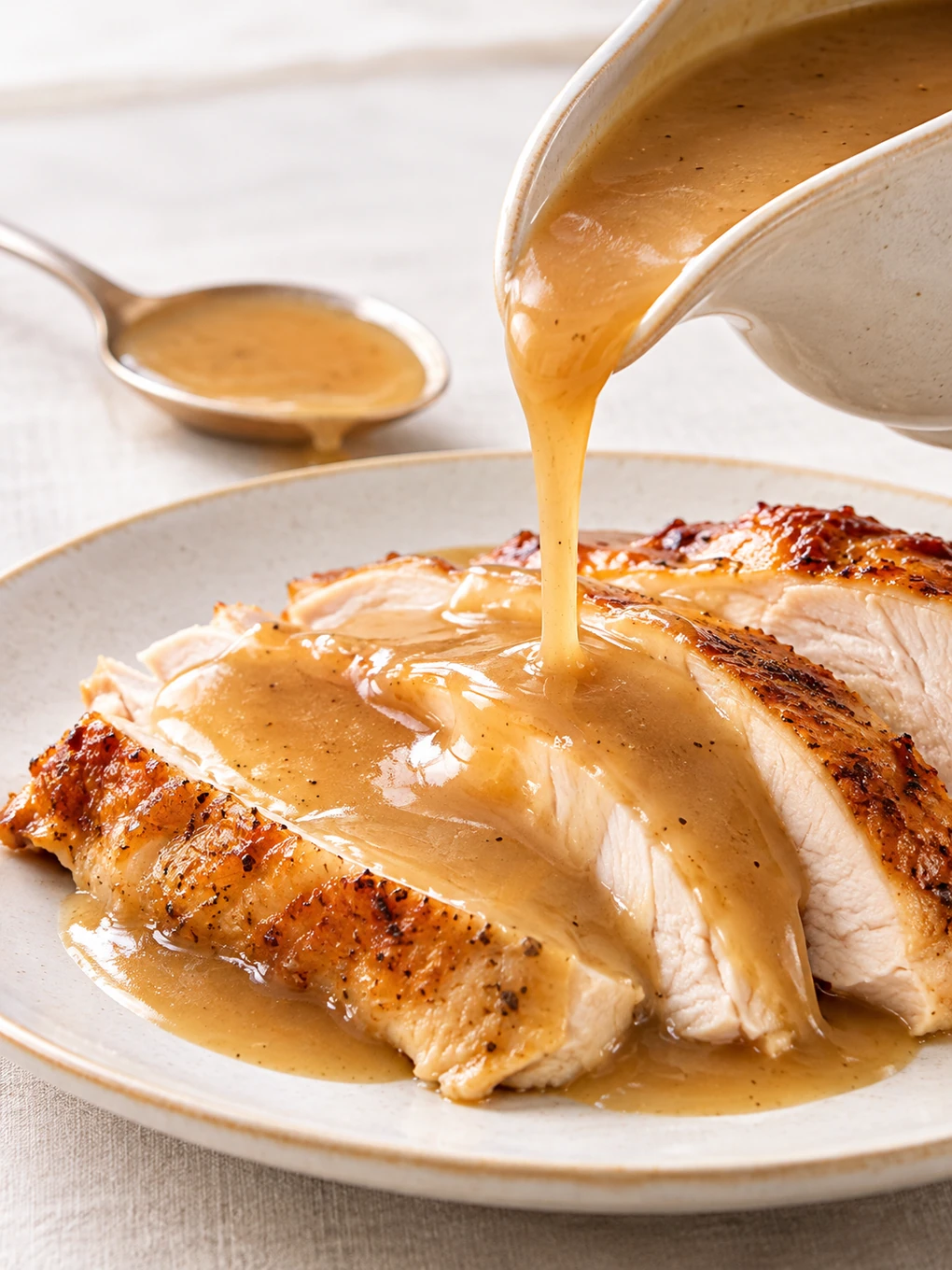
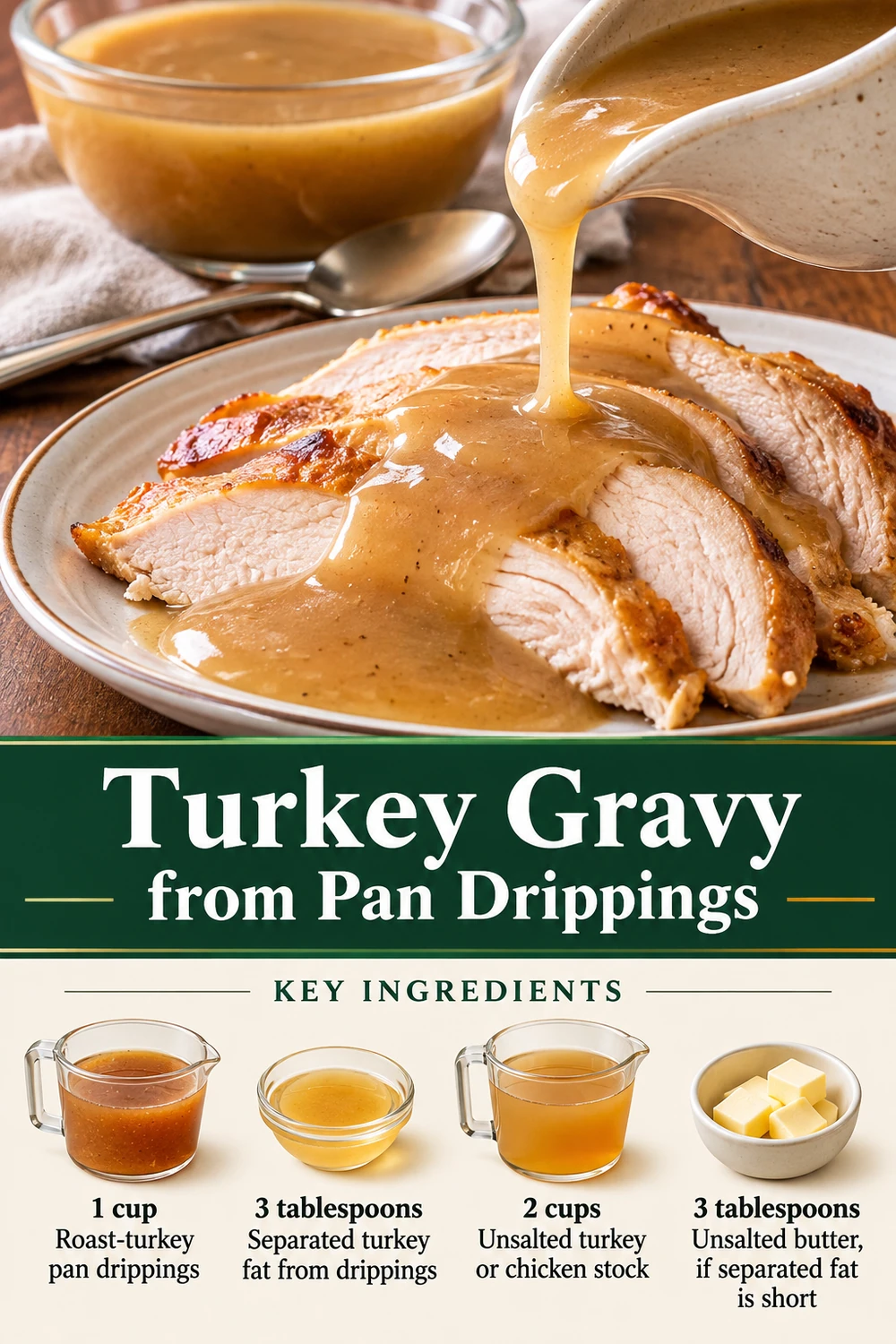
Turkey Gravy from Pan Drippings. A small batch of turkey gravy made by separating roasted-turkey pan juices and fat, then whisking a measured roux with unsalted stock. The formula and timing below are working estimates for a future kitchen trial, not a claim that a batch has been made.
Jump to ingredients · Jump to method
The roast supplies flavor, not a fixed cup of fat
Turkey gravy from pan drippings starts after the roast is cooked. The browned juices in a roasting pan contribute flavor, while separated fat and flour make the thickening base. This working sauce proposes up to one cup defatted pan juice plus unsalted stock to reach three cups liquid. It is not a turkey-roasting recipe, and its twenty-five-minute estimate begins only when usable drippings are ready.
A published Chefly citrus-herb turkey-breast page mentions turning its drippings into gravy but does not give an ingredient list or method for gravy. This distinct small-batch article could answer that gap; the connected inventory also shows two versions of the turkey-breast title, which merits its own editorial consolidation check before cross-linking.
Measure after roasting
A roast's drippings depend on bird size, fat content, roasting pan and the stock already in the pan. Strain them and let the fat rise. Use three tablespoons total fat: ideally separated turkey fat, topped off with unsalted butter only when there is less than three tablespoons. Do not use both full quantities, or the sauce may taste greasy.
Three tablespoons flour make a light roux with that fat. Start with two cups unsalted turkey or chicken stock and up to one cup defatted juices. If the pan yields less, fill the liquid measure with additional stock to three cups before mixing. This keeps the flour-to-liquid relationship intact without promising that every roast delivers the same pan juice.
Pan salt varies widely. Unsalted stock is deliberate, and the ingredient list does not specify a fixed amount of added salt. Butter introduces milk if needed; flour introduces wheat. Seasoning on the roast or packaged stock may introduce more allergens, so don't automatically label the gravy dairy-free or gluten-free.
Ingredients for 12 quarter-cup portions
| Ingredient | Amount | Use |
|---|---|---|
| Roast-turkey pan drippings | 1 cup | Strain and separate; yields and fat vary, so measure after roasting. |
| Separated turkey fat from drippings | 3 tablespoons | Use only if available; see butter fallback. |
| Unsalted butter, if separated fat is short | 3 tablespoons | Use enough butter to bring total cooking fat to 3 tbsp, not all 3 tbsp in addition. |
| All-purpose flour | 3 tablespoons | Whisk into total 3 tbsp fat. |
| Unsalted turkey or chicken stock | 2 cups | Combine with up to 1 cup defatted pan juices for approximately 3 cups liquid. |
| Freshly ground black pepper | 1/4 teaspoon | Taste after reduction; salt only if needed after a trial. |
Step-by-step method
- After a fully cooked roast turkey is removed, strain about 1 cup pan drippings into a fat separator or clear measure. Let fat rise. Reserve up to 3 tbsp fat and up to 1 cup defatted juices separately. If rendered fat is under 3 tbsp, add only enough unsalted butter to reach 3 tbsp total; any missing defatted juice is replaced with extra unsalted stock so liquid totals 3 cups.
- Warm the measured 3 tbsp total fat in a medium saucepan over medium heat. Whisk in 3 tbsp all-purpose flour and cook, stirring continuously, about 2–3 minutes until a smooth light-golden paste forms. Do not let the roux scorch.
- Whisk 2 cups unsalted stock together with up to 1 cup defatted pan juices, supplementing stock to make 3 cups liquid. Add in small pours to the roux, whisking smooth after each. Simmer about 8–10 minutes until the gravy lightly coats a spoon; the final volume may be slightly less than 3 cups after evaporation.
- Add 1/4 tsp black pepper, taste, and season only after considering salt already present in the drippings and stock. Pour into a warm gravy boat for roughly twelve quarter-cup portions. Record actual pan-juice yield, salt and thickness in a kitchen trial.
Turn a smooth roux into gravy
Prepare the liquid measure before the roux cooks. Warm the separated fat and any necessary butter over medium heat, then whisk in flour. Stir without interruption until it smells lightly toasted and looks golden, roughly two to three minutes. A dark, scorched paste should be restarted rather than hidden with stock.
Whisk liquid into the roux in small additions. The first pour may thicken quickly; keep whisking until smooth before adding more. Let the sauce simmer eight to ten minutes so the flour cooks through and the consistency can be judged on a spoon. It should pour, not stand in lumps.
The nominal liquid measures total three cups before simmering, so the finished gravy may yield a little less. Twelve quarter-cup portions are an estimate, not a promise of an exact finished volume. A kitchen trial should measure what is left in the pot and adjust serving language accordingly.
If it is lumpy, thin or salty
Lumps often arise when a large pour of liquid hits a dry roux. Whisk vigorously as each small pour is added, and strain finished gravy if necessary. A gravy that is too thin should simmer a little longer; note the final volume rather than adding an unmeasured extra spoon of flour to the card.
A greasy film can indicate too much reserved fat or drippings that were not separated. A salty taste may come from the roast rub or a salted stock, not the stated black pepper. Start with unsalted stock and taste only after the sauce is cooked. A turkey breast roasted with broth in its pan may produce a diluted but still useful juice; its concentration has to be checked.
The DwardCooks pan-gravy reference explains fat separation and roux technique. This Chefly working formula is independently measured and will require a real roast trial for yield, texture and seasoning.
Serve promptly with the roast
Pour into a warm gravy boat shortly before the meal. If sauce thickens while waiting, whisk gently over low heat and record any extra stock required for a tested version. Avoid a blanket make-ahead promise: the drippings are only available after the roast unless a separate advance-drippings recipe is developed.
Chefly's roasted citrus-herb turkey breast and sautéed green beans are relevant meal links, but the gravy does not inherit any safety or nutrition claim from those posts. Cool leftovers promptly and reheat thoroughly under current guidance; exact quality after chilling and reheating is not established for this working sauce.
Gravy questions
What if the pan gives little fat?
Top up the separated fat with only enough butter to total three tablespoons; do not add all three tablespoons butter on top of the turkey fat.
What if there are fewer than one cup pan juices?
Use all available defatted juice and add unsalted stock until the total liquid measure reaches three cups.
Can I make the named version before cooking a turkey?
Not from fresh pan drippings. A stock-only gravy would be a separate recipe with a different title and flavor base.
Further reading and related Chefly recipes: DwardCooks' guide to turkey pan gravy; Chefly roasted citrus-herb turkey breast; Chefly sautéed green beans. These are relevant references and other dishes, not evidence that this proposed formula was tested.
Print
Turkey Gravy from Pan Drippings
- Total Time: 25 minutes
- Yield: 12 servings 1x
Description
About three cups of gravy from a cooked turkey's pan juices and stock.
Ingredients
- 1 cup Roast-turkey pan drippings
- 3 tablespoons Separated turkey fat from drippings
- 3 tablespoons Unsalted butter, if separated fat is short
- 3 tablespoons All-purpose flour
- 2 cups Unsalted turkey or chicken stock
- 1/4 teaspoon Freshly ground black pepper
Instructions
- After a fully cooked roast turkey is removed, strain about 1 cup pan drippings into a fat separator or clear measure. Let fat rise. Reserve up to 3 tbsp fat and up to 1 cup defatted juices separately. If rendered fat is under 3 tbsp, add only enough unsalted butter to reach 3 tbsp total; any missing defatted juice is replaced with extra unsalted stock so liquid totals 3 cups.
- Warm the measured 3 tbsp total fat in a medium saucepan over medium heat. Whisk in 3 tbsp all-purpose flour and cook, stirring continuously, about 2–3 minutes until a smooth light-golden paste forms. Do not let the roux scorch.
- Whisk 2 cups unsalted stock together with up to 1 cup defatted pan juices, supplementing stock to make 3 cups liquid. Add in small pours to the roux, whisking smooth after each. Simmer about 8–10 minutes until the gravy lightly coats a spoon; the final volume may be slightly less than 3 cups after evaporation.
- Add 1/4 tsp black pepper, taste, and season only after considering salt already present in the drippings and stock. Pour into a warm gravy boat for roughly twelve quarter-cup portions. Record actual pan-juice yield, salt and thickness in a kitchen trial.
Notes
Recipe-development draft; not kitchen-tested. Timing and yield are estimates. Nutrition has not been calculated.
Untested estimate once roast-turkey drippings exist; turkey roasting time is not part of this sauce recipe.
- Prep Time: 10 minutes
- Cook Time: 15 minutes
- Category: Side Dishes
Nutrition
- Serving Size: Approximately 1/4 cup gravy