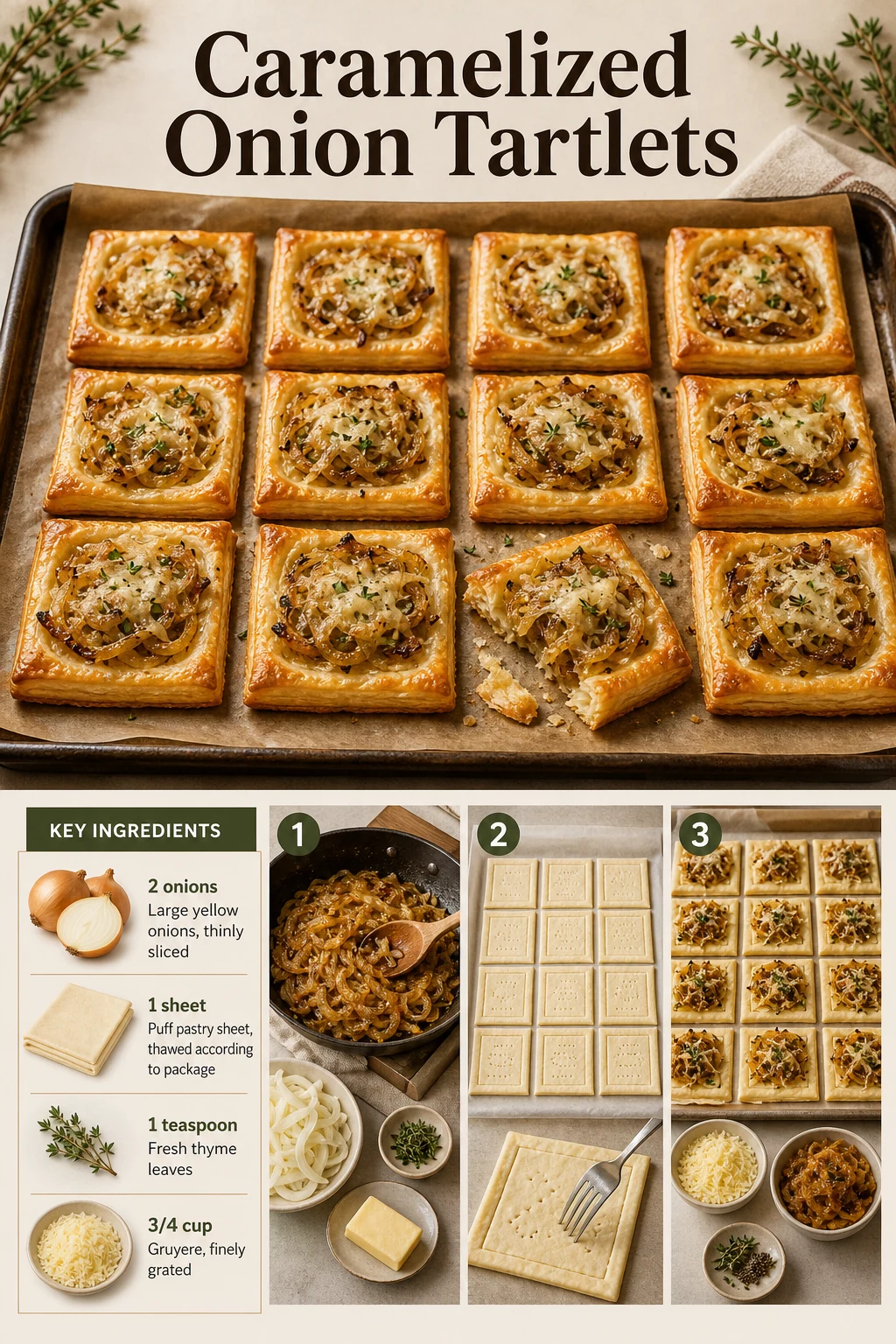
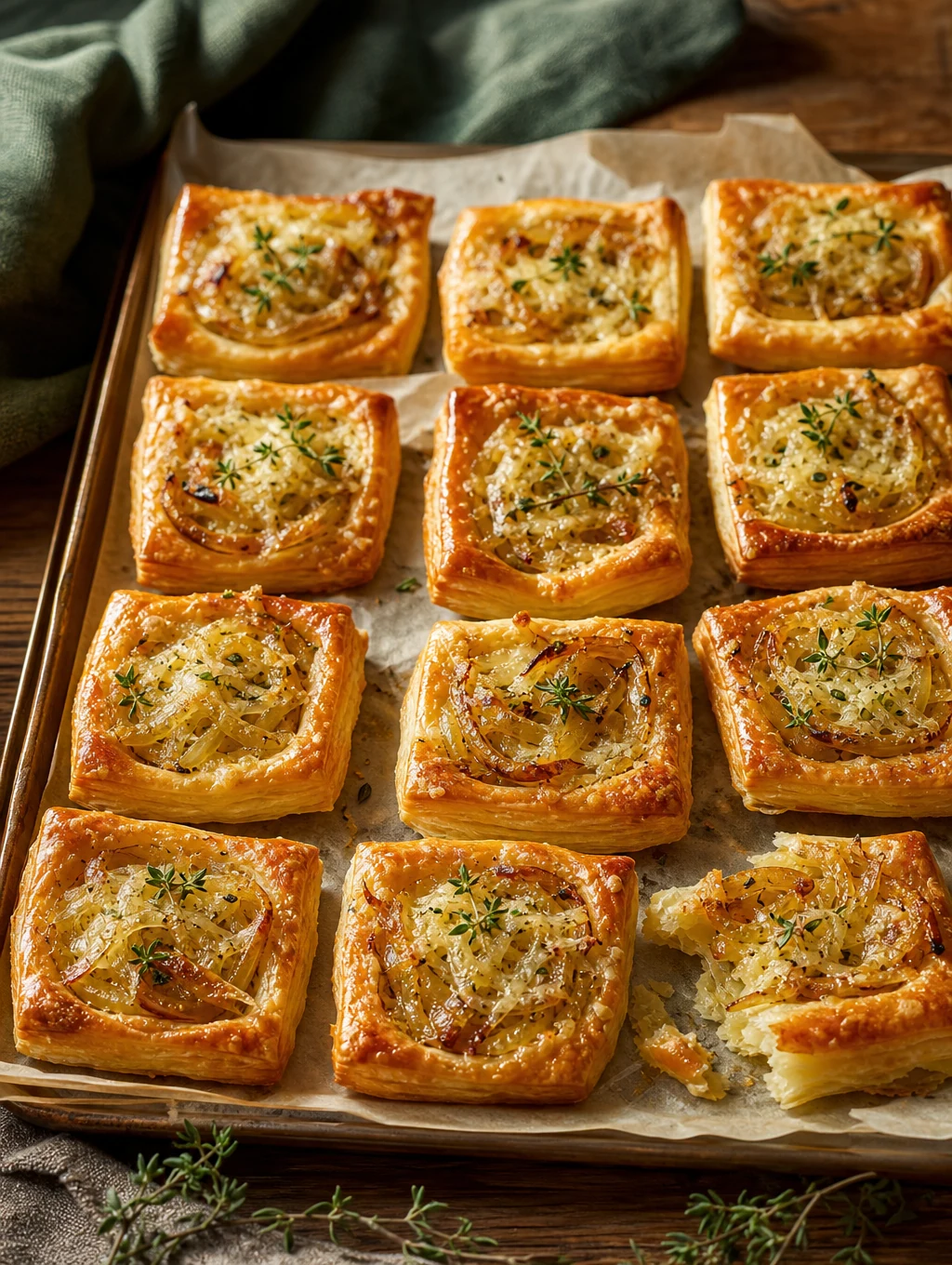
Caramelized onion tartlets are little squares of flaky puff pastry topped with slowly browned onions, Gruyere and thyme. They suit a savory party tray without a wet custard filling or a muffin pan. Most of the work is waiting for the onions to turn golden; the pastry then bakes as an open-faced bite. This is a proposed twelve-piece recipe, so the exact tray fit, pastry crispness and finished yield need a kitchen test before any “foolproof” claim.
Jump to ingredients · Jump to method
Why cook the onions separately?
Raw onion carries enough moisture to make a small pastry center soggy. Cooking thin slices slowly before assembly softens them and develops a deeper brown color. The goal is a jammy pile without pooled liquid, not blackened shards or a quick high-heat sauté. A wide skillet exposes more onion to the pan; use medium-low heat, stir frequently and lower the burner if the edges darken before the rest softens.
The tartlets are intentionally different from Food Network’s onion-and-goat-cheese tartlet method, which sets an egg-and-cream filling inside pastry-lined muffin cups. This working version uses open pastry squares and grated Gruyere, with no custard. Keep a narrow scored border clear of topping to let the edges rise. The center is pricked lightly, but neither scoring nor pricking is a promise that every brand of pastry will puff the same way.
Chefly already has French onion ground beef sliders. Those are an onion-and-beef filling inside rolls, not a competing cheese-and-pastry appetizer. Offer the sliders as another party-food option, but do not describe these tartlets as meat-filled or call both recipes the same dish.
Ingredients and equipment
| Ingredient | Amount | Use |
|---|---|---|
| Puff pastry sheet, thawed per package | 1 sheet | Cut into twelve little squares or rectangles. |
| Large yellow onions, thinly sliced | 2 | Slowly brown before filling. |
| Olive oil | 1 tbsp | Help coat onions in the skillet. |
| Unsalted butter | 1 tbsp | Round out onion flavor. |
| Gruyere, finely grated | ¾ cup | Divide across centers. |
| Fresh thyme leaves | 1 tsp | Scatter over the onion topping. |
| Fine salt | ¼ tsp | Season onions. |
| Black pepper | ⅛ tsp | Finish topping. |
You need a wide skillet, one parchment-lined baking sheet, a knife and an oven. A rolling pin is useful only to smooth the thawed sheet’s creases; flattening it aggressively may compress its layers. Thawing instructions depend on the actual package and may add passive time to the 85-minute development schedule. Note the sheet’s dimensions when testing: twelve pieces from a differently sized product will not have identical widths or filling capacity.
Brown the onions, then bake the squares
- Thaw and slice. Follow the puff pastry package for thawing. Thinly slice two large yellow onions. Warm a tablespoon each of olive oil and unsalted butter in a wide skillet over medium-low heat. Add the onions and a quarter teaspoon fine salt, stirring to coat.
- Cook the topping. Stir frequently for approximately 30 minutes, adjusting the heat to keep the onions browning gradually rather than scorching. The pan should not hold visible free liquid when the onions come off the burner. Let the topping cool slightly so it does not melt the pastry before baking.
- Shape the pastry. Heat the oven to 400°F. Unfold one thawed sheet, gently even its creases and divide into twelve roughly equal squares or rectangles. Space them on parchment. Score a narrow border inside each edge without cutting all the way through, then prick the center lightly with a fork. Keep the border uncovered.
- Top without mounding. Distribute three-quarter cup finely grated Gruyere among the twelve centers. Add the cooked onions in thin, even portions; scatter one teaspoon fresh thyme leaves and an eighth teaspoon black pepper across the batch. Do not add a wet spoonful of pan liquid. The topping should leave enough pastry visible for an open tart.
- Bake and check. Bake around 20 minutes, until pastry borders are puffed and deeply golden and the bottoms are cooked through. Lift one piece gently to check underneath rather than relying only on melted cheese. Rest 10 minutes on the sheet before serving. Record whether twelve pieces fit one sheet without crowding; a second oven load changes total time.
The estimated total is 85 minutes: 25 minutes preparation, 30 minutes for onions, 20 minutes for pastry and 10 minutes cooling. Some prep can overlap the onion cooking, but the stated arithmetic does not depend on that shortcut. A frozen pastry sheet that needs prolonged refrigerator thaw must be accounted for separately. In a real kitchen trial, photograph the underside and measure whether the cheese and onions stay within the border.
Keeping pastry crisp
Centers look wet: cook more moisture out of the onions before the next trial, use a lighter topping and check that the pastry itself baked through. Edges stay flat: the scored border may have been cut too deeply, covered in onions or flattened while rolling. Cheese browns too early: check rack position and the actual oven temperature; do not pull pastry while the bottoms remain raw. Onions taste bitter: lower the skillet heat and stir more often rather than scraping scorched patches into the filling.
Gruyere is the defining cheese in this working card. A Swiss-style alternative may melt differently and be saltier or milder; test its quantity rather than promising an identical result. Goat cheese would change flavor and appearance, and a cream-and-egg filling would make it a different custard tart. The base includes wheat and milk, while purchased puff pastry may have further allergens listed on its package. Avoid vegetarian certification until the cheese and pastry ingredients are checked for the intended audience.
Serving and advance planning
Serve the squares warm as a passed appetizer or on a shallow platter, with enough space that steam does not soften the neighbors. Prepare the cooked onion component ahead only after deciding a sensible storage procedure for the tested batch. Assemble on cold pastry shortly before baking rather than leaving damp topping on an unbaked sheet for hours. Covered leftovers may lose their flaky contrast; a reheating trial should establish the best oven method before a time-and-temperature instruction goes live.
For a larger holiday spread, the Chefly beef sliders supply a heartier bite while these tartlets stay focused on onion, pastry and cheese. Do not use an image of closed hand pies, goat-cheese cups or onion jam on crackers for this article. Numerical nutrition would require the pastry brand, actual cheese weight, cooked onion yield and number of usable pieces, none of which is verified yet.
Tartlet questions
Do I need a mini muffin tin?
No. This version is shaped as open squares on a baking sheet. Muffin cups and custard would be another formulation with a different baking endpoint.
Can I use raw onions to save time?
Not for this working card. Its topping is cooked until lightly caramelized and no longer wet; raw onions would change moisture, flavor and pastry crispness.
Can I prepare the pastry hours ahead?
Thaw it as the package directs, but do not assume assembled wet tartlets can sit for hours without affecting their bottoms. Test a make-ahead method before promising one.
Recipe-card handoff: Eight ingredients, five stages, twelve working pieces and an 85-minute serial estimate excluding package-specific thaw. Board, photos, author, native recipe record and final tested bake remain pending; the October 18 date is editorial planning, not a live scheduled post.
Print
Caramelized Onion Tartlets
- Total Time: 85 minutes
- Yield: 12 servings 1x
Description
Twelve small puff-pastry squares topped with slowly browned onions, grated Gruyere and thyme, baked crisp.
Ingredients
- 1 sheet Puff pastry sheet, thawed according to package
- 2 onions Large yellow onions, thinly sliced
- 1 tablespoon Olive oil
- 1 tablespoon Unsalted butter
- 3/4 cup Gruyere, finely grated
- 1 teaspoon Fresh thyme leaves
- 1/4 teaspoon Fine salt
- 1/8 teaspoon Black pepper
Instructions
- Thaw one pastry sheet according to its package while preparing ingredients. Slice 2 yellow onions thinly. In a wide skillet warm 1 tbsp olive oil and 1 tbsp butter over medium-low heat. Add onions and ¼ tsp fine salt; cook about 30 minutes, stirring and adjusting heat to brown slowly without burning. Cool slightly.
- Heat oven to 400°F. Unfold and gently roll pastry enough to even creases; cut into twelve equal rectangles or squares. Space on a parchment-lined sheet. Score a narrow border without cutting through the pastry and prick each center lightly.
- Divide ¾ cup finely grated Gruyere among centers, then add the cooked onions without piling too high. Sprinkle 1 tsp fresh thyme leaves and ⅛ tsp black pepper across the batch. Keep the borders bare.
- Bake approximately 20 minutes at 400°F until pastry borders are puffed and deep golden and bottoms are cooked through. Cool 10 minutes before serving. Test whether this load fits a single sheet and whether moisture leaves the centers crisp.
Notes
Recipe-development draft; not kitchen-tested. Timing and yield are estimates. Nutrition has not been calculated.
Additional chilling, resting or cooling time: 10 minutes, included in the total.
Untested serial estimate: 25 minutes slicing/rolling/assembly, 30 minutes onions and 20 minutes pastry in oven, then 10 minutes cooling. Passive thaw of frozen pastry must follow package and may add time.
- Prep Time: 25 minutes
- Chilling, resting or cooling: 10 minutes
- Cook Time: 50 minutes
Nutrition
- Serving Size: One of twelve pastry squares; actual dimensions and finished weight pending