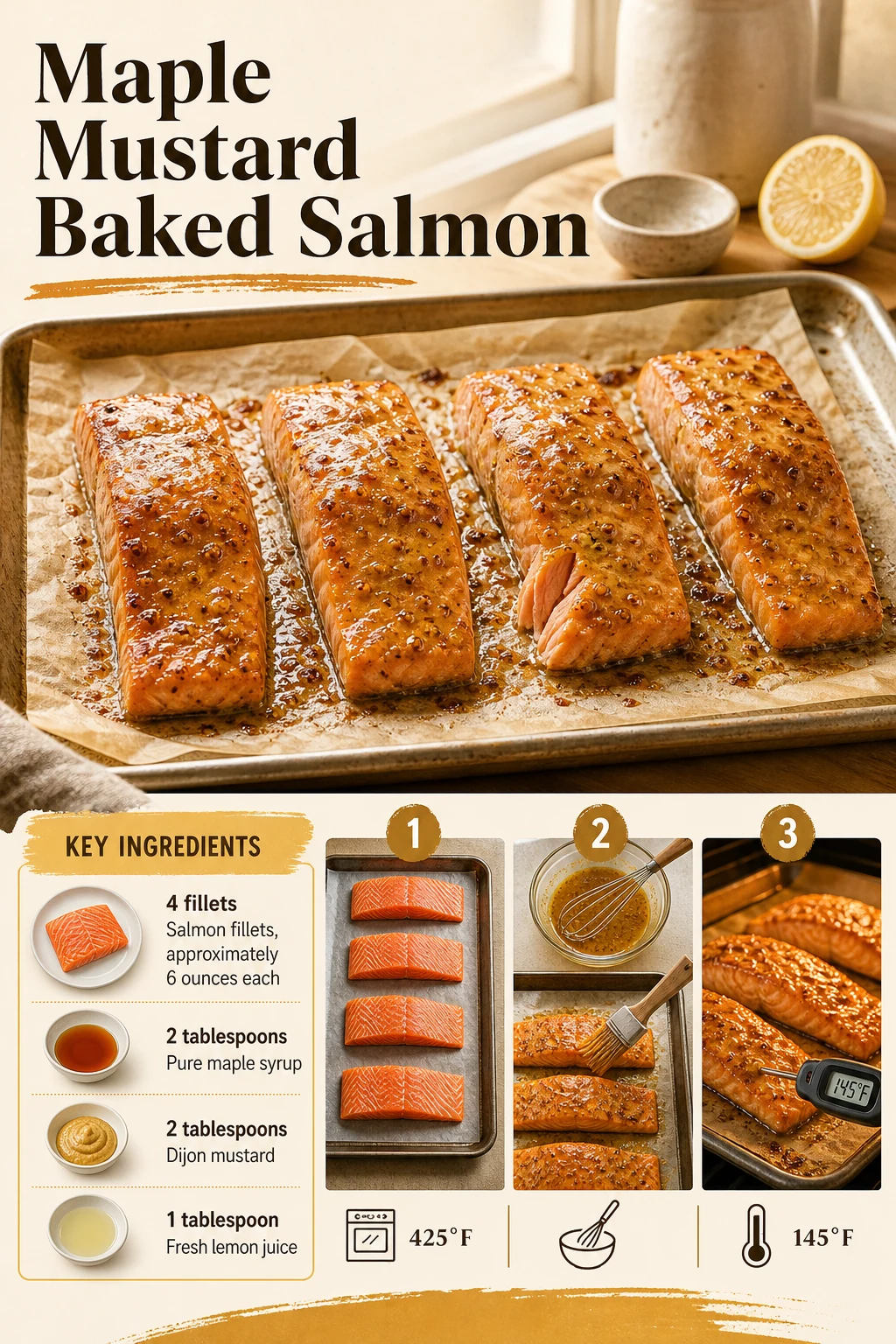
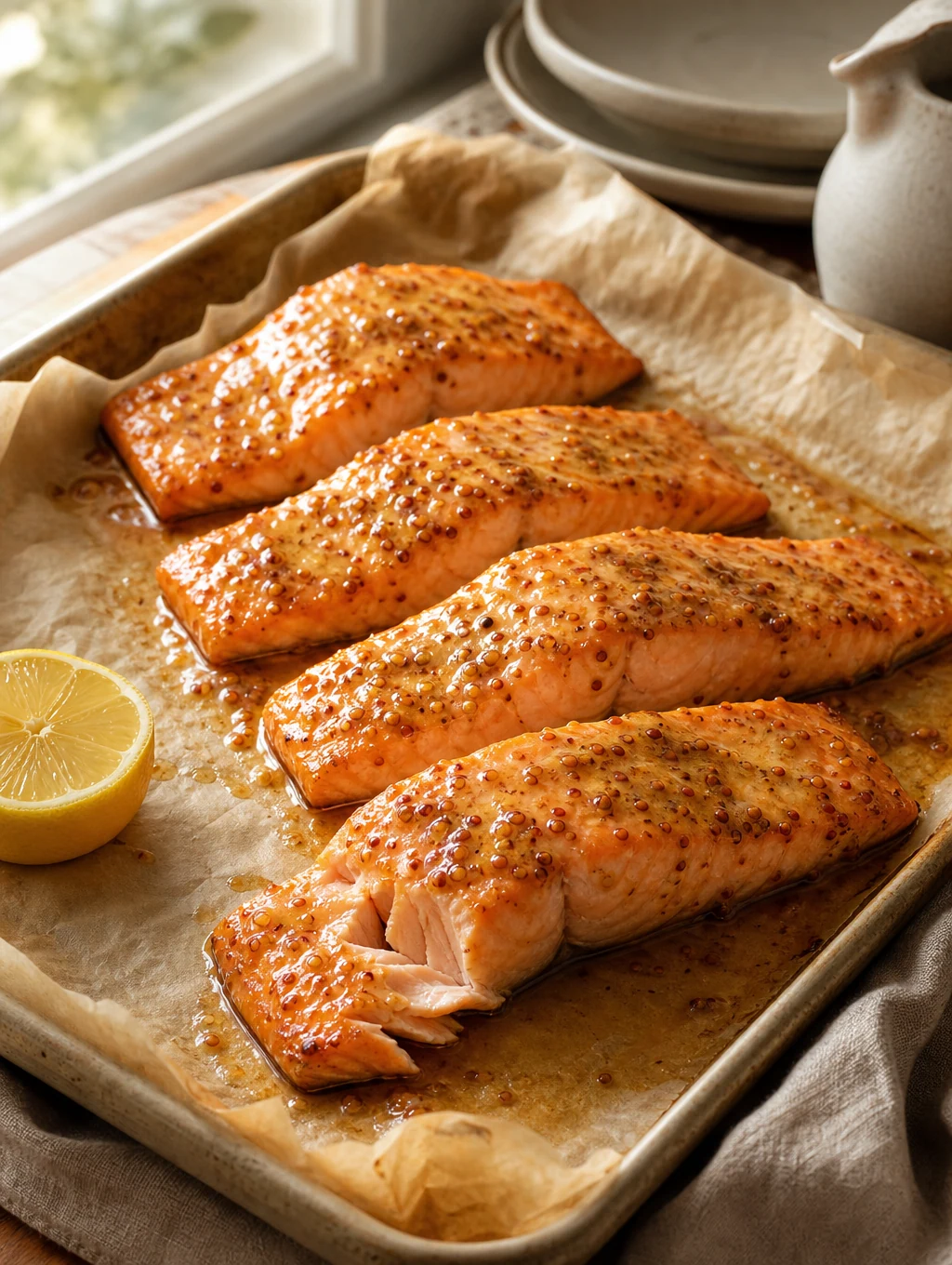
Maple mustard baked salmon brings a thin, sweet-tangy glaze to four oven-baked fillets. Pure maple syrup rounds out Dijon’s bite, while lemon cuts through the richness. There is no soy or honey in this version. It is designed for a parchment-lined tray rather than a skillet, and a thermometer—not the color of the glaze—determines when the thickest part is done. The 35-minute planning total and actual balance of the glaze remain to be checked in a kitchen trial.
Jump to ingredients · Jump to method
A different salmon dinner from the skillet glaze
Chefly’s honey garlic glazed salmon uses honey, soy, sesame and a skillet sear. This draft uses maple, Dijon and an oven. Those differences are material to both flavor and method, though a final body-inventory pass should still look for unpublished variants before another page is created. The maple here is measured, not a thick candy coating. A sugary surface can deepen in color before the fish reaches its cooking endpoint, so check both glaze and thickest flesh independently.
Four similar-size fillets are a useful starting point because very thin tail pieces cook differently from thick center cuts. A piece sold as six ounces may still vary in thickness. Keep a little space between the fish on the tray so heat can circulate. Skin-on and skinless fillets can both be considered, but the working photo and test should settle on one presentation rather than mixing an untested promise into the card. This version assumes fillets are fully thawed before cooking; a frozen block is a different timing problem.
The measured maple-Dijon mixture
| Ingredient | Amount | Role |
|---|---|---|
| Salmon fillets | 4, about 6 oz each | Main fish; match thickness when possible. |
| Pure maple syrup | 2 tbsp | Sweetness and light glaze. |
| Dijon mustard | 2 tbsp | Tang and body. |
| Olive oil | 1 tbsp | Loosen the coating. |
| Fresh lemon juice | 1 tbsp | Brightness. |
| Fine salt | ¼ tsp | Seasoning; Dijon also contributes salt. |
| Black pepper | ⅛ tsp | Gentle bite. |
Use a small bowl and whisk, a rimmed sheet lined with parchment, and a clean food thermometer. Dijon brands differ in salt, sharpness and ingredient labels. Do not automatically advertise the dish as gluten-free or dairy-free without checking the actual mustard and any sides. Fish is a declared allergen; mustard should be called out, too. The estimated serving is one raw six-ounce fillet plus a quarter of the glaze, not a measured cooked weight or nutrition value.
Bake to the center, not just the clock
- Prepare the oven and fish. Heat oven to 425°F. Line a rimmed sheet with parchment and pat four similarly sized fillets dry. Place them skin-side down with a little space between pieces. Keep raw fish refrigerated until it is time to cook.
- Whisk and brush. Mix two tablespoons each pure maple syrup and Dijon, one tablespoon each olive oil and lemon juice, a quarter teaspoon fine salt and an eighth teaspoon black pepper. Brush the top and sides of each fillet. Once a brush has touched raw fish, do not serve leftover glaze from that bowl as a cold table sauce.
- Cook and measure. Bake for approximately 15 minutes, then check the thickest part with a clean food thermometer. The USDA FSIS safe minimum temperature chart lists 145°F for fish and shellfish; its public URL was blocked by a direct check and remains in the source ledger for editorial verification. Continue baking as needed to that internal temperature. The clock is an estimate, particularly if pieces have different thicknesses. Color of mustard and maple is not a substitute for measurement.
- Rest briefly. Leave the fish on the tray for five minutes before plating. Note if the glaze slides off, turns too dark or tastes too sweet in the kitchen trial; adjust measured ingredients only after observing a cooked batch.
Fifteen minutes preparation plus an estimated 15-minute bake and five-minute rest give a 35-minute development total. Oven preheat may take place while mixing, but the actual dinner time can run longer if the fillets are thick or the oven is crowded. Do not promise that all salmon cooks in 15 minutes. A digital probe positioned in the thickest portion without resting against the hot pan gives a more useful reading than a look at flaking alone.
Keep the glaze balanced
Glaze browns before the middle cooks: look at rack placement, sugar concentration and actual oven heat. Do not remove underdone fish because the topping looks ready. Surface is patchy: pat the fish dry and whisk the dressing until mustard and oil are dispersed before brushing. Flavor tastes too sharp: a particular Dijon may be especially pungent; note the brand and taste after cooking before changing ratios. Fish dries out: compare thickness, tray load and probe placement rather than dropping the thermometer endpoint from the official guidance without a qualified alternative method.
Honey is not a straight flavor replacement for maple in the named dish, and whole-grain mustard will make a chunkier coating. Either can be a separate measured variation after testing. Using one large side of salmon instead of four fillets also changes thickness and oven time. Avoid rolling all versions into the same quick card. A lemon wedge at the table is optional and is not included in the measured ingredients or nutrient calculation.
How to serve and handle leftovers
Plate a fillet with a crisp vegetable or a simple potato side so the mustard-maple finish remains the main flavor. The honey-garlic salmon is an alternative for readers who prefer a savory soy glaze and skillet method, not an accompaniment on the same plate. If taking photos, show a baked fillet with a restrained glaze, not a pool of raw-looking marinade or sesame topping that belongs to the other recipe.
Transfer leftovers to shallow covered containers and refrigerate promptly. Reheat only after deciding a tested method that warms the fish through without drying its edges; the draft does not assert a precise microwave or oven minute count. If serving anyone with a fish or mustard allergy, the standard recipe is not suitable. Numerical nutrition is omitted because salmon species, edible cooked mass, mustard brand and actual glaze retained per piece are not established.
Salmon questions
Can I judge doneness by the brown glaze?
No. Maple and mustard can color early. Measure the thickest fish with a clean thermometer and use the fish endpoint from the USDA chart rather than relying on the surface.
Can I start with frozen fillets?
This working schedule assumes thawed fish. Frozen fillets change cooking time and glaze adhesion; develop and test a separate method instead of adding an arbitrary number of minutes.
What if one fillet is thinner?
Check pieces individually. A thin tail section may reach its endpoint before a thick center cut. Note that variation in the test and avoid presenting one clock time as universal.
Recipe-card handoff: Seven ingredients, four stages, four working servings and a 35-minute estimated total with a thermometer endpoint. Test the glaze and time; assign author, images and native recipe record only after review. No WordPress draft, live schedule or Pinterest destination was created.
Print
Maple Mustard Baked Salmon
- Total Time: 35 minutes
- Yield: 4 servings 1x
Description
Four salmon fillets baked with a lightly sweet maple-Dijon and lemon glaze.
Ingredients
- 4 fillets Salmon fillets, approximately 6 ounces each
- 2 tablespoons Pure maple syrup
- 2 tablespoons Dijon mustard
- 1 tablespoon Olive oil
- 1 tablespoon Fresh lemon juice
- 1/4 teaspoon Fine salt
- 1/8 teaspoon Black pepper
Instructions
- Heat oven to 425°F and line a rimmed sheet with parchment. Pat four similarly sized 6-oz salmon fillets dry; set skin-side down with space between them. Keep raw fish chilled until ready to cook.
- Whisk 2 tbsp maple syrup, 2 tbsp Dijon mustard, 1 tbsp olive oil, 1 tbsp lemon juice, ¼ tsp fine salt and ⅛ tsp black pepper. Brush over the top and sides of fish; do not reserve raw-fish-contact glaze for the table.
- Bake about 15 minutes, checking the thickest part with a clean food thermometer. Continue as needed until it reaches 145°F. Thickness, starting temperature and oven vary; a browned glaze alone does not establish doneness.
- Rest five minutes on the sheet before plating. Record glaze behavior, actual cooking time and texture in a kitchen trial; divide into four servings.
Notes
Recipe-development draft; not kitchen-tested. Timing and yield are estimates. Nutrition has not been calculated.
Additional chilling, resting or cooling time: 5 minutes, included in the total.
Untested estimate: 15 minutes prep, approximately 15 minutes in 425°F oven and 5 minutes rest. Use a food thermometer for 145°F in the thickest part; thick fillets may take longer.
- Prep Time: 15 minutes
- Chilling, resting or cooling: 5 minutes
- Cook Time: 15 minutes
Nutrition
- Serving Size: One 6-ounce raw-weight salmon fillet plus one-quarter of the glaze; cooked weight pending