
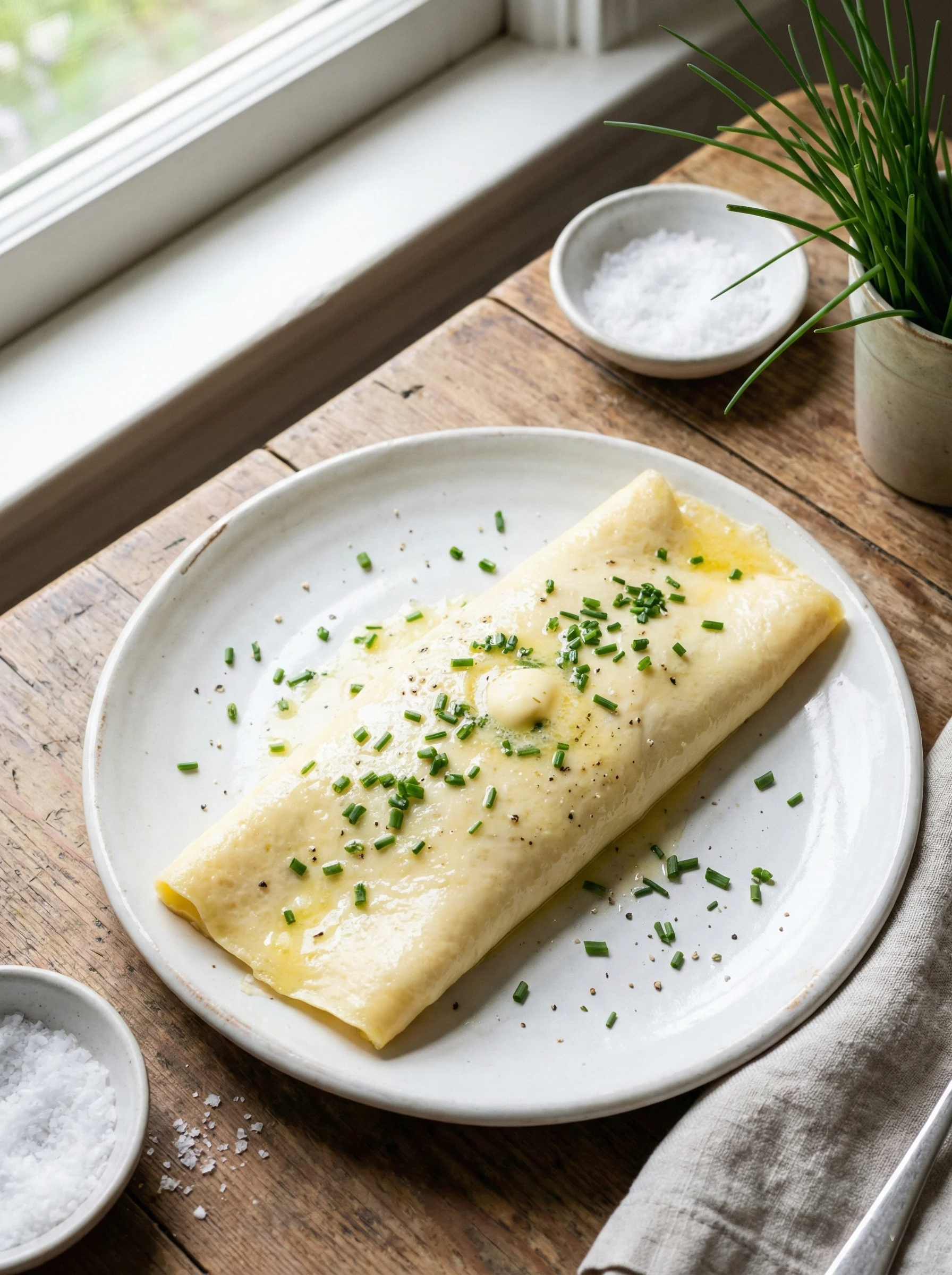
Mastering the Classic French Omelette provides a touch of culinary elegance to your weekend brunch or a quick, nutritious weeknight dinner. This smooth, pale, and buttery delight serves as the perfect comfort food for a chilly autumn morning or a light summer lunch. Explore the recipe.
I still remember the first time I attempted to make a Classic French Omelette in culinary school. My instructor watched closely as I struggled with the heat, resulting in a brown, crispy mess that looked more like a pancake than a delicate French masterpiece. He gently reminded me that patience and temperature control define the Classic French Omelette experience.
Since then, I have spent years perfecting this technique for my own family. My kids now request this Classic French Omelette every Sunday morning, and I love how such simple ingredients create a sophisticated meal. Whether you are a beginner or a seasoned home cook, learning the art of the Classic French Omelette will transform your breakfast routine forever.
Why You’ll Love This Classic French Omelette Recipe
You will absolutely adore this Classic French Omelette because it redefines what eggs can be. Unlike the American-style omelette, which often features browned edges and a chunky texture, the Classic French Omelette boasts a silky, custard-like interior. It feels incredibly luxurious on the palate. Furthermore, this recipe requires less than five minutes of actual cooking time, making it an ideal choice for busy parents who still want to serve a high-quality meal.
Another reason to love the Classic French Omelette is its versatility. While the traditional version emphasizes simplicity, it acts as a blank canvas for high-quality ingredients like fresh herbs or fine cheeses. You will also appreciate the skill building involved.
Once you master the “shake and stir” technique required for a Classic French Omelette, your confidence in the kitchen will soar. This dish proves that you do not need expensive ingredients to create a five-star dining experience at home.
Finally, the Classic French Omelette is naturally gluten-free and packed with high-quality protein. It satisfies your hunger without feeling heavy. The bright yellow color and the glossy butter finish make the Classic French Omelette a stunning centerpiece for any table. Your guests will think you spent hours in the kitchen, but only you will know how effortlessly it came together.
Ingredients You’ll Need
To create the perfect Classic French Omelette, you must prioritize the quality of your ingredients. Because this dish uses so few components, every flavor shines through clearly. Always choose the freshest eggs possible for the best structural integrity and flavor.
| Ingredient | Amount | Notes |
|---|---|---|
| Large Eggs | 3 | Preferably organic or pasture-raised |
| Unsalted Butter | 1 Tablespoon | High-quality European butter works best |
| Kosher Salt | To taste | Enhances the natural egg flavor |
| White Pepper | A pinch | Maintains the clean, yellow aesthetic |
| Fresh Chives | 1 Teaspoon | Finely minced for garnish and filling |
Substitutions & Variations
While the Classic French Omelette traditionally remains plain or contains only herbs, you can certainly experiment with variations. If you prefer a dairy-free option, substitute the butter with a high-quality olive oil. However, keep in mind that the butter provides the signature nutty aroma and silky finish that defines a Classic French Omelette.
For a “Fines Herbes” variation, mix a combination of chervil, parsley, tarragon, and chives into the eggs before cooking. This adds a sophisticated depth of flavor to your Classic French Omelette. If you desire a cheesy center, add a small amount of finely grated Gruyère or Boursin cheese just before folding. Avoid overfilling the Classic French Omelette, as too many fillings will cause the delicate egg structure to tear.
You might also consider adding sautéed mushrooms or spinach. Ensure you cook these additions separately to remove excess moisture before placing them inside the Classic French Omelette. If you lack white pepper, black pepper works fine, though it will leave small dark specks in your otherwise pristine Classic French Omelette. Regardless of the variations you choose, always maintain the smooth, unbrowned exterior that characterizes this legendary dish.
While the Classic French Omelette traditionally remains plain or contains only herbs, you can certainly experiment with variations. For those looking to explore heartier dishes, consider complementing your meal with a Classic beef stew with vinegar.
Step-by-Step Instructions
Follow these steps carefully to ensure your Classic French Omelette turns out perfectly every single time. Preparation is key, so have all your tools and ingredients ready before you turn on the stove.
Visual Guide: We’ve included this video to help you see the techniques in action, but please stick to the written instructions below for the exact recipe.
1. Prepare the Eggs: Crack three large eggs into a small mixing bowl. Add a pinch of salt and white pepper.
Whisk the eggs vigorously with a fork until no visible streaks of egg white remain. Aim for a uniform, pale yellow liquid. For an even smoother Classic French Omelette, strain the eggs through a fine-mesh sieve to remove the chalazae.
2. Heat the Pan: Place an 8-inch non-stick skillet over medium-low heat. Add one tablespoon of unsalted butter.
Allow the butter to melt and begin to foam. Do not let the butter brown. Swirl the pan to coat the bottom and the sides evenly. This ensures the Classic French Omelette releases easily later.
3. The “Shake and Stir”: Pour the whisked eggs into the center of the pan. Immediately begin stirring the eggs in a circular motion with a heat-resistant silicone spatula.
Simultaneously, shake the pan back and forth over the heat. This technique creates very small curds, similar to scrambled eggs, which gives the Classic French Omelette its creamy texture.
4. Form the Omelette: Once the eggs look like soft, wet curds but still appear slightly runny on top, stop stirring. Use your spatula to smooth the eggs into an even layer across the pan.
Let the Classic French Omelette sit for about 30 seconds to set the bottom. At this point, you may sprinkle your fresh chives or cheese over the surface.
5. The Fold: Tilt the pan away from you at a 45-degree angle. Use the spatula to carefully roll the edge of the Classic French Omelette nearest to the handle toward the center.
Continue rolling until you reach the opposite edge. Alternatively, you can fold the Classic French Omelette into thirds like a letter.
6. The Plate: Gently slide the Classic French Omelette to the edge of the pan. Invert the pan over a warm plate so the Classic French Omelette lands with the seam side down.
Use a clean paper towel to tuck in any messy edges and shape it into a neat almond or cigar shape. Rub a tiny bit of cold butter over the top for a professional gloss.
Pro Tips for Success
To master the Classic French Omelette, you must use the right tools. A high-quality non-stick pan is non-negotiable. Without a smooth surface, the delicate eggs will stick and tear, ruining the appearance of your Classic French Omelette. I recommend an 8-inch pan for a three-egg Classic French Omelette to achieve the perfect thickness.
Temperature control represents the most critical factor. If the pan stays too hot, the eggs will brown and become rubbery. If the pan remains too cool, the eggs will not set properly.
Look for the “sizzle” when the eggs hit the butter; it should be gentle, not aggressive. If you see the Classic French Omelette browning at any point, lift the pan off the heat immediately to lower the temperature.
Moreover, whisk your eggs just before cooking. If you whisk them too early, the salt can break down the proteins and affect the texture. When stirring, use a silicone spatula rather than a metal fork to protect your non-stick coating and ensure a gentle touch.
Finally, practice makes perfect. Do not feel discouraged if your first Classic French Omelette looks imperfect. Even professional chefs practice this technique hundreds of times to reach perfection.
To master the Classic French Omelette, you must use the right tools. An essential addition to your kitchen for easy and quick meals is a Delicious Air Fryer Baked Potato – Easy Meals & Healthy Dinner Recipes.
Storage & Reheating Tips
Ideally, you should consume a Classic French Omelette immediately after cooking. The delicate, custard-like texture begins to change as the eggs cool. However, if you have leftovers, you can store the Classic French Omelette in an airtight container in the refrigerator for up to two days. Wrap it tightly to prevent it from absorbing other refrigerator odors.
Reheating a Classic French Omelette requires extreme care to avoid overcooking the eggs. Avoid the microwave if possible, as it will likely make the eggs rubbery. Instead, place the Classic French Omelette in a non-stick pan over very low heat.
Add a teaspoon of water or a small pat of butter to the pan and cover it with a lid. Heat for 1-2 minutes until just warmed through.
If you must use a microwave, set it to 50% power. Heat the Classic French Omelette in 20-second intervals until it reaches your desired temperature. Be aware that the center will no longer have that signature creamy “baveuse” texture after reheating. Nevertheless, the flavors of the Classic French Omelette will still provide a delicious and quick meal.
What to Serve With This Recipe
A Classic French Omelette pairs beautifully with light, fresh sides that complement its rich, buttery profile. A simple green salad with a bright lemon vinaigrette provides the perfect acidic contrast to the eggs. I often serve my Classic French Omelette with a few stalks of lightly blanched asparagus or a side of sautéed cherry tomatoes for a pop of color.
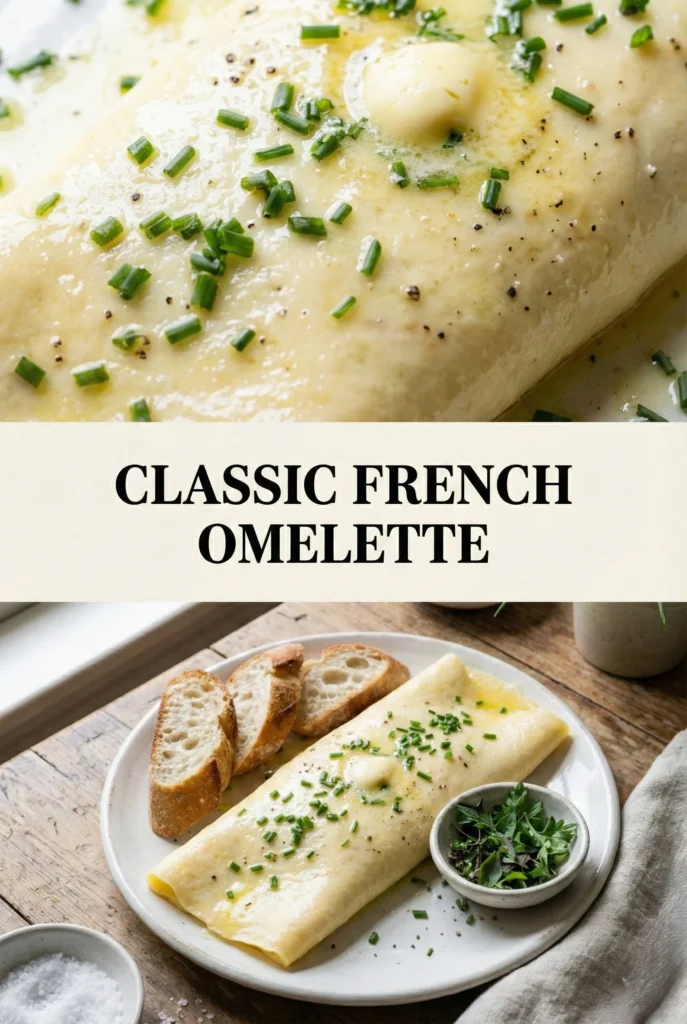
If you want a more filling meal, pair the Classic French Omelette with a thick slice of toasted sourdough or a buttery croissant. For a classic Parisian brunch experience, serve it alongside a few slices of smoked salmon and a dollop of crème fraîche. The smokiness of the fish highlights the delicate flavor of the Classic French Omelette beautifully.
Don’t forget the beverages! A crisp glass of dry white wine or a sparkling Mimosa elevates the Classic French Omelette into a celebratory feast. If you prefer a non-alcoholic option, a fresh-pressed orange juice or a hot café au lait works wonderfully. No matter what you choose, keep the side dishes simple so the Classic French Omelette remains the star of the show.
A Classic French Omelette pairs beautifully with light, fresh sides that complement its rich, buttery profile. If you’re looking for a delightful breakfast or brunch side, try a Baked German Pancake Recipe.
FAQs
What is the difference between a French omelette and an American omelette?
The primary difference lies in the texture and color. An American omelette usually features a browned, slightly crispy exterior and large, fluffy curds. In contrast, a Classic French Omelette has a smooth, pale yellow exterior with no browning and a creamy, custard-like interior with very small curds.
Do I need to add milk or cream to the eggs?
No, a Classic French Omelette does not require milk or cream. The creamy texture comes entirely from the “shake and stir” technique and the emulsion of the eggs with the butter. Adding dairy can actually make the Classic French Omelette too heavy and prevent it from setting correctly.
Why is my omelette sticking to the pan?
If your Classic French Omelette sticks, your pan may have lost its non-stick coating, or you did not use enough butter. Ensure the butter coats the entire surface of the pan before adding the eggs. Additionally, make sure the pan is sufficiently heated before pouring in the egg mixture.
What does “baveuse” mean in French cooking?
“Baveuse” refers to the slightly runny, undercooked state of the eggs in the center of a Classic French Omelette. This translates to “drooly” or “oozy,” indicating the desired creamy consistency that distinguishes a professional Classic French Omelette from a standard one.
The Classic French Omelette is a staple in French cuisine, renowned for its silky texture and delicate flavor. It is often seen as a test of a chef’s skill, as the perfect omelette requires careful temperature control and technique to achieve its signature creaminess, as explored in this article.
Nutrition Information (per serving)
The Classic French Omelette provides a dense source of nutrients, including vitamins A, D, and B12. It is an excellent choice for those following a low-carb or ketogenic diet.
| Nutrient | Amount |
|---|---|
| Calories | 310 kcal |
| Total Fat | 26g |
| Saturated Fat | 12g |
| Cholesterol | 550mg |
| Sodium | 380mg |
| Total Carbohydrates | 2g |
| Protein | 19g |
Enjoy your journey into French cuisine with this Classic French Omelette. With a little bit of practice, you will soon be rolling these beautiful yellow treasures out of your pan like a pro. Happy cooking!
Print
Classic French Omelette
- Total Time: 10 mins
- Yield: 1 serving 1x
- Diet: Gluten Free
Description
The Classic French Omelette is a smooth, pale, and buttery delight that serves as perfect comfort food for any meal. Unlike the American-style omelette, it has a silky custard-like interior with a glossy finish.
Ingredients
3 Large Eggs
1 Tablespoon Unsalted Butter
To taste Kosher Salt
A pinch White Pepper
1 Teaspoon Fresh Chives
Instructions
- Prepare the Eggs: Crack the eggs into a bowl, add salt and white pepper, and whisk until uniform
- Heat the Pan: Place a non-stick skillet over medium-low heat and add butter. Allow it to melt but not brow
- The 'Shake and Stir': Pour the eggs into the pan, stirring in a circular motion while shaking the pa
- Form the Omelette: Once the eggs look like wet curds, stop stirring, smooth into an even layer, and let sit to set the bottom
- The Fold: Tilt the pan and roll the edge of the omelette toward the center until finished
- The Plate: Slide the omelette onto a warm plate and shape it neatly
Notes
Practice makes perfect, and focus on temperature control to avoid browning.
- Prep Time: 5 mins
- Cook Time: 5 mins
- Category: Breakfast
- Method: Frying
- Cuisine: French
Nutrition
- Serving Size: 1 omelette
- Calories: 310 kcal
- Sugar: 0 g
- Sodium: 380 mg
- Fat: 26 g
- Saturated Fat: 12 g
- Unsaturated Fat: 10 g
- Trans Fat: 0 g
- Carbohydrates: 2 g
- Fiber: 0 g
- Protein: 19 g
- Cholesterol: 550 mg