
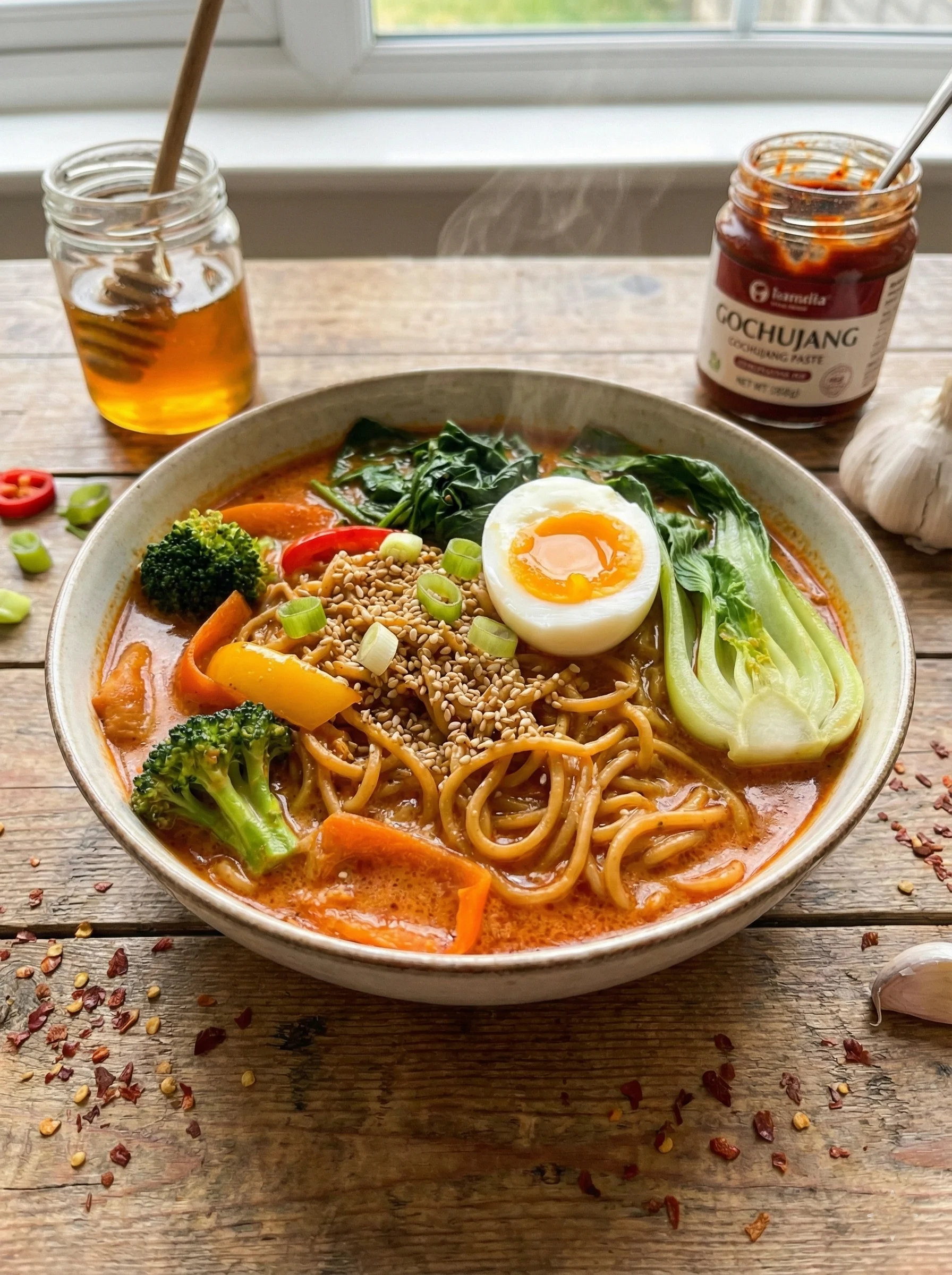
I remember one particularly chilly evening, the kind where only the deepest, most comforting flavors could truly warm the soul. I craved something rich, a little spicy, and utterly satisfying, yet still packed with the vibrant nourishment I always advocate for. That night, inspiration struck, and I found myself whisking together a broth that would become the cornerstone of what I now call my ultimate comfort creation: Creamy gochujang ramen with soft egg and sesame.
This dish isn’t just a meal; it’s a hug in a bowl, a harmonious blend of fiery Korean gochujang, silky broth, perfectly runny soft-boiled eggs, and the delightful crunch of toasted sesame. It felt like pure magic, transforming simple ingredients into an extraordinary experience. I realized then that this was a recipe I simply had to share, a dish that proves healthy eating can be incredibly indulgent and deeply flavorful.
It effortlessly caters to diverse palates and dietary needs, offering simple swaps for a completely vegan or gluten-free delight without compromising on taste or texture. Prepare to fall in love with the luscious depths of this incredible creamy gochujang ramen with soft egg and sesame. It’s a true testament to the power of fresh, thoughtfully combined ingredients.
This nourishing noodle bowl embraces you with every slurp, a vibrant celebration of flavor that perfectly embodies the Fresh & Fit philosophy. You deserve this kind of joy in your kitchen!
Why You’ll Love This Creamy Gochujang Ramen with Soft Egg and Sesame
This isn’t just another ramen recipe; it’s a culinary revelation that perfectly balances indulgence with wholesome goodness. You’ll quickly discover why this creamy gochujang ramen with soft egg and sesame will become a staple in your repertoire. First, the flavor profile is simply out of this world.
The robust, fermented heat of gochujang melds beautifully with a velvety, dairy-free creaminess, creating an umami bomb that tantalizes your taste buds. Furthermore, its incredible versatility allows for endless customization. Easily adapt it to your dietary needs; make it fully vegan by swapping the egg for pan-fried tofu and using plant-based noodles, or keep it gluten-free with rice noodles.
Moreover, preparing this delightful bowl of creamy gochujang ramen with soft egg and sesame is surprisingly quick, making it perfect for weeknight dinners when you crave something special without the fuss. It truly offers a complete meal in one bowl, brimming with nourishing vegetables, satisfying protein, and complex carbohydrates. Beyond its delicious taste, this ramen delivers a comforting warmth that soothes both body and soul, a testament to the power of mindful cooking.
You are creating a dish that truly nourishes from the inside out. Embrace the vibrant flavors and comforting embrace of your very own creamy gochujang ramen with soft egg and sesame.
Ingredients You’ll Need
Gathering your ingredients forms the crucial first step towards crafting this incredible creamy gochujang ramen with soft egg and sesame. I always emphasize fresh, high-quality components for the best flavor and nutritional punch. Think vibrant greens, aromatic garlic, and the rich depth of gochujang.
| Category | Ingredient | Notes & Fresh & Fit Insight |
|---|---|---|
| Noodles | Ramen noodles | Use your favorite brand. For GF, opt for brown rice ramen or shirataki noodles. |
| Broth Base | Vegetable broth | Choose a low-sodium, high-quality broth for a clean base. |
| Gochujang (Korean chili paste) | The star of our creamy gochujang ramen. Look for a good quality one; provides amazing depth. | |
| Creamy plant-based milk (e.g., oat, soy, cashew) | Unsweetened! Creates that luscious creaminess without dairy. | |
| Soy sauce or tamari | Adds umami. Use tamari for GF. | |
| Sesame oil | Toasted sesame oil provides incredible fragrance. | |
| Maple syrup or agave nectar | Just a touch to balance the spice and acidity. | |
| Garlic | Freshly minced, always! Boosts flavor and immune benefits. | |
| Ginger | Freshly grated, adds a wonderful zing and anti-inflammatory properties. | |
| Toppings | Large eggs | For perfect soft-boiled eggs, the essential topping for creamy gochujang ramen with soft egg and sesame. Omit for vegan. |
| Fresh spinach or bok choy | Adds vibrant greens and essential vitamins. | |
| Green onions | Finely sliced for freshness and a mild oniony bite. | |
| Toasted sesame seeds | For crunch and nutty aroma. | |
| Chili flakes or gochugaru (optional) | For extra heat, if you desire! |
Substitutions & Variations
The beauty of this creamy gochujang ramen with soft egg and sesame lies in its incredible adaptability. I encourage you to make it truly your own, tailoring it to your preferences and what you have on hand. Feel empowered to explore!
- Noodle Alternatives: If you don’t have traditional ramen noodles, feel free to use udon, soba, or even thin spaghetti. For a lighter option, zucchini noodles or spiraled sweet potato noodles offer a wonderful twist. Remember, brown rice ramen works beautifully for a gluten-free creamy gochujang ramen with soft egg and sesame.
- Protein Power-Ups: While the soft egg is a star, you can easily switch things up. For a vegan version, pan-fried firm tofu or tempeh, marinated and crisped, creates a fantastic protein boost. Sautéed mushrooms, particularly shiitake or oyster varieties, also add a delightful umami depth. If you prefer meat, shredded chicken or thinly sliced pork belly would also complement this rich creamy gochujang ramen.
- Veggie Boosts: Load up on even more greens! Sautéed mushrooms, shredded carrots, bell peppers, snow peas, or corn kernels all make excellent additions. Feel free to use whatever fresh vegetables you have in your fridge; this dish welcomes them all.
- Spice Level Adjustments: Gochujang offers a moderate, complex heat. If you love things fiery, add extra gochugaru (Korean chili powder) or a dash of your favorite hot sauce. For a milder experience, reduce the amount of gochujang slightly and increase the plant-based milk. This ensures everyone can enjoy a bowl of creamy gochujang ramen exactly how they like it.
- Flavor Enhancers: A spoonful of white miso paste stirred into the broth adds another layer of fermented goodness and umami. A squeeze of fresh lime juice at the end brightens all the flavors beautifully.
Step-by-Step Instructions
Creating your own bowl of creamy gochujang ramen with soft egg and sesame is a truly rewarding experience. Follow these simple steps, and you’ll have a vibrant, satisfying meal in no time!
Visual Guide: We’ve included this video to help you see the techniques in action, but please stick to the written instructions below for the exact recipe.
- Prepare Your Eggs (if using): Bring a small pot of water to a rolling boil. Carefully lower your eggs into the boiling water and cook for exactly 6-7 minutes for a perfectly jammy yolk. Immediately transfer the eggs to an ice bath to stop the cooking process. Once cooled, peel them gently. Set aside.
- Cook the Noodles: In a separate pot, cook your ramen noodles according to package directions. Ensure they are al dente. Drain them well and set aside, tossing with a tiny drizzle of sesame oil to prevent sticking.
- Build the Broth Base: In a medium saucepan or pot, heat a tiny bit of sesame oil over medium heat. Add the minced garlic and grated ginger, sautéing for about 30-60 seconds until fragrant. Do not let them burn.
- Whisk in the Flavor: Add the gochujang, vegetable broth, plant-based milk, soy sauce (or tamari), and maple syrup (or agave) to the pot. Whisk everything together thoroughly until the gochujang is fully dissolved and the mixture is smooth and creamy.
- Simmer and Season: Bring the broth to a gentle simmer, then reduce the heat to low. Allow it to simmer for 5-7 minutes, letting the flavors meld and deepen. Taste the broth and adjust seasonings as needed – perhaps a little more soy sauce for saltiness, or a tiny bit more maple syrup to balance the spice. This is your delicious creamy gochujang ramen base!
- Add Your Greens: Stir in the fresh spinach or bok choy. Cook just until wilted, usually 1-2 minutes. This keeps them vibrant and nutritious.
- Assemble Your Bowls: Divide the cooked noodles among serving bowls. Ladle the hot, creamy gochujang broth and wilted greens over the noodles.
- Garnish and Serve: Halve your soft-boiled eggs and place them on top of the ramen. Generously sprinkle with sliced green onions and toasted sesame seeds. If you desire extra heat, add a pinch of chili flakes or gochugaru. Your beautiful bowl of creamy gochujang ramen with soft egg and sesame is now ready to enjoy! Serve immediately and savor every spoonful.
Pro Tips for Success
Elevate your creamy gochujang ramen with soft egg and sesame from simply delicious to truly extraordinary with these expert tips from my Fresh & Fit kitchen.
- The Perfect Soft-Boiled Egg: Timing is everything! For a jammy yolk, 6 minutes is ideal. For a slightly firmer but still rich yolk, go for 7 minutes. The ice bath is non-negotiable; it prevents overcooking and makes peeling much easier. This attention to detail makes all the difference in your creamy gochujang ramen with soft egg and sesame.
- Emulsify for Creaminess: When adding the gochujang and plant-based milk to the broth, whisk vigorously. This helps to fully emulsify the ingredients, resulting in that wonderfully smooth and creamy texture we adore. Don’t rush this step; it ensures your creamy gochujang ramen is perfectly velvety.
- Taste as You Go: Seasoning is personal. Always taste your broth before serving and adjust according to your preference. You might want more spice, more sweetness, or a touch more umami. Trust your palate!
- Fresh Ingredients Shine: Since this recipe focuses on whole foods, the quality of your ingredients truly matters. Use fresh garlic, ginger, and vibrant greens for the best possible flavor and nutritional benefit.
- Don’t Overcook Your Noodles: Nobody enjoys mushy noodles. Cook them just until al dente, as they will continue to soften slightly when combined with the hot broth. This preserves the satisfying texture of your creamy gochujang ramen.
- Warm Your Bowls: For an extra touch of hospitality, warm your serving bowls before ladling in the ramen. This helps keep the dish hot for longer, enhancing the overall eating experience.
Storage & Reheating Tips
While creamy gochujang ramen with soft egg and sesame is always best enjoyed fresh, you can certainly store and reheat components to enjoy later. Proper storage maintains freshness and flavor.
- Separate Components: For optimal results, store the broth and noodles separately in airtight containers in the refrigerator. The noodles can absorb too much broth and become mushy if stored together. Store any leftover soft-boiled eggs separately as well.
- Refrigeration Time: The broth will keep well in the refrigerator for up to 3-4 days. Cooked noodles are best consumed within 1-2 days.
- Reheating the Broth: Gently reheat the broth in a saucepan over medium-low heat, stirring occasionally, until it reaches a gentle simmer. Avoid boiling it vigorously, which can change its creamy texture. You might need to add a splash more vegetable broth or plant-based milk if it has thickened too much.
- Reheating Noodles: You can briefly dunk cooked noodles in hot water (or even the reheating broth) to warm them through. Do this just before serving to prevent them from becoming overcooked.
- Assembling for Leftovers: When ready to eat, combine freshly warmed noodles and broth. Add your stored toppings like fresh green onions and sesame seeds. If you have stored cooked eggs, add them at this stage. Unfortunately, soft-boiled eggs do not reheat well without changing their texture, so for the best experience, I recommend preparing fresh eggs if possible when enjoying leftover creamy gochujang ramen with soft egg and sesame.
What to Serve With This Recipe

- Simple Green Salad: A crisp salad with a light vinaigrette, perhaps a sesame-ginger dressing, offers a refreshing contrast to the ramen’s richness. Think mixed greens, thinly sliced cucumber, and a sprinkle of toasted almonds.
- Kimchi: For an authentic Korean touch and a fantastic probiotic boost, a small side of kimchi is always a welcome addition. Its tangy, fermented flavor cuts through the creaminess beautifully.
- Steamed Edamame: A bowl of lightly salted steamed edamame makes a wonderful, protein-rich appetizer or side. It’s simple, clean, and adds a lovely textural element.
- Seaweed Salad: A refreshing wakame salad provides a delightful oceanic flavor and a different texture, complementing the Asian-inspired profile of the creamy gochujang ramen.
- Cucumber Salad: A quick pickled or fresh cucumber salad with a light rice vinegar dressing offers a cool, crisp counterpoint to the warm, spicy ramen.
FAQs
Is this recipe truly spicy?
The level of spice in this creamy gochujang ramen with soft egg and sesame depends largely on the amount and brand of gochujang you use, as well as any added chili flakes. Gochujang provides a balanced, savory heat rather than an overwhelming fire. I would describe it as a medium spice level for most palates.
You can easily adjust it to your preference by adding less gochujang for a milder dish or incorporating extra gochugaru (Korean chili flakes) for more heat. It’s all about finding your perfect balance.
Can I make this creamy gochujang ramen vegan?
Absolutely! Transforming this creamy gochujang ramen with soft egg and sesame into a fully vegan meal is incredibly simple. Omit the soft-boiled egg and instead top your ramen with crispy pan-fried tofu, roasted mushrooms, or even a generous serving of shelled edamame.
Ensure your ramen noodles are egg-free (most are, but always check the label) and your plant-based milk is unsweetened. This recipe uses vegetable broth, making the base already suitable. You will still achieve that incredible depth of flavor and satisfying creaminess!
What kind of noodles are best for this creamy gochujang ramen with soft egg and sesame?
Traditional ramen noodles work wonderfully, providing that classic chewy texture. However, feel free to experiment! Udon noodles offer a thicker, chewier bite, while soba noodles provide an earthier, nutty flavor.
For a gluten-free option, I highly recommend brown rice ramen noodles, which hold up beautifully in the creamy broth, or even shirataki noodles for a lighter, low-carb alternative. Choose what you love most for your ultimate creamy gochujang ramen.
How do I get the perfect soft-boiled egg?
Achieving the perfect soft-boiled egg for your creamy gochujang ramen with soft egg and sesame is simpler than you think! Bring a pot of water to a rolling boil. Gently lower cold eggs directly from the fridge into the boiling water.
Cook for precisely 6 minutes for a beautifully runny yolk, or 7 minutes for a jammy, custardy yolk. Immediately transfer them to an ice bath for at least 2 minutes to stop the cooking process. Peel them under cold running water for ease. This method consistently delivers fantastic results.
Can I prepare parts of this dish ahead of time?
Yes, you certainly can! To streamline your cooking process, prepare the broth for your creamy gochujang ramen with soft egg and sesame ahead of time. You can make it up to 2-3 days in advance and store it in an airtight container in the refrigerator.
You can also chop your vegetables and measure out your seasonings. However, I strongly recommend cooking the noodles and the soft-boiled eggs fresh just before serving. This ensures the best texture for the noodles and the perfect gooey yolk for the eggs, maintaining the integrity of your delicious creamy gochujang Ramen.
Nutrition Information (per serving)
*Note: This is an approximate nutritional breakdown and can vary based on specific brands and exact quantities of ingredients used, especially if substitutions are made (e.g., vegan/GF options).*
| Nutrient | Approximate Value |
|---|---|
| Calories | 450-550 kcal |
| Protein | 20-25g |
| Fat | 15-20g |
| Carbohydrates | 50-60g |
| Fiber | 5-7g |
| Sodium | 800-1000mg |
Creamy gochujang ramen with soft egg and sesame
- Total Time: 30 mins
- Yield: 4 servings 1x
- Diet: Gluten Free, Vegan Option Available
Description
Creamy gochujang ramen with soft egg and sesame is a warm, comforting dish that combines the spicy depth of gochujang with a creamy broth, topped with soft-boiled eggs and fresh vegetables. It's adaptable for various dietary needs and provides a fulfilling and nutritious meal.
Ingredients
4 servings Ramen noodles
4 cups Vegetable broth
4 tbsp Gochujang (Korean chili paste)
1 cup Creamy plant-based milk (e.g., oat, soy, cashew)
2 tbsp Soy sauce or tamari
2 tsp Sesame oil
1 tbsp Maple syrup or agave nectar
4 cloves Garlic, minced
1 inch Ginger, grated
4 Large eggs
2 cups Fresh spinach or bok choy
4 Green onions, finely sliced
2 tbsp Toasted sesame seeds
Chili flakes or gochugaru (optional)
Instructions
- Prepare the soft-boiled eggs by boiling them for 6-7 minutes, then transferring to an ice bath
- Cook the ramen noodles according to package directions, then drain and toss with a bit of sesame oil
- In a medium saucepan, heat sesame oil and sauté garlic and ginger until fragrant
- Whisk in gochujang, vegetable broth, plant-based milk, soy sauce, and maple syrup until smooth
- Simmer the broth for 5-7 minutes, adjusting seasonings as needed
- Add spinach or bok choy to the broth and cook until wilted
- Divide noodles among bowls, ladle the broth and greens over, and top with halved eggs, green onions, and sesame seeds
Notes
For a vegan option, replace eggs with pan-fried tofu.
Store broth and noodles separately for optimal freshness.
- Prep Time: 20 mins
- Cook Time: 10 mins
- Category: Dinner
- Method: Stovetop
- Cuisine: Korean
Nutrition
- Serving Size: 1 bowl
- Calories: 500 kcal
- Sugar: 5 g
- Sodium: 900 mg
- Fat: 18 g
- Saturated Fat: 4 g
- Unsaturated Fat: 12 g
- Trans Fat: 0 g
- Carbohydrates: 60 g
- Fiber: 7 g
- Protein: 22 g
- Cholesterol: 186 mg