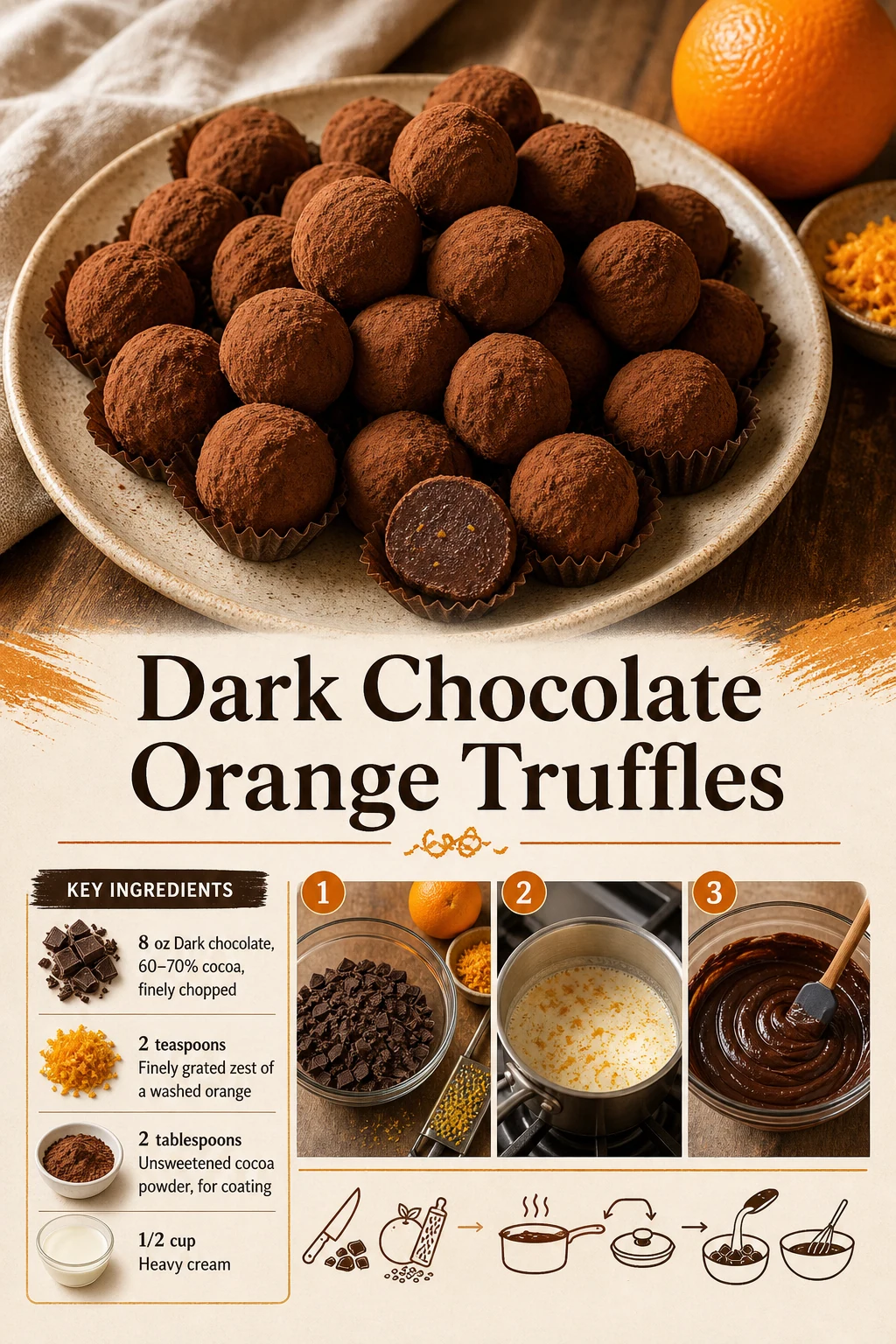
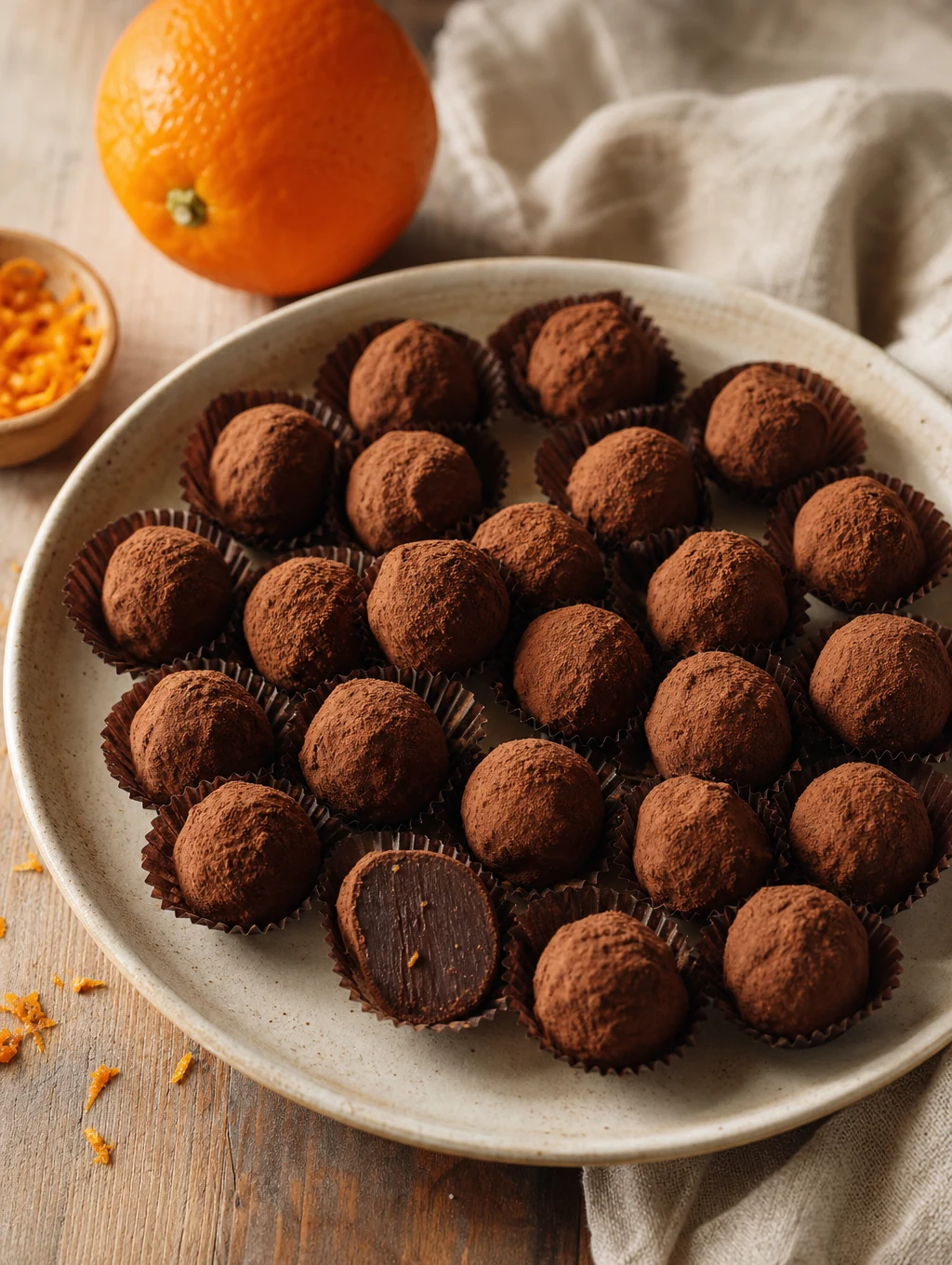
Dark chocolate orange truffles are small ganache bites with a cocoa-dusted outside and fresh orange zest inside. This proposed version uses a short zest infusion in warm cream before it meets chopped dark chocolate. There is no liqueur, orange juice, candy shell or tempered coating. Once the ganache is firm enough to scoop, it is rolled into about twenty-four pieces and lightly coated with unsweetened cocoa. The exact firmness, citrus strength and finished count need a kitchen trial; the two-hour chill is included in the working timeline.
Jump to ingredients · Jump to method
Why orange zest rather than juice?
Fine zest adds orange aroma without adding much water to the cream-and-chocolate mixture. Only the colored outer peel is used; white pith can taste bitter. The warmed cream carries the zest into the ganache, so little orange flecks may remain visible in a cut truffle. Juice would change the water balance and acidity and is not an interchangeable tablespoon-for-teaspoon addition.
Callebaut’s orange ganache example also uses zest in cream, but its professional formula includes glucose, sorbitol, honey, butter, liqueur and piping/tempering steps. This is a simpler home-kitchen proposal based on dark chocolate, heavy cream, zest, salt and cocoa powder. It should not inherit the professional recipe’s shelf-life claim. Chefly’s published chocolate-orange layer cake has the same flavor family but is an entirely different baked dessert.
Five measured components
| Ingredient | Amount | Role |
|---|---|---|
| Dark chocolate, 60–70% cocoa | 8 oz, finely chopped | Ganache structure and chocolate flavor. |
| Heavy cream | ½ cup | Warm liquid that melts chocolate and carries the zest. |
| Finely grated orange zest | 2 tsp from a washed orange | Orange aroma without fruit juice. |
| Fine salt | 1/16 tsp | Small measured balance. |
| Unsweetened cocoa powder | 2 tbsp | Light outer dusting; some may remain in the bowl. |
The 60–70% range acknowledges that dark chocolate comes in different percentages, but the first test should record an exact brand and percentage. That choice affects sweetness and how the ganache sets. Use a bar or other real chocolate that can be chopped small. The selected chocolate and cocoa may contain other allergens; the cream contributes milk. No dairy-free or vegan label is supported for this measured formula.
Make, set and coat the ganache
- Prepare chocolate and orange. Chop eight ounces of dark chocolate finely and place in a heatproof bowl. Wash and dry an orange. Finely grate two teaspoons outer zest without digging into the white pith.
- Infuse the cream. Warm one-half cup heavy cream with the zest in a small saucepan over medium-low heat until steaming, about five minutes. Take it off heat, cover and steep ten minutes. Rewarm gently for about two minutes until steaming again, without boiling hard.
- Form the ganache. Pour the warm cream and zest over the chopped chocolate. Let it sit approximately two minutes, then stir gently from the center outward until smooth. Stir in one-sixteenth teaspoon fine salt. If small lumps remain, allow a little more contact time with the warm cream rather than adding cold liquid or overheating the bowl.
- Chill. Cover and refrigerate about two hours until firm enough to scoop but not rock hard. A shallow bowl may set differently from a deep one; record the actual timing. Ganache that is too soft will smear during rolling.
- Shape. Put two tablespoons unsweetened cocoa in a shallow bowl. Scoop approximately twenty-four small portions, briefly roll each into a ball and turn in cocoa to coat. Place on a parchment-lined tray and keep chilled until serving. Measure the real yield in the first batch.
The proposed total is 157 minutes: twenty minutes of active preparation divided between chopping and shaping, seven minutes warming and rewarming the cream, ten minutes off-heat infusion and 120 minutes refrigeration. A two-minute stand after pouring is handled within active work, not advertised as an additional full cooking block. The final 24-piece count depends on the chosen scoop and how much ganache stays in the bowl.
Ganache texture and coating problems
The chocolate does not melt. Chop it more finely for the next attempt and make sure the cream is steaming when poured. A large pile of cold chocolate can cool the cream rapidly. Let it sit before stirring. Do not boil the cream so hard that much liquid evaporates or scorch the chocolate to force an emulsion.
The ganache looks oily or separated. Stir gently from the center while it is warm rather than beating large amounts of air into it. Chocolate percentage and the cream-to-chocolate ratio matter. Record the particular ingredients and method in a test batch before offering a purported universal rescue.
It is too firm to roll. Let the chilled bowl stand briefly under supervision until a small scoop can cut through it. If it is too soft, return it to the refrigerator. A kitchen trial should identify the comfortable window rather than promising that every refrigerator sets the ganache at exactly two hours.
Cocoa looks patchy. Use a small amount and turn each ball gently, tapping away excess. A truffle that is warm from hands may take a heavy coat, but too much dry powder can mask the citrus. Do not show a glossy tempered shell; that is a different confection.
Gifting and serving
These truffles can be arranged in paper candy cups after they have set, but a gifting container and safe holding interval have not been tested for this fresh-cream recipe. Keep them chilled, and do not transfer Callebaut’s professional conservation period to this simpler formula. A home trial should assess how the cocoa coating looks after refrigeration and how long the ganache remains pleasant at serving temperature.
For a dessert table, the truffles offer a small, dense chocolate bite beside fruit or a different cookie. Pairing them with the Chefly chocolate-orange layer cake repeats orange and chocolate on a larger scale, so menus may benefit from contrast instead. The cover photograph should show one cut center as ganache, not a cake-like crumb or orange jelly filling.
Questions before rolling
Can I use orange extract?
Extract strength varies and the base recipe uses measured fresh zest. A few drops might become overpowering; test a separately measured version rather than presenting extract as a direct substitute.
Can I dip these in melted chocolate?
That adds a coating stage, more chocolate and potentially tempering for a stable finish. These are cocoa-dusted truffles. A dipped version needs its own quantities, timing and image brief.
Can I make them without cream?
Replacing the half cup of dairy changes the ganache emulsion and firmness. This formula contains milk; a nondairy formulation requires a new test and allergen check.
Recipe-card handoff — preview, not a native plugin card
Dark Chocolate Orange Truffles. About twenty-four small truffles. Active prep approximately 20 minutes; cream heating approximately 7 minutes; orange steep 10 minutes; ganache chill approximately 120 minutes; total approximately 157 minutes. No-bake confection. Not kitchen-tested; nutrition not calculated.
Ingredients: 8 oz finely chopped 60–70% dark chocolate; ½ cup heavy cream; 2 tsp fine zest of a washed orange; 1/16 tsp fine salt; 2 tbsp unsweetened cocoa powder for coating.
Instructions: Chop chocolate. Warm cream with orange zest about five minutes until steaming, steep off heat ten minutes, then rewarm gently about two minutes. Pour over chocolate; stand two minutes, stir smooth and add salt. Cover and chill about two hours until scoopable. Roll roughly twenty-four small balls, dust with measured cocoa and keep chilled. Test texture, citrus strength and yield before publication.
Print
Dark Chocolate Orange Truffles
- Total Time: 157 minutes
- Yield: 24 servings 1x
Description
Twenty-four cocoa-dusted balls of dark-chocolate ganache made with orange-zest-infused cream.
Ingredients
- 8 oz Dark chocolate, 60–70% cocoa, finely chopped
- 1/2 cup Heavy cream
- 2 teaspoons Finely grated zest of a washed orange
- 1/16 teaspoon Fine salt
- 2 tablespoons Unsweetened cocoa powder, for coating
Instructions
- Finely chop 8 oz 60–70% dark chocolate into a heatproof bowl. Wash and zest an orange to measure 2 tsp, avoiding the white pith.
- Heat 1/2 cup heavy cream with 2 tsp zest in a small saucepan over medium-low until steaming, about 5 minutes. Remove from heat, cover and steep 10 minutes; rewarm gently for about 2 minutes until steaming again, not boiling.
- Pour the warm zest-and-cream mixture over the chocolate; let stand about 2 minutes, then stir from the center outward until a smooth ganache forms. Stir in 1/16 tsp fine salt. Cover and refrigerate about 2 hours until scoopable but not rock hard.
- Put 2 tbsp unsweetened cocoa powder in a shallow bowl. Scoop and briefly roll ganache into about 24 small balls; coat lightly with cocoa and place on a parchment-lined tray. Keep chilled until serving and record actual yield and holding quality in a trial.
Notes
Recipe-development draft; not kitchen-tested. Timing and yield are estimates. Nutrition has not been calculated.
Additional chilling, resting or cooling time: 130 minutes, included in the total.
Untested estimate with ten-minute off-heat zest infusion and two-hour ganache chill; active prep includes chopping and rolling across stages.
- Prep Time: 20 minutes
- Chilling, resting or cooling: 130 minutes
- Cook Time: 7 minutes
Nutrition
- Serving Size: One truffle, approximate final mass unmeasured