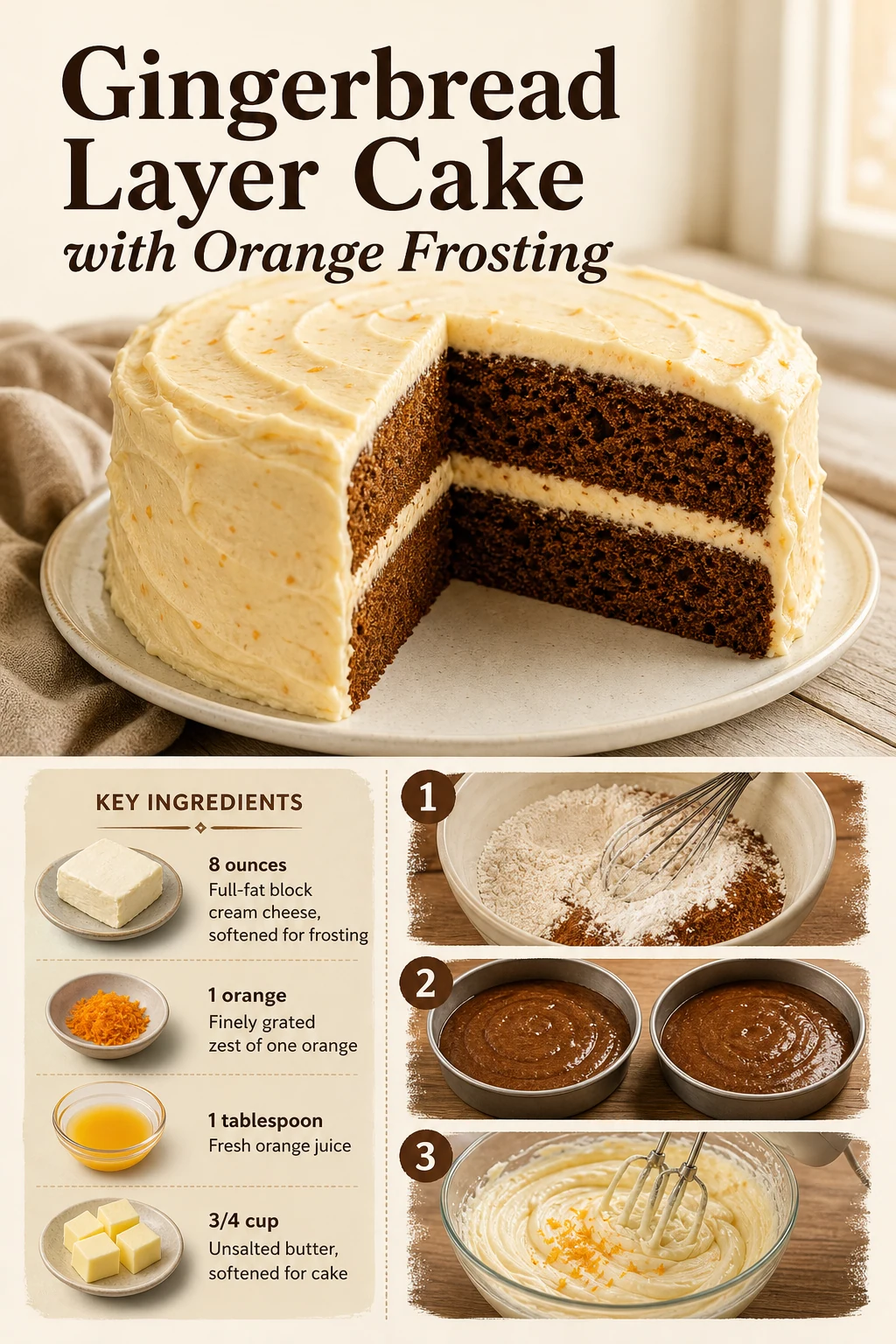
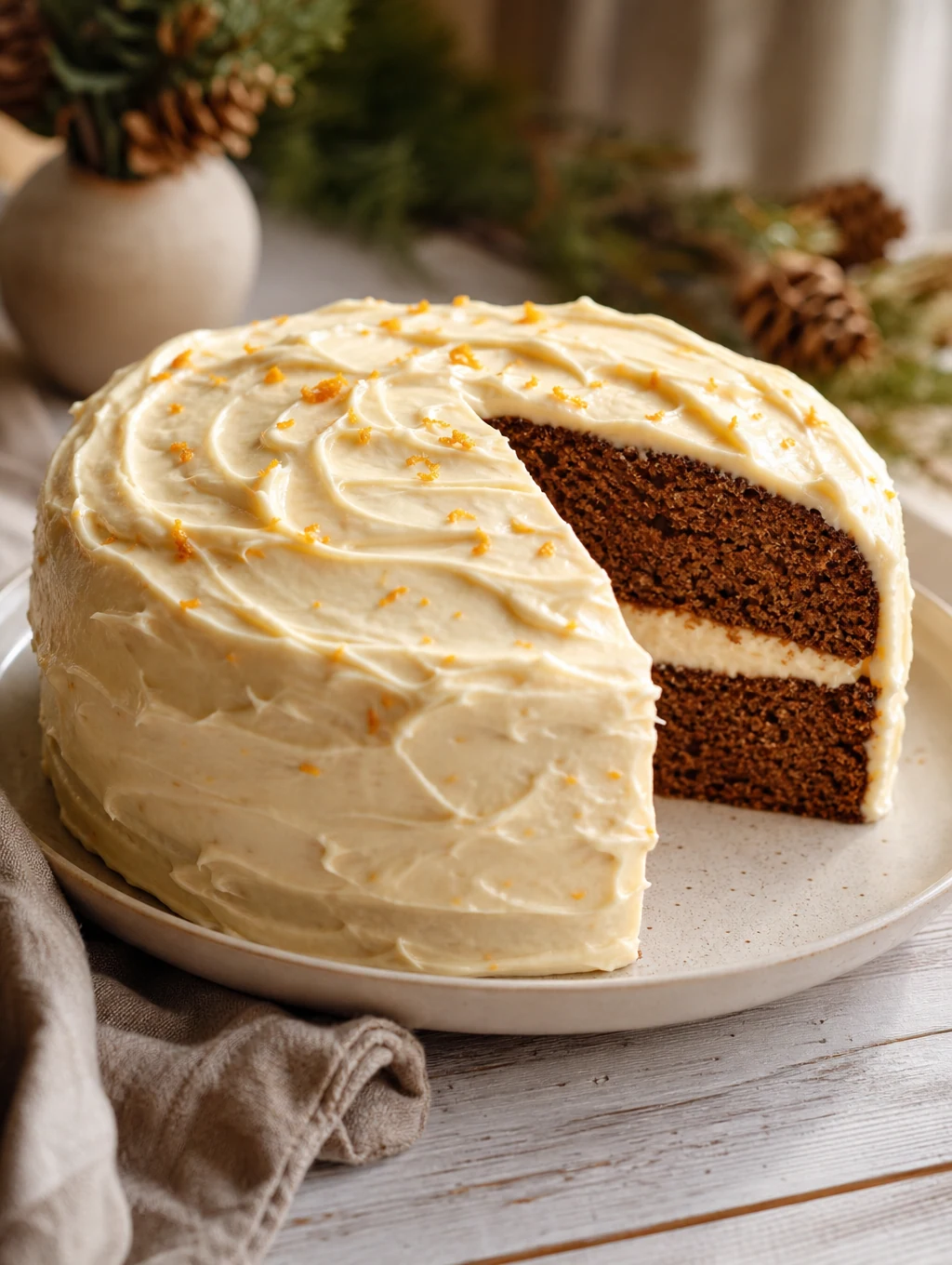
Gingerbread layer cake with orange frosting makes a holiday dessert when you want warm spice but not another cutout cookie. This proposed cake uses molasses, ginger, cinnamon and a little clove in two eight-inch layers. A pale orange-zest cream-cheese frosting goes between and around them only after they cool completely. The twelve slices and 140-minute working total still need a kitchen test; a warm cake cannot be frosted on the advertised clock just because the oven is off.
Jump to ingredients · Jump to method
Keep the spice and orange in different layers
The cake gets its gingerbread identity from unsulfured molasses and a measured dry-spice blend. The frosting uses zest from one orange and just a tablespoon of juice for a brighter finish without turning the cream cheese runny. There is no candied orange, chocolate ganache or cookie crumb on this base. If a test suggests a stronger orange flavor, record the new zest or juice amount before changing photos or card fields.
Use two equal eight-inch pans so the layers rise and bake at a similar rate. Weighing the batter between pans would be the most reliable next test, but the current cups and pan volumes are not yet measured. Begin checking both centers toward the end of the estimated 30–35 minutes; a dark molasses color does not tell you whether wet batter remains inside.
Ingredients for two layers and frosting
| Ingredient | Amount | Use |
|---|---|---|
| All-purpose flour | 2 1/2 cups | Cake. |
| Baking powder | 2 tsp | Cake leavening. |
| Baking soda | 1 tsp | Cake leavening with buttermilk/molasses. |
| Fine salt | 1/2 tsp | Cake balance. |
| Ground ginger | 2 tsp | Cake. |
| Ground cinnamon | 2 tsp | Cake. |
| Ground cloves | 1/4 tsp | Cake; do not substitute a whole tablespoon. |
| Unsalted butter, softened for cake | 3/4 cup | Separate from frosting butter. |
| Light brown sugar, packed | 3/4 cup | Cake. |
| Unsulfured molasses | 3/4 cup | Cake color and flavor. |
| Large eggs | 2 | Cake. |
| Buttermilk | 1 cup | Cake. |
| Full-fat block cream cheese, softened | 8 oz | Frosting. |
| Unsalted butter, softened for frosting | 1/2 cup | Frosting. |
| Powdered sugar, sifted | 3 cups | Frosting. |
| Finely grated orange zest | From 1 orange | Frosting. |
| Fresh orange juice | 1 tbsp | Frosting. |
You will need two eight-inch round cake pans, parchment, mixer, bowls, wire racks and an offset spatula. The frosting’s eight-ounce block cream cheese is not the same as whipped tub cheese; the latter could change its structure. The cake contains wheat, milk and egg. Do not taste the uncooked batter, in line with FDA’s raw-flour advice.
Bake, cool and frost
- Prepare pans and dry mix. Heat oven to 350°F (175°C). Grease and line two eight-inch round pans. Whisk two and a half cups flour, two teaspoons baking powder, one teaspoon baking soda, half teaspoon salt, two teaspoons each ginger and cinnamon, and quarter teaspoon cloves.
- Make the batter. Beat three-quarter cup softened butter with three-quarter cup packed brown sugar until lighter. Beat in three-quarter cup unsulfured molasses and then two eggs one at a time. Add dry mixture alternately with one cup buttermilk, beginning and ending with dry. Stop once combined rather than overbeating.
- Bake and cool completely. Divide batter evenly between pans. Bake about thirty to thirty-five minutes, checking both centers with a tester for no wet batter. Cool in pans about ten minutes, turn out onto racks and cool completely. Allow at least sixty minutes total cooling in the working plan; a warm center needs longer.
- Make orange frosting. Beat eight ounces softened block cream cheese with half cup softened butter until smooth. Add three cups sifted powdered sugar gradually. Beat in finely grated zest of one orange and one tablespoon fresh orange juice. If the frosting is too soft to spread, chill briefly and record the extra time rather than adding unmeasured sugar.
- Stack and serve. Place one fully cool layer on a plate and spread part of frosting over it. Add the second layer, then cover top and sides with the remainder. Cut twelve working slices. Refrigerate the cream-cheese-frosted cake promptly following FoodSafety.gov’s chill guidance.
Forty-five minutes is allocated to mixing, frosting and assembling, up to thirty-five minutes to baking, and at least sixty minutes to cooling: 140 minutes in the working plan. Mixing frosting while the layers cool can overlap, but you cannot frost while the cake is warm. The exact cool time depends on layer height and room temperature, so a measured test may extend the advertised total.
Fix texture before decorating
Sunken center: check leavener measures, avoid opening the oven too early and test that both centers are baked, not just the edges. Dense crumb: cream softened butter and sugar well and stop mixing after dry ingredients are incorporated. Runny frosting: begin with block cheese and only the measured tablespoon juice; a longer chill may help before adding unrecorded sugar. Sliding layers: let cake cool fully and level domed tops only after testing actual rise.
Blackstrap molasses can be more bitter than the unsulfured type specified here. A milk-and-lemon replacement for buttermilk needs a separate cake test. A dairy-free cream cheese changes frosting firmness and allergens. There is no automatic gluten-free, vegan or lower-sugar conversion: each would be a new formula with new baking and label checks.
Serve a holiday cake
Chefly’s published Biscoff Cookie Butter Cake is a different spiced-cookie-flavor dessert for another occasion. This gingerbread cake should have a visible brown crumb and pale orange frosting in its own photos, without a Biscoff spread or a pile of gingerbread cookies that are not listed. A clean, warm knife wiped between cuts can help portion the soft frosting.
Keep the frosted cake refrigerated and take out only the portions being served. A fixed multi-day shelf-life or freeze-and-thaw quality promise has not been tested. If you bake layers in advance, cool and wrap them separately before frosting, then conduct a real storage and flavor check before turning that into an overnight make-ahead claim.
Cake questions
Can I use one deep pan?
A deep single cake bakes differently from two eight-inch layers and may leave a wet center. Use the two specified pans for this formula or test a new pan and clock.
Can I frost immediately after baking?
No. Hot cake softens cream cheese frosting and makes layers slide. Wait until both layers are fully cool, even if that exceeds the working hour.
Where is the orange flavor?
One orange’s zest and one tablespoon juice are in the frosting, not the gingerbread batter. Keep that separation in a recipe card and in the two image prompts.
Recipe-card handoff: Two eight-inch gingerbread cake layers with orange-zest cream cheese frosting, twelve working slices; forty-five minutes active, up to thirty-five minutes baking and at least sixty minutes cooling, 140 minutes estimated. Seventeen listed ingredients and five steps above are proposed native fields. Nutrition, images, Tasty Recipes record and kitchen-test evidence are pending.
Print
Gingerbread Layer Cake with Orange Frosting
- Total Time: 140 minutes
- Yield: 12 servings 1x
Description
Two 8-inch molasses-spice cake layers filled and covered with an orange-zest cream cheese frosting.
Ingredients
- 2 1/2 cups All-purpose flour
- 2 teaspoons Baking powder
- 1 teaspoon Baking soda
- 1/2 teaspoon Fine salt
- 2 teaspoons Ground ginger
- 2 teaspoons Ground cinnamon
- 1/4 teaspoon Ground cloves
- 3/4 cup Unsalted butter, softened for cake
- 3/4 cup Light brown sugar, packed
- 3/4 cup Unsulfured molasses
- 2 eggs Large eggs
- 1 cup Buttermilk
- 8 ounces Full-fat block cream cheese, softened for frosting
- 1/2 cup Unsalted butter, softened for frosting
- 3 cups Powdered sugar, sifted
- 1 orange Finely grated zest of one orange
- 1 tablespoon Fresh orange juice
Instructions
- Heat oven to 350 F (175 C). Grease and line two 8-inch round pans. Whisk 2 1/2 cups flour, 2 teaspoons baking powder, 1 teaspoon baking soda, 1/2 teaspoon salt, 2 teaspoons each ground ginger and cinnamon, and 1/4 teaspoon cloves.
- Beat 3/4 cup softened unsalted butter with 3/4 cup packed light brown sugar until lighter. Beat in 3/4 cup unsulfured molasses, then 2 eggs one at a time. Add dry mix in alternation with 1 cup buttermilk, starting and ending with dry, mixing just until combined. Do not taste raw batter.
- Divide evenly between prepared pans. Bake about 30–35 minutes until a tester in each center comes out without wet batter. Cool in pans 10 minutes, then unmold onto racks and cool fully, at least 60 minutes total in the working plan.
- Beat 8 ounces softened block cream cheese with 1/2 cup softened unsalted butter until smooth. Beat in 3 cups sifted powdered sugar gradually, then zest of one orange and 1 tablespoon fresh orange juice. If too soft, chill briefly and record how that changes the clock.
- Place one completely cool layer on a plate, spread part of frosting, top with second layer and frost top and sides with the remainder. Divide into 12 working slices. Refrigerate the cream-cheese-frosted cake promptly; do not leave it on a long room-temperature buffet.
Notes
Recipe-development draft; not kitchen-tested. Timing and yield are estimates. Nutrition has not been calculated.
Additional chilling, resting or cooling time: 60 minutes, included in the total.
Working estimate: 45 minutes mixing/frosting/assembly, up to 35-minute bake and at least 60 minutes complete layer cooling. Longer cooling may be needed.
- Prep Time: 45 minutes
- Chilling, resting or cooling: 60 minutes
- Cook Time: 35 minutes
Nutrition
- Serving Size: One of twelve working slices from a two-layer 8-inch cake; actual baked and frosted weights pending