Italian Pizzelle Cookies. Working anise-and-vanilla pizzelle cookies pressed thin in a dedicated pizzelle iron and cooled crisp. The formula and timing below are working estimates for a future kitchen trial, not a claim that a batch has been made.
Jump to ingredients · Jump to method
A patterned cookie that depends on its iron
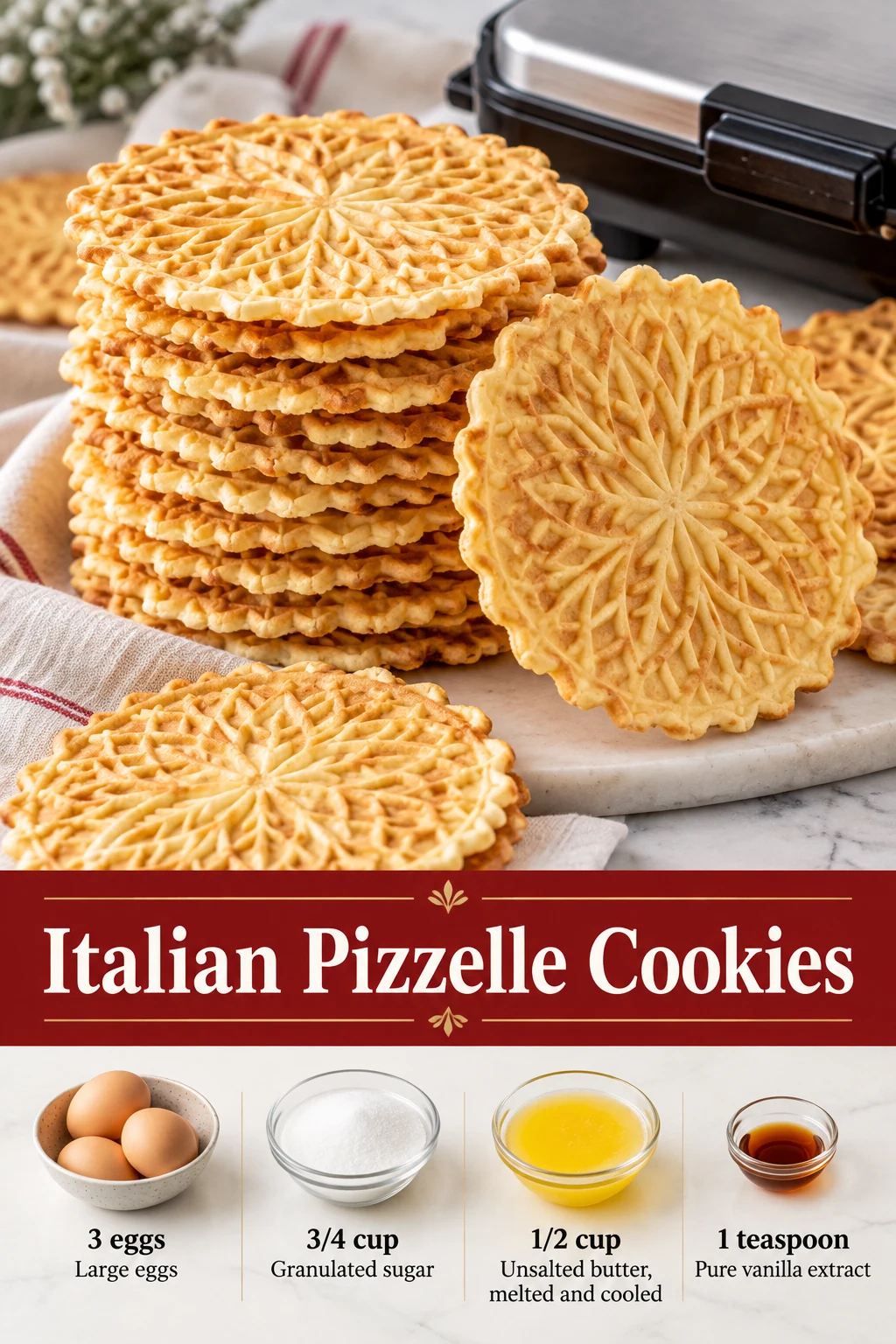
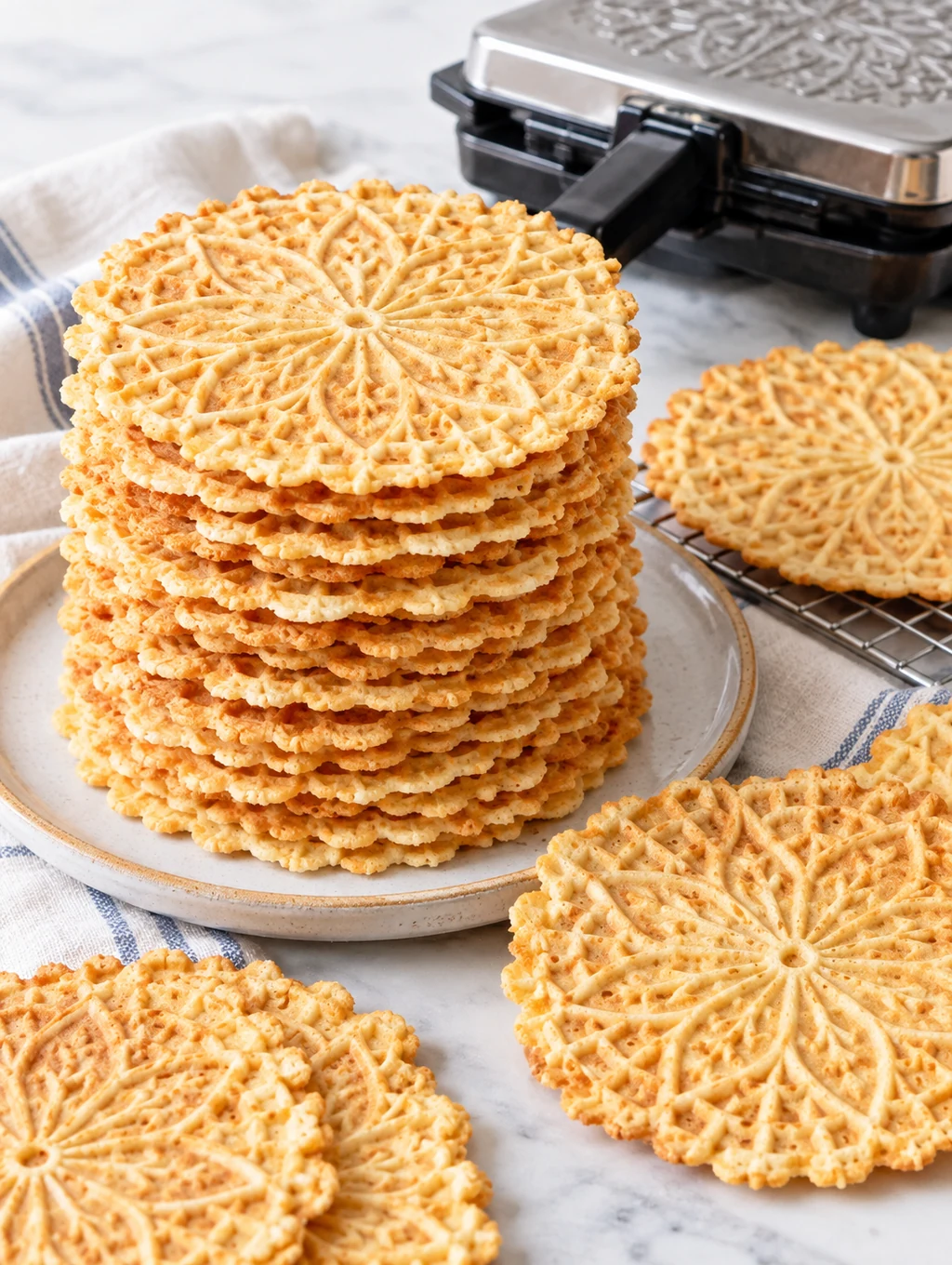
Pizzelle are thin pressed cookies with a delicate patterned surface, not ordinary drop cookies baked on a sheet pan. A dedicated iron cooks a spoonful of batter between heated patterned plates, producing edges that become crisp as they cool. This working version combines vanilla with a measured half teaspoon of anise extract for a clear but not overpowering licorice note.
The formula has not been kitchen-tested. A proposed thirty cookies assumes a two-pattern electric iron and modest scoops; some irons make larger or smaller rounds. The one-hour working clock includes roughly fifteen cycles and a final cool, but excludes appliance preheat. Verify the actual plate capacity before printing a yield or ready-time badge.
The batter should be thick enough to scoop
Three eggs and three-quarters cup sugar are whisked until a little thick and pale. Melted butter must cool before it meets the eggs or it may cook streaks into the mixture. Vanilla and anise extracts enter with the butter; anise seed is not included, so a photo with visible whole seeds would not match the base.
One and three-quarter cups all-purpose flour, two teaspoons baking powder and a little salt make a soft batter. Spoon flour into the measure rather than packing it; a heavier cup can lead to a stiff mixture. Fold until the flour disappears, then stop rather than beating extensively. Do not add milk just because the mixture is not pourable; it is meant to sit briefly on an iron pattern.
Butter, eggs and wheat are part of the base. A dairy-free or gluten-free label would need a completely retested formula. The anise flavor can be changed later, but an extract swap changes the named version and should be reflected in the card and images.
Ingredients for 30 cookies
| Ingredient | Amount | Use |
|---|---|---|
| Large eggs | 3 eggs | Batter structure. |
| Granulated sugar | 3/4 cup | Beat with eggs. |
| Unsalted butter, melted and cooled | 1/2 cup | Not hot when added. |
| Pure vanilla extract | 1 teaspoon | Flavor. |
| Anise extract | 1/2 teaspoon | Measured licorice-like note. |
| All-purpose flour | 1.75 cups | Spoon and level. |
| Baking powder | 2 teaspoons | Leavening. |
| Fine salt | 1/4 teaspoon | Balance. |
Step-by-step method
- Preheat a two-cookie electric pizzelle iron according to its manufacturer instructions. Whisk 3 eggs with 3/4 cup granulated sugar until slightly thick and pale, about 2–3 minutes. Whisk in 1/2 cup melted, cooled unsalted butter, 1 tsp vanilla and 1/2 tsp anise extract.
- Whisk 1 3/4 cups flour, 2 tsp baking powder and 1/4 tsp fine salt in another bowl. Fold into the egg mixture until no dry flour remains. The batter should be spoonable rather than pourable; do not thin with unmeasured milk.
- Place a modest scoop, roughly 1 tbsp, in the center of each warmed iron pattern, close without forcing batter out and cook per appliance instructions until lightly golden, often around 60–90 seconds. Lift thin cookies carefully with a heat-safe spatula onto a wire rack. Repeat in batches, reducing scoop size if batter spills.
- Cool each cookie flat and uncovered until fully crisp, about 10 minutes after the last batch. Count actual cookies and note the iron's cycle time; the 30-cookie yield and 60-minute total are estimates for a two-pattern appliance.
Press small amounts, then cool flat
Follow the iron's manual for preheat and any light surface coating; nonstick and older irons behave differently. Place approximately a tablespoon in the center of each pattern to start, close, and check a test round for whether it reaches the edge without overflowing. A too-large scoop can run out of the iron and burn around the hinges.
Most electric irons finish a thin cookie quickly, often in about a minute to a minute and a half, but color is a better endpoint than an untested universal clock. Lift with a thin heat-safe spatula and lay flat on a rack. Fresh pizzelle may be pliable for a moment; let airflow reach both sides so the steam leaves and the rounds crisp.
Work through the batter in cycles. For a two-pattern iron, about fifteen cycles are proposed; a single-pattern model doubles the active iron time. The final rack cool is measured after the last batch. Keep the first rounds uncovered while the remaining batter cooks rather than sealing warm cookies in a box.
If they bend, burn or stick
Soft pizzelle may be undercooked, stacked while still warm or exposed to a humid kitchen. Check the first round's color and allow complete rack cooling before deciding the batter needs more flour. An extra minute in a particular iron can burn the sugar, so adjust only after a small test.
Uneven or ragged edges usually reflect scoop amount and placement, not a need for extra batter. If the cookie sticks, confirm that the appliance reached its recommended temperature and that any oiling follows the manual. Do not pry with a metal utensil that might scratch a coated iron.
Bigger Bolder Baking provides a useful overview of iron timing and patterned texture. This independently measured Chefly version deliberately specifies vanilla and anise in the batter and no filling. It also differs from the local rugelach and kolaczki drafts: those are shaped cream-cheese pastries, not pressed iron cookies.
A crisp gift-box candidate
Once cool, stack gently with paper in a dry covered container. The finished crispness and storage window have not been measured for this formula, particularly in humid conditions. A kitchen test should note when the first and last batches soften and whether a dry tin helps; do not promise a month-long shelf life.
Chefly's Earl Grey cookies make a different, thicker cookie alongside a pizzelle assortment. The image prompt calls for golden unfilled rounds and the iron pattern; it is not a picture of a waffle, sandwich wafer or chocolate-coated variation. No real image or rights have been supplied.
Questions about the iron
Can these go in a waffle maker?
Not for the named result. A waffle maker is deeper and would produce a different thickness and texture; use a pizzelle iron for this method.
Can I omit anise?
A vanilla-only batch may be possible, but this measured base includes anise. Record the variation separately and adjust its title and description.
Why are they soft when first lifted?
They often firm as steam escapes on a rack. Check the test round after full cooling before extending iron time.
Further reading and related Chefly recipes: Bigger Bolder Baking's pizzelle guide; Chefly Earl Grey cookies. These are relevant references and other dishes, not evidence that this proposed formula was tested.
Recipe-card handoff — preview, not a native plugin card
Italian Pizzelle Cookies. Category: Cookies. 30 cookies. Prep approximately 20 minutes; cooking approximately 30 minutes; additional cooling/chilling approximately 10 minutes; total approximately 60 minutes excluding preheat. Not kitchen-tested; nutrition not calculated.
Ingredients: 3 eggs Large eggs; 3/4 cup Granulated sugar; 1/2 cup Unsalted butter, melted and cooled; 1 teaspoon Pure vanilla extract; 1/2 teaspoon Anise extract; 1.75 cups All-purpose flour; 2 teaspoons Baking powder; 1/4 teaspoon Fine salt.
Instructions: Preheat a two-cookie electric pizzelle iron according to its manufacturer instructions. Whisk 3 eggs with 3/4 cup granulated sugar until slightly thick and pale, about 2–3 minutes. Whisk in 1/2 cup melted, cooled unsalted butter, 1 tsp vanilla and 1/2 tsp anise extract. Whisk 1 3/4 cups flour, 2 tsp baking powder and 1/4 tsp fine salt in another bowl. Fold into the egg mixture until no dry flour remains. The batter should be spoonable rather than pourable; do not thin with unmeasured milk. Place a modest scoop, roughly 1 tbsp, in the center of each warmed iron pattern, close without forcing batter out and cook per appliance instructions until lightly golden, often around 60–90 seconds. Lift thin cookies carefully with a heat-safe spatula onto a wire rack. Repeat in batches, reducing scoop size if batter spills. Cool each cookie flat and uncovered until fully crisp, about 10 minutes after the last batch. Count actual cookies and note the iron's cycle time; the 30-cookie yield and 60-minute total are estimates for a two-pattern appliance.
Allergens: Egg; Milk; Wheat; Check extract and baking-powder packaging for individual needs. Review packaged ingredients and cross-contact before serving.
Print
Italian Pizzelle Cookies
- Total Time: 60 minutes
- Yield: 30 servings 1x
Description
About 30 thin anise-vanilla pizzelle made in a two-cookie electric iron.
Ingredients
- 3 eggs Large eggs
- 3/4 cup Granulated sugar
- 1/2 cup Unsalted butter, melted and cooled
- 1 teaspoon Pure vanilla extract
- 1/2 teaspoon Anise extract
- 1 3/4 cups All-purpose flour
- 2 teaspoons Baking powder
- 1/4 teaspoon Fine salt
Instructions
- Preheat a two-cookie electric pizzelle iron according to its manufacturer instructions. Whisk 3 eggs with 3/4 cup granulated sugar until slightly thick and pale, about 2–3 minutes. Whisk in 1/2 cup melted, cooled unsalted butter, 1 tsp vanilla and 1/2 tsp anise extract.
- Whisk 1 3/4 cups flour, 2 tsp baking powder and 1/4 tsp fine salt in another bowl. Fold into the egg mixture until no dry flour remains. The batter should be spoonable rather than pourable; do not thin with unmeasured milk.
- Place a modest scoop, roughly 1 tbsp, in the center of each warmed iron pattern, close without forcing batter out and cook per appliance instructions until lightly golden, often around 60–90 seconds. Lift thin cookies carefully with a heat-safe spatula onto a wire rack. Repeat in batches, reducing scoop size if batter spills.
- Cool each cookie flat and uncovered until fully crisp, about 10 minutes after the last batch. Count actual cookies and note the iron's cycle time; the 30-cookie yield and 60-minute total are estimates for a two-pattern appliance.
Notes
Recipe-development draft; not kitchen-tested. Timing and yield are estimates. Nutrition has not been calculated.
Additional chilling, resting or cooling time: 10 minutes, included in the total.
Untested estimate: 15 two-cookie iron cycles at about two minutes per cycle including handling, plus rack cool; equipment preheat excluded.
- Prep Time: 20 minutes
- Chilling, resting or cooling: 10 minutes
- Cook Time: 30 minutes
- Category: Cookies
Nutrition
- Serving Size: One thin cookie