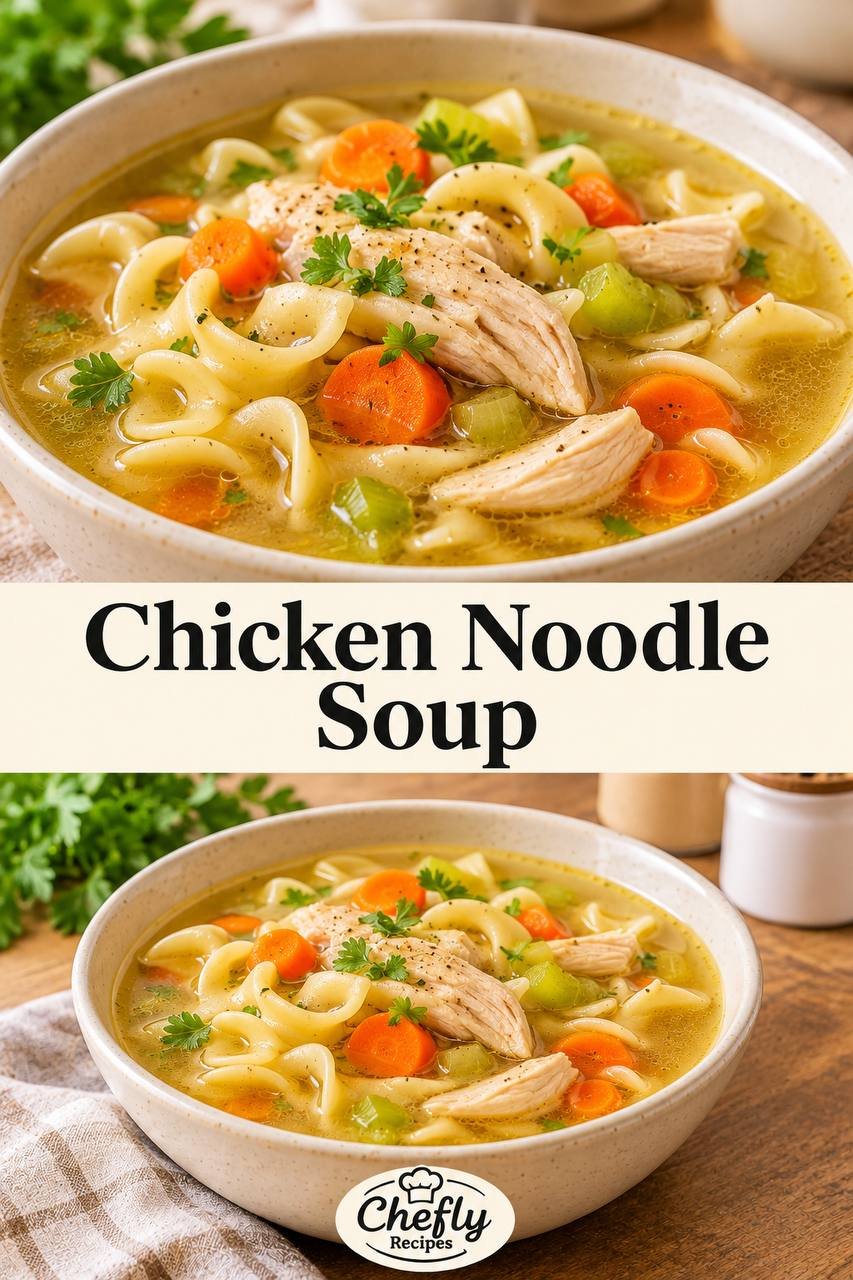
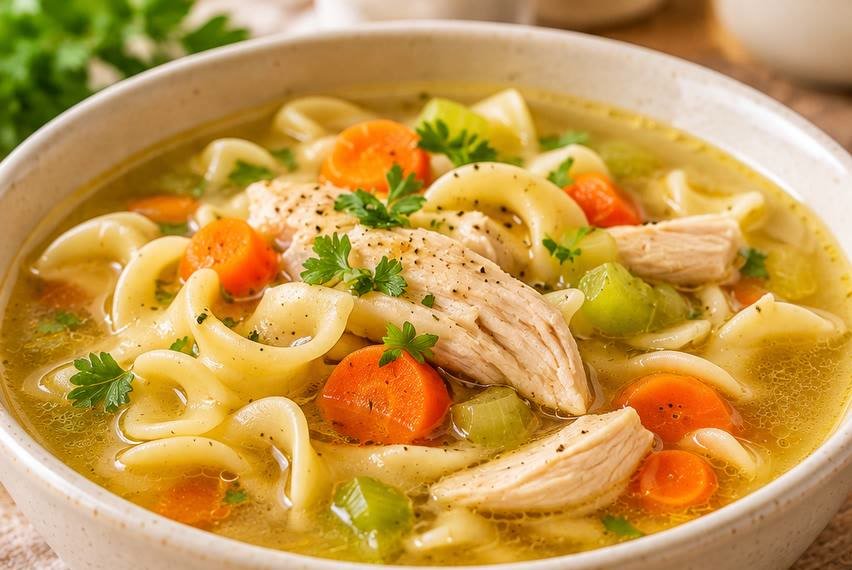
Homemade chicken noodle soup is a bowl of clear golden broth, tender shredded chicken, carrots, celery, and wide noodles rather than a thick, creamy stew. This stovetop version begins with onion and vegetables, gently cooks raw chicken in the broth, and adds the noodles near the end so they stay distinct. Parsley and an optional squeeze of lemon brighten the finished bowl without changing its familiar comfort-food character. The supplied images show the finished dish, not a step-by-step cooking test; the instructions below therefore emphasize thermometer checks and visual cues rather than promising an exact minute when every stove will finish.
Jump to the measured recipe, or read the practical notes first if you want broth and noodles that remain good for leftovers.
What to expect from this soup
The broth is savory and relatively light. Sautéing onion, carrot, and celery in a little olive oil gives the base a rounded flavor before the liquid goes in. Garlic, thyme, a bay leaf, and parsley add aroma without turning this into a spicy or heavily seasoned soup. Chicken breasts cook gently in the pot, are checked for doneness, then are shredded and returned. Wide egg noodles cook in the broth near the end and absorb some of its flavor.
This is intentionally different from Chefly’s Instant Pot chicken noodle soup: there is no pressure-cooker timing or release step. It also does not mimic a Thai red curry version, which uses a different broth and noodle profile. Keeping the scope clear helps the article answer a reader looking for a classic stovetop method, rather than promising several unrelated soups under one title.
The broth can become cloudier when noodles cook in it. That is normal; starch leaves the pasta and enriches the liquid slightly. If you want a clearer bowl for company or plan to store the soup for several days, cook the noodles separately in water and add them to individual bowls. The base recipe below cooks them in the soup for convenience and flavor, but the separate-noodle method is the most useful make-ahead variation.
Ingredients: amounts and choices
| Ingredient | Amount | Practical note |
|---|---|---|
| Olive oil | 2 tablespoons | For softening the vegetables. |
| Yellow onion | 1 medium, diced | Builds the savory base. |
| Carrots | 3 medium, sliced | Keep pieces similar in thickness. |
| Celery stalks | 3, sliced | Adds the familiar aromatic note. |
| Garlic cloves | 3, minced | Add after the vegetables so it does not scorch. |
| Dried thyme | 1 teaspoon | A restrained herbal backbone. |
| Bay leaf | 1 | Remove before serving. |
| Low-sodium chicken broth | 8 cups | Allows seasoning at the end; check the ingredient label. |
| Boneless, skinless chicken breasts | 1½ pounds | Cook to 165°F (74°C) before shredding. |
| Wide egg noodles | 6 ounces dry | Add near the end; check package timing. |
| Fine salt and black pepper | To taste | Start modestly because broth brands vary. |
| Chopped fresh parsley | ¼ cup | Stir in just before serving. |
| Lemon juice | 1 tablespoon, optional | Add to taste off heat. |
The chicken amount makes six moderate bowls when accompanied by the vegetables and noodles. Serving size will change with bowl capacity and evaporation; if a large pot simmers uncovered for a long time, add a little water or broth to restore the volume before seasoning. The recipe is not based on a pre-cooked rotisserie chicken, because the raw-chicken temperature check is built into the method. If you choose a pre-cooked chicken shortcut, adjust the sequence and use safe leftover handling rather than treating it as raw.
Use low-sodium broth if possible. A full-salt carton plus reduction can make the soup overly salty before you have a chance to correct it. Tasting near the end is more reliable than writing a fixed teaspoon of salt for every possible brand. If a label matters for dietary or religious reasons, inspect the broth, noodle, and poultry sourcing; this formula contains no pork, wine, or gelatin, but that alone is not a certification of commercial ingredients or cross-contact.
Wide egg noodles resemble those in the images. Thin noodles or small pasta shapes can work, but cooking times differ and the final bowl looks different. If you need to avoid egg, use a suitable egg-free pasta and follow its package directions. If you need gluten-free noodles, choose a product labeled for that requirement and cook it separately if it tends to release starch. Do not claim the base recipe is gluten-free: regular egg noodles contain wheat.
Equipment and food-safety setup
Choose a 5- to 6-quart pot with a lid, a cutting board and sharp knife, tongs, a clean plate for cooked chicken, two forks for shredding, and a food thermometer. A thermometer matters because a chicken breast can look pale before the thickest part reaches a safe temperature, or can overcook if you wait for an arbitrary number on the clock. The FoodSafety.gov safe-temperature chart lists 165°F (74°C) for poultry.
Keep raw poultry separate from vegetables that are ready to eat. Wash hands, knife, board, and surfaces after handling it. Do not put cooked chicken back onto a plate that held raw poultry unless that plate has been washed. The FDA’s clean, separate, cook, and chill guidance explains these basic steps. You do not need to rinse raw chicken; avoid splashing raw juices around the sink.
The estimated 55-minute total assumes about 20 minutes for chopping and setup, then 35 minutes of stovetop cooking. A thick breast may take longer to reach 165°F, and your noodle brand may specify a different simmer time. The temperature check, not the estimate, determines when the chicken is ready. Start with thawed poultry; do not assume frozen pieces follow the same timing.
Stovetop method, step by step
1. Soften the vegetables. Set the pot over medium heat and add olive oil. Stir in diced onion, carrots, and celery. Cook for about 7–8 minutes, stirring occasionally, until the onion softens and the vegetables start to smell sweet. The carrots do not need to be fully tender yet; they will continue in broth. If the pan looks dry or vegetables catch, turn the heat down rather than browning them deeply.
2. Add aromatics and liquid. Stir in garlic and thyme for about 30–60 seconds, just until fragrant. Pour in the broth, scrape any flavorful bits from the pot bottom, and add the bay leaf. Bring the liquid toward a gentle simmer. A rolling boil is unnecessary once the chicken goes in and can make the breast fibers firmer.
3. Cook the chicken safely. Lower the thawed chicken breasts into the simmering broth. Cover partly and maintain a gentle simmer, checking after roughly 12–15 minutes. The thickest part of every breast must reach at least 165°F (74°C) on a food thermometer; thicker pieces can take longer. Lift them onto a clean plate when they reach the endpoint. Keep the pot simmering so the vegetables finish softening.
4. Shred and taste the base. Let the chicken rest until you can handle it safely, then pull it into bite-size shreds with two clean forks. Remove and discard the bay leaf. Taste the broth and add salt and pepper in small increments. If the carrots are still hard, give them a few more minutes before adding noodles; pasta should not sit in boiling liquid while waiting for vegetables to catch up.
5. Cook the noodles. Stir the dry egg noodles into the simmering soup. Use the package’s cooking time as a guide, usually about 7–9 minutes for many wide noodles, and check a piece for tenderness. Do not add them when the pot is barely warm or boil them vigorously until they fall apart. The broth may need a splash of water if the noodles absorb more than expected.
6. Finish and serve. Return shredded chicken to the pot for the last minute or two, until hot throughout. Stir in parsley. Turn off the heat and add optional lemon juice a little at a time, tasting before using the full tablespoon. Ladle into bowls with an even share of chicken, vegetables, noodles, and broth. Finish with black pepper if you like; there is no need for wine, bacon, or a cream swirl.
If your chicken breasts vary greatly in size, check each one separately and remove smaller pieces as they reach 165°F. Leaving a finished breast in a simmering pot while waiting for a thicker one can make it stringy. If you substitute boneless thighs, the official safe poultry endpoint remains 165°F; texture preferences and cooking duration differ, so adjust by thermometer and tenderness.
Keeping broth, chicken, and noodles balanced
Noodles keep drinking broth even after the heat is off. For a soup you plan to eat immediately, that is a pleasant, lightly thickened bowl. For meal prep, it can turn into a pasta dish by the next day. A simple solution is to divide the broth-and-chicken base from the dry noodles: cook noodles separately to the texture you want, drain, and add a handful to each serving bowl. Store remaining noodles and soup separately. The photograph still matches at serving time.
If the soup tastes flat, do not immediately add a large amount of salt. First make sure it is warm enough to taste properly, then add salt a pinch at a time. A little lemon juice can make existing flavors seem clearer, but adding too much makes the broth taste sour. Fresh parsley added at the end tastes brighter than parsley boiled for 30 minutes. Black pepper can go on individual bowls if family members prefer different levels.
If the broth is too salty, adding water dilutes it but also thins the flavor. Add a little unsalted broth or water and more cooked vegetables if you have them; avoid an unsupported “potato absorbs salt” trick. If it is too concentrated from evaporation, top up before the noodles go in. If it is watery, simmer the broth briefly before adding pasta, not after it has already reached tenderness.
Cloudy broth is not a failure. Pasta starch, tiny chicken proteins, and a vigorous boil all affect clarity. Skim visible foam if you want a cleaner surface, keep the simmer gentle, and cook noodles separately for a clearer plated result. The visual aim is an appetizing golden soup with distinct chicken and vegetables, not a laboratory-clear consommé.
Variations without changing the identity
Swap half the carrots for parsnip if you enjoy a sweeter root-vegetable note, but cut pieces small enough to cook in the same window. A few peas can go in with the final minutes of noodles. For a more herb-forward bowl, finish with dill alongside parsley; taste first, since dill is assertive. None of these additions belong to the base ingredient table unless you actually use them and update the card.
For a lemonier soup, add an extra teaspoon of juice to a single bowl rather than to the full pot. This protects leftovers from becoming sharper as they sit. If using homemade broth, chill and store it safely, remove any bones before serving, and measure the same eight cups. Homemade broths vary more in salt and gelatin content than cartons; the recipe has no separate gelatin ingredient.
For a shortcut with safely cooked chicken, soften the vegetables and simmer them in broth until tender, then add noodles and stir in shredded cooked chicken at the end. Heat everything thoroughly, and remember the leftover reheating guidance of 165°F (74°C) if using leftovers. The cook time may be shorter, but this is a variation, not the timing claimed for the raw-chicken base recipe.
Storage, freezing, and reheating
Divide a large pot into shallow containers and refrigerate promptly. The FDA advises chilling perishable food within two hours of cooking, or within one hour when the surrounding temperature exceeds 90°F (32°C). Do not put a tightly covered, piping-hot deep pot into the refrigerator and assume the center will cool quickly. Shallow portions cool more efficiently. The FoodSafety.gov cold-storage chart provides specific refrigerator and freezer ranges; use cooked chicken soup within three to four days when properly chilled, or freeze for longer quality.
For freezing, the broth, vegetables, and chicken retain a better texture without fully cooked egg noodles. Freeze the base in meal-size containers with headspace, label the date, and prepare fresh noodles after thawing. If you do freeze a completed bowl, expect softer pasta on reheating. Thaw safely in the refrigerator rather than leaving the container on the counter. Bring soup back to a thorough heat, stir to eliminate cool pockets, and confirm reheated leftovers reach 165°F (74°C) as advised by FoodSafety.gov. Add cooked noodles near the end.
Do not repeatedly heat the entire pot if only one person needs a bowl. Portion out what you will serve, reheat it properly, and keep the rest refrigerated. An occasional splash of broth or water restores the serving consistency after noodles absorb liquid. Taste again after reheating; seasonings and acidity can seem different when the soup is hot.
What to serve with it and where to explore next
A crusty bread, a simple green salad, or roasted vegetables can round out the meal. Keep the soup the main event and choose a side that will not overwhelm its gentle broth. If you would rather use an appliance, Chefly has an Instant Pot chicken noodle soup. For a much more aromatic, coconut-curry direction, see Thai red curry chicken noodle soup. Another distinct chicken-soup option is chicken tortilla soup with avocado. Those are alternatives, not extra steps or ingredients for this stovetop recipe.
Because the finished bowl contains wheat and egg from the noodles, it is not appropriate to label it gluten-free or egg-free. The base also contains chicken. If cooking for someone with food allergies or a strict halal requirement, inspect the actual product labels and preparation environment; an ingredient list alone cannot address every manufacturing or kitchen cross-contact risk.
Frequently asked questions
Can I make the broth in advance?
Yes. Cook the soup base with vegetables and chicken, check the chicken’s safe temperature, cool it promptly in shallow containers, and refrigerate. Reheat the amount you need, then cook noodles in that portion or separately. This gives a more distinct pasta texture than storing cooked noodles in a full pot of broth.
Can I use chicken thighs instead of breasts?
Boneless, skinless thighs are a reasonable variation. Use the same weight and check each piece with a food thermometer for at least 165°F (74°C); thighs may take a different time and have a richer flavor. Shred and return them after the vegetables and noodles are ready. Do not rely on the breast timing as a substitute for temperature measurement.
What if I only have small pasta?
Use about the same dry weight and cook according to its package directions, checking early. Small pasta can continue to swell in leftovers. For the pictured wide-noodle look, choose egg noodles. For an egg-free substitution, confirm the pasta label and cook separately if it releases substantial starch.
Why does my soup become thick overnight?
Cooked noodles absorb broth during storage. Add a little broth or water when reheating and stir, or store the noodles separately next time. Thickening by itself does not tell you whether the soup is safe; cooling time, refrigerator temperature, storage duration, and reheating are the relevant safety controls.
Recipe development note
This recipe has not been kitchen-tested by Chefly. Prep and cook minutes are estimates; thermometer-confirmed poultry doneness takes precedence. Numerical nutrition is omitted because broth composition, noodle brand, evaporative loss, and actual serving volume have not been measured for a traceable calculation.
PrintHomemade Chicken Noodle Soup with Tender Shredded Chicken
- Total Time: 55 minutes
- Yield: 6 servings 1x
Description
Classic stovetop golden broth with tender chicken, carrots, celery, wide noodles and parsley.
Ingredients
- 2 tablespoons Olive oil
- 1 medium Yellow onion, diced
- 3 medium Carrots, sliced
- 3 Celery stalks, sliced
- 3 Garlic cloves, minced
- 1 teaspoon Dried thyme
- 1 Bay leaf
- 8 cups Low-sodium chicken broth
- 1.5 pounds Boneless, skinless chicken breasts
- 6 ounces Wide egg noodles, dry
- to taste Fine salt and black pepper
- 0.25 cup Chopped fresh parsley
- 1 tablespoon Lemon juice (optional)
Instructions
- Heat olive oil in a 5- to 6-quart pot over medium heat. Soften onion, carrots and celery about 7–8 minutes.
- Add garlic and thyme for 30–60 seconds. Pour in broth, add bay leaf and bring to a gentle simmer.
- Add thawed raw chicken breasts. Cover partly and simmer gently, checking the thickest part of each breast with a food thermometer. Remove each when it reaches at least 165°F (74°C); thicker pieces take longer.
- Shred safely cooked chicken with clean forks. Remove bay leaf, check carrots for tenderness, and season broth to taste.
- Add egg noodles and simmer according to their package until tender, about 7–9 minutes for many wide noodles. Add water or broth if needed.
- Return shredded chicken to heat through. Stir in parsley. Turn off heat and add optional lemon juice to taste. Serve promptly.
Notes
Not kitchen-tested. Prep and cook times are estimates; every chicken breast must reach 165°F (74°C) in its thickest part. Contains wheat and egg from the noodles. Divide leftovers into shallow containers and refrigerate within 2 hours, or within 1 hour above 90°F (32°C). Use properly chilled soup within 3–4 days. Reheat leftovers to 165°F (74°C). Store noodles separately for better texture. Numerical nutrition has not been calculated.
- Prep Time: 20 minutes
- Cook Time: 35 minutes
- Category: Soup
- Method: Stovetop
- Cuisine: American