
There’s a special magic that happens in my kitchen on a busy weeknight. The kids are finally settled, the aroma of a simmering pot of pasta sauce fills the air, and my husband often asks, “What’s for bread tonight, Julia?” For years, I struggled to find that perfect, easy accompaniment – something utterly delicious but without demanding hours of my precious time. Traditional artisan bread felt intimidating after a long day.
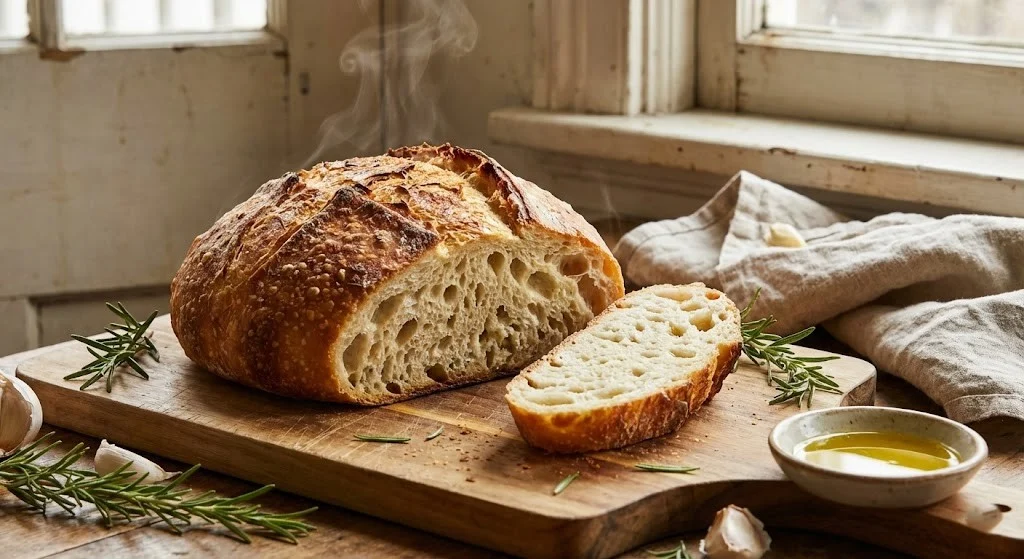
Then, I discovered the incredible world of no-knead dough. It completely transformed our meal times, especially with a recipe I’ve perfected: this amazing No knead garlic rosemary bread for soups and pasta nights. Imagine a crusty exterior, a soft, airy interior, and the irresistible fragrance of fresh garlic and rosemary.
It’s truly a game-changer, making those cozy dinners even more special without any fuss. This loaf is simply divine, whether you’re dipping it into a hearty minestrone or sopping up the last bits of a rich marinara. It’s my secret weapon for elevating everyday meals into memorable culinary experiences, and I cannot wait to share the joy of making this No knead garlic rosemary bread for soups and pasta nights with you.
Why You’ll Love This No Knead Garlic Rosemary Bread for Soups and Pasta Nights
You absolutely will adore this recipe, I promise! Firstly, it’s incredibly simple. No special equipment is required, and you won’t spend precious time kneading dough.
Secondly, the flavor profile is exceptional. Fresh garlic and aromatic rosemary infuse every bite, creating a savory experience that perfectly complements so many dishes. This No knead garlic rosemary bread for soups and pasta nights elevates even the simplest meal.
Thirdly, the texture is divine – a wonderfully crisp crust gives way to a soft, chewy crumb. Moreover, it’s versatile. While perfect for dipping into your favorite soups or sopping up pasta sauces, it also makes fantastic toast or even a base for bruschetta.
This recipe truly delivers gourmet results with minimal effort, making it ideal for busy home cooks. Indeed, you will impress everyone with your homemade bread, all thanks to this brilliant No knead garlic rosemary bread for soups and pasta nights.
Ingredients You’ll Need
Making this incredible No knead garlic rosemary bread for soups and pasta nights requires just a few basic ingredients. You likely have most of them in your pantry already! Freshness truly makes a difference here, especially with the garlic and rosemary. Always opt for good quality flour; it provides the best structure and flavor for your bread.
| Ingredient | Quantity | Notes |
|---|---|---|
| All-purpose flour | 3 cups (about 360g) | Unbleached all-purpose flour works best. |
| Warm water | 1 ½ cups (360ml) | Around 105-115°F (40-46°C). Not too hot, not too cold! |
| Active dry yeast | 1 teaspoon | Ensure it’s fresh and active. |
| Salt | 1 ½ teaspoons | Fine sea salt or kosher salt. |
| Fresh rosemary | 2 tablespoons, finely chopped | Dried rosemary can work, but fresh is superior. |
| Garlic | 3-4 cloves, minced | Adjust to your taste. Freshly minced garlic provides the best flavor for this No knead garlic rosemary bread for soups and pasta nights. |
| Olive oil (for brushing) | 1 tablespoon | Extra virgin for best flavor. |
Substitutions & Variations
One of the beautiful aspects of baking is its flexibility! This recipe for No knead garlic rosemary bread for soups and pasta nights adapts wonderfully to your pantry and preferences. Feel free to get creative.
* Herbs: Not a fan of rosemary? Or simply want to try something different? Substitute with other fresh herbs like thyme, oregano, or even a mix of Italian herbs.
Dried herbs can work too, use about half the amount of fresh.
* Garlic: For a milder garlic flavor, use roasted garlic cloves instead of fresh minced garlic. They add a sweet, mellow depth.
Alternatively, you can add a teaspoon of garlic powder if you’re out of fresh.
* Cheese: Fold in ½ cup of grated Parmesan or Gruyère cheese with the flour for a cheesy garlic rosemary bread. This variation is particularly delicious with tomato-based pasta dishes.
* Olives: Add ½ cup of chopped Kalamata or green olives to the dough for a Mediterranean twist. This adds a lovely briny element.
* Spices: A pinch of red pepper flakes can introduce a subtle heat, complementing the garlic and rosemary beautifully.
Consider adding a teaspoon of onion powder for extra savory notes.
* Whole Wheat Flour: You can substitute up to ½ cup of the all-purpose flour with whole wheat flour for a slightly nuttier flavor and denser crumb. Remember, this might require a tiny bit more water.
* Gluten-Free: While this specific recipe uses wheat flour, you can find excellent gluten-free no-knead bread recipes online. However, a direct substitution with GF flour blends often requires adjusting liquid and rise times significantly. This particular No knead garlic rosemary bread for soups and pasta nights recipe focuses on traditional flour.
Step-by-Step Instructions
Making this fantastic No knead garlic rosemary bread for soups and pasta nights is incredibly straightforward. Just follow these simple steps, and you’ll have a warm, fragrant loaf ready in no time.
Visual Guide: We’ve included this video to help you see the techniques in action, but please stick to the written instructions below for the exact recipe.
1. Combine Dry Ingredients: In a large bowl, whisk together the all-purpose flour, salt, finely chopped fresh rosemary, and minced garlic. Make sure everything is well distributed.
2. Activate Yeast: In a separate small bowl, combine the warm water and active dry yeast. Stir gently and let it sit for about 5-10 minutes until it looks foamy.
This indicates your yeast is alive and ready to work its magic for your No knead garlic rosemary bread for soups and pasta nights.
3. Mix Dough: Pour the activated yeast mixture into the bowl with your dry ingredients.
Using a wooden spoon or a sturdy spatula, mix everything together until no dry spots of flour remain. The dough will be shaggy and sticky – this is exactly what you want for no-knead bread. Do not worry about overmixing or kneading!
4. First Rise (Bulk Fermentation): Cover the bowl tightly with plastic wrap or a clean kitchen towel. Place the bowl in a warm spot in your kitchen.
Let the dough rise at room temperature for at least 8 hours, or preferably 12-18 hours. A longer, slower rise develops incredible flavor in your No knead garlic rosemary bread for soups and pasta nights.
5.
Prepare for Baking: After the long rise, the dough will be bubbly and significantly increased in volume. Lightly flour your work surface. Gently scrape the dough out onto the floured surface.
Fold the edges of the dough towards the center a few times to create a rough ball shape. Do not punch down the dough too much; preserve those lovely air bubbles.
6.
Second Rise (Proofing): Line a bowl or a proofing basket (banneton) with parchment paper. Transfer the dough, seam-side up, into the prepared bowl/basket. Cover loosely with plastic wrap or a kitchen towel.
Let it proof for another 30-60 minutes while your oven preheats.
7. Preheat Oven & Dutch Oven: About 30 minutes before baking, place a 5-6 quart Dutch oven with its lid into your oven.
Preheat the oven to 450°F (230°C) with the Dutch oven inside. This step is crucial for achieving that fantastic crust on your No knead garlic rosemary bread for soups and pasta nights.
8.
Bake the Bread: Carefully remove the scorching hot Dutch oven from the oven (use oven mitts!). Gently lift the dough by the parchment paper and transfer it into the hot Dutch oven. Score the top of the dough with a sharp knife or razor blade if desired (a single slash or cross works well).
9. Covered Bake: Cover the Dutch oven with its lid and bake for 30 minutes. The steam trapped inside creates that wonderful chewy crust.
10. Uncovered Bake: Remove the lid from the Dutch oven. Continue baking for another 15-20 minutes, or until the crust is deeply golden brown and sounds hollow when tapped on the bottom.
11. Cool: Carefully remove the bread from the Dutch oven and transfer it to a wire rack. Let it cool completely for at least 1 hour before slicing.
This allows the internal structure to set and prevents a gummy texture. Enjoy your perfectly baked No knead garlic rosemary bread for soups and pasta nights!
Pro Tips for Success
As a professional mom-chef, I’ve learned a few tricks that truly elevate this No knead garlic rosemary bread for soups and pasta nights from good to absolutely phenomenal. These little details make all the difference.
* Water Temperature is Key: The warm water should feel like a warm bath – not too hot to kill the yeast, and not too cold to inhibit its activity. Aim for 105-115°F (40-46°C). A kitchen thermometer is a great investment for consistent results.
* Don’t Rush the Rise: The long, slow fermentation at room temperature is crucial for developing complex flavors in this No knead garlic rosemary bread for soups and pasta nights. If your kitchen is cooler, it might take a bit longer. If it’s very warm, it might be ready sooner.
Watch the dough, not just the clock.
* Handle Gently: When you turn the dough out onto your floured surface, resist the urge to punch it down or overwork it. You want to preserve as many of those beautiful air bubbles as possible.
Just a few gentle folds are sufficient to shape it.
* The Dutch Oven Advantage: Preheating the Dutch oven is non-negotiable for that incredibly crisp crust and open crumb. The high heat creates instant steam, mimicking a professional bakery oven.
Make sure it’s piping hot before the dough goes in.
* Don’t Skip Cooling: I know it’s hard, but resist cutting into your No knead garlic rosemary bread for soups and pasta nights immediately! The bread continues to cook and set as it cools.
Slicing too early can result in a dense, gummy texture. Patience truly rewards you with the perfect loaf.
* Fresh Ingredients: Always use fresh active dry yeast.
If your yeast is old, your bread won’t rise. Similarly, fresh rosemary and garlic provide unparalleled flavor compared to their dried counterparts for this recipe.
* Experiment with Scoring: A simple score on top isn’t just for looks; it allows the bread to expand predictably in the oven. A sharp blade (like a bread lame or razor) works best.
Storage & Reheating Tips
You’ve baked this incredible No knead garlic rosemary bread for soups and pasta nights, and now you need to keep it fresh! Proper storage ensures you enjoy every delicious crumb.
* Room Temperature: Store your cooled bread in a paper bag or wrapped loosely in a clean kitchen towel at room temperature. This allows the crust to remain crisp. Avoid airtight plastic bags or containers, as they can make the crust soft and soggy.
It stays fresh for 2-3 days.
* Freezing for Longer Storage: For longer storage, slice the cooled bread and place the slices in a freezer-safe bag or airtight container. It freezes beautifully for up to 3 months.
This is perfect for ensuring you always have some of this amazing No knead garlic rosemary bread for soups and pasta nights on hand.
* Reheating Slices: To reheat individual slices, you can toast them in a toaster, a toaster oven, or even a dry pan on the stove until warmed through and crisp.
* Reheating a Whole Loaf: If you have a larger piece or a whole loaf, sprinkle a little water on the crust (this helps reactivate the crispness) and reheat it in a preheated oven at 350°F (175°C) for 10-15 minutes, or until warmed through and the crust is revitalized. Your No knead garlic rosemary bread for soups and pasta nights will taste almost as good as fresh out of the oven!
What to Serve With This Recipe
This No knead garlic rosemary bread for soups and pasta nights is truly versatile, making it the perfect accompaniment for so many delicious meals. Its robust flavor and satisfying texture complement a wide array of dishes.

* Hearty Soups: This bread truly shines alongside any soup. Think classic French Onion Soup, a rustic Lentil Soup, creamy Tomato Basil Soup, or a flavorful Minestrone. The crusty exterior is perfect for dipping.
* Pasta Dishes: Naturally, this bread is a match made in heaven for pasta night! Serve it with a rich Bolognese, a simple Marinara, a creamy Alfredo, or a vibrant Pesto Pasta. It’s fantastic for sopping up every last drop of sauce.
* Stews & Chilis: The savory notes of garlic and rosemary pair beautifully with hearty stews like Beef Bourguignon, Chicken and Dumplings, or a spicy Chili Con Carne.
* Salads: Serve warm slices alongside a crisp Caesar salad or a vibrant Caprese salad. The bread adds a wonderful textural and flavor contrast.
* Cheese Boards: This artisan-style bread is a welcome addition to any cheese board. Its simple yet sophisticated flavor pairs well with a variety of cheeses, olives, and cured meats.
* Dipping Oils: For a simple appetizer, serve warm slices with a good quality olive oil, perhaps infused with a little balsamic vinegar, a sprinkle of red pepper flakes, or a touch more rosemary.
* Bruschetta Base: Toast slices of this No knead garlic rosemary bread for soups and pasta nights, then top with fresh tomatoes, basil, and a drizzle of balsamic glaze for a quick and elegant appetizer.
* Sandwiches: While often served alongside, thicker slices can also make a fantastic base for gourmet sandwiches, especially those with Italian-inspired fillings.
* Breakfast/Brunch: Don’t forget breakfast! Toast slices and serve with scrambled eggs, avocado, or even a smear of cream cheese.
FAQs
You’ve got questions about this wonderful No knead garlic rosemary bread for soups and pasta nights, and I’ve got answers! Let’s tackle some common queries.
What kind of flour works best for this no-knead bread?
Unbleached all-purpose flour consistently yields the best results for this No knead garlic rosemary bread for soups and pasta nights. Its protein content strikes a good balance for both structure and tenderness. Bread flour also works but will produce a slightly chewier loaf. Avoid bleached flours.
Can I make this bread ahead of time?
Absolutely! In fact, the long fermentation time is part of the magic. You can mix the dough in the evening and let it rise overnight (8-18 hours) on your countertop.
Then, in the morning, proceed with shaping and baking. This makes it perfect for a fresh-baked loaf anytime. The extended rise develops incredible flavor in your No knead garlic rosemary bread for soups and pasta nights.
My bread didn’t rise. What went wrong?
Several factors can inhibit yeast activity. Firstly, your yeast might be expired or inactive. Always check the expiry date.
Secondly, the water temperature might have been too hot (killing the yeast) or too cold (slowing it down too much). Thirdly, your kitchen might be too cold; yeast prefers a warm environment to thrive. Ensure your yeast is fresh and your water temperature is correct for a successful rise for this No knead garlic rosemary bread for soups and pasta nights.
Is this bread good for sandwiches?
Yes, absolutely! While incredibly delicious for dipping into soups and pasta sauces, the sturdy yet tender crumb of this No knead garlic rosemary bread for soups and pasta nights makes fantastic sandwiches. Slice it thicker for heartier fillings or thinner for more delicate ones. Toasting the slices first adds another layer of texture.
Can I use fresh yeast instead of active dry yeast?
You certainly can use fresh yeast. Generally, you would use twice the weight of fresh yeast compared to active dry yeast. So, for 1 teaspoon of active dry yeast (about 3.5g), you would use about 7g of fresh yeast.
Crumble it into the warm water to dissolve before adding to the flour. The results for this No knead garlic rosemary Bread for soups and pasta nights will be equally delightful.
How do I get an even crispier crust?
For an extra crispy crust on your No knead garlic rosemary bread for soups and pasta nights, ensure your Dutch oven is thoroughly preheated for at least 30 minutes at the highest temperature recommended (450°F / 230°C).
You can also try removing the lid for the last 5-10 minutes of baking and increasing the oven temperature slightly to 475°F (245°C), watching carefully to prevent burning. Placing a tray of hot water at the bottom of the oven during the uncovered bake can also increase steam, promoting a crispier crust.
Nutrition Information (per serving)
Here’s an estimated nutritional breakdown for one serving of this delicious No knead garlic rosemary bread for soups and pasta nights. Please note, these values are approximate and can vary based on specific ingredients and serving size. A typical loaf yields about 12-16 slices.
| Nutrient | Amount (approx.) |
|---|---|
| Calories | 160 kcal |
| Total Fat | 2g |
| Saturated Fat | 0g |
| Cholesterol | 0mg |
| Sodium | 280mg |
| Total Carbohydrates | 30g |
| Dietary Fiber | 1g |
| Total Sugars | 0g |
| Protein | 5g |
No knead garlic rosemary bread for soups and pasta nights
- Total Time: 12 hours 5 mins
- Yield: 12 servings 1x
- Diet: Vegetarian
Description
A wonderfully crisp No knead garlic rosemary bread, perfect for soups and pasta nights. This bread features a crusty exterior, a soft, airy interior, and is infused with the flavors of fresh garlic and rosemary.
Ingredients
3 cups All-purpose flour
1 ½ cups Warm water
1 teaspoon Active dry yeast
1 ½ teaspoons Salt
2 tablespoons Fresh rosemary, finely chopped
3–4 cloves Garlic, minced
1 tablespoon Olive oil, for brushing
Instructions
- Combine Dry Ingredients: In a large bowl, whisk together the all-purpose flour, salt, finely chopped fresh rosemary, and minced garlic
- Activate Yeast: In a separate small bowl, combine the warm water and active dry yeast. Stir gently and let it sit for about 5-10 minutes until foamy
- Mix Dough: Pour the activated yeast mixture into the bowl with your dry ingredients and mix until no dry spots of flour remai
- First Rise: Cover the bowl tightly and let the dough rise at room temperature for at least 8-18 hours
- Prepare for Baking: After the long rise, the dough will be bubbly. Lightly flour your work surface, gently scrape the dough onto it, and fold the edges towards the center
- Second Rise: Place the dough into a lined proofing basket, cover loosely, and let it proof for 30-60 minutes while the oven preheats
- Preheat Oven & Dutch Oven: Place a Dutch oven in the oven and preheat to 450°F (230°C) for 30 minutes
- Bake the Bread: Transfer the dough to the hot Dutch oven and score the top. Cover and bake for 30 minutes
- Uncovered Bake: Remove the lid and continue baking for another 15-20 minutes until deeply golden brow
- Cool: Transfer the bread to a wire rack and let it cool for at least 1 hour before slicing
Notes
Using fresh ingredients will enhance the flavor of the bread.
Resist cutting into the bread immediately after baking to prevent a gummy texture.
- Prep Time: 20 mins
- Cook Time: 45 mins
- Category: Dinner
- Method: Baking
- Cuisine: American
Nutrition
- Serving Size: 1 slice
- Calories: 160 kcal
- Sugar: 0g
- Sodium: 280mg
- Fat: 2g
- Saturated Fat: 0g
- Unsaturated Fat: N/A
- Trans Fat: 0g
- Carbohydrates: 30g
- Fiber: 1g
- Protein: 5g
- Cholesterol: 0mg